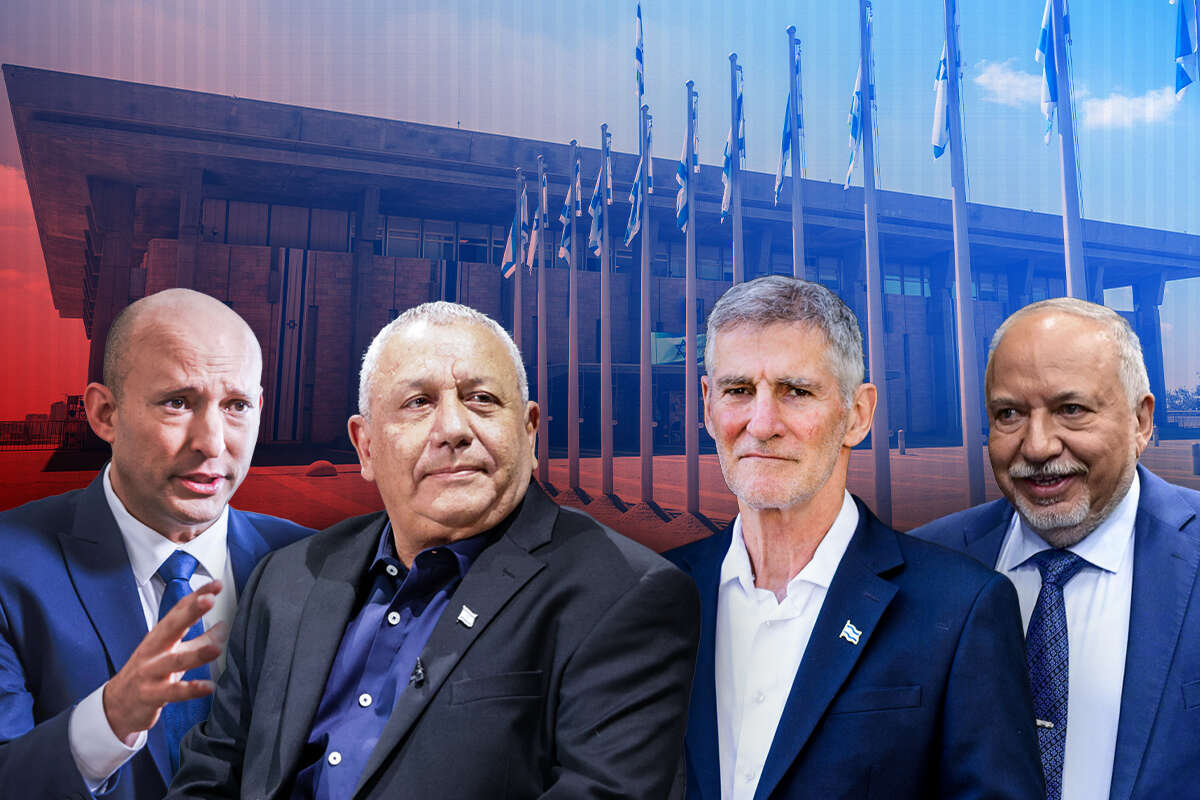
A full week has passed since the election, and the leaders of the anti-Netanyahu bloc, who were almost certainly disappointed by the results, are meeting Tuesday for the first time since voters went to the polls.
The meeting is intended to coordinate the parties' next steps, particularly amid the deep divisions that have emerged among their leaders in recent days. Yisrael Beytenu Chairman Avigdor Liberman brought those disagreements into the open at a briefing for journalists Monday, accusing Gadi Eisenkot of running a "self-serving campaign that hurt us all and led to a crushing defeat."
Despite his accusations, Liberman announced that he would recommend Eisenkot to the president as the next prime minister, virtually ensuring that the Yashar! party chairman will be tasked with forming a government, possibly as early as the end of this week.
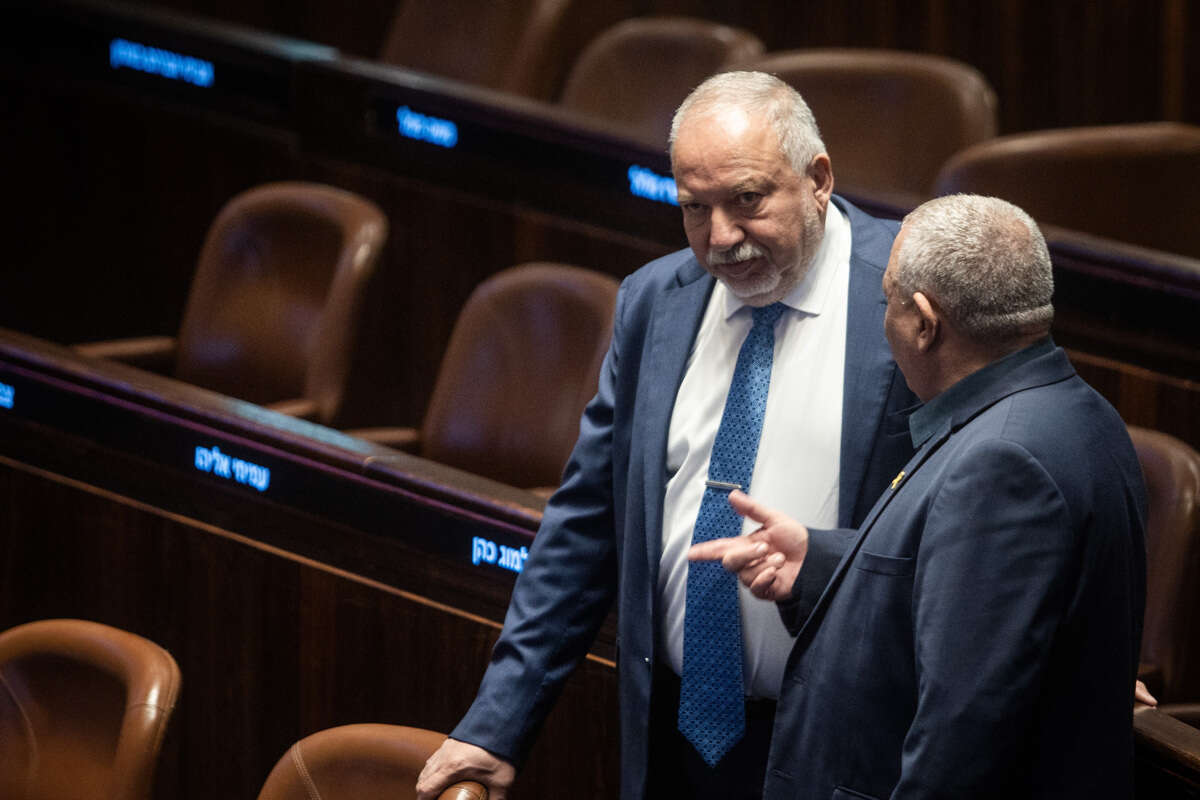
Liberman holds the balance of power
Liberman appears to be the biggest unknown for the bloc's leaders. If they had their way, Eisenkot, Naftali Bennett and Yair Golan would swear in a new government within days, with the support of the Arab Ra'am party and the Joint List abstaining from the vote. But Liberman is firmly opposed to any form of reliance on the Arab parties, as well as to the establishment of a minority government in general.
For now, the bloc's leaders understand that Liberman is unlikely to change his position anytime soon. They are therefore exploring other possibilities, including cooperation with the ultra-Orthodox United Torah Judaism party to secure the government's inauguration.
Liberman himself has not entirely ruled out cooperation with the ultra-Orthodox parties, a significant shift after years of opposition. The implications could be dramatic: Together with the ultra-Orthodox parties, the anti-Netanyahu bloc would control 61 seats in the 120-member Knesset, enough to swear in a government backed by a Jewish majority.
Although the prospects appear slim, it is reasonable to assume that the issue will come up at Tuesday morning's meeting, particularly after the announcement Liberman made Monday.
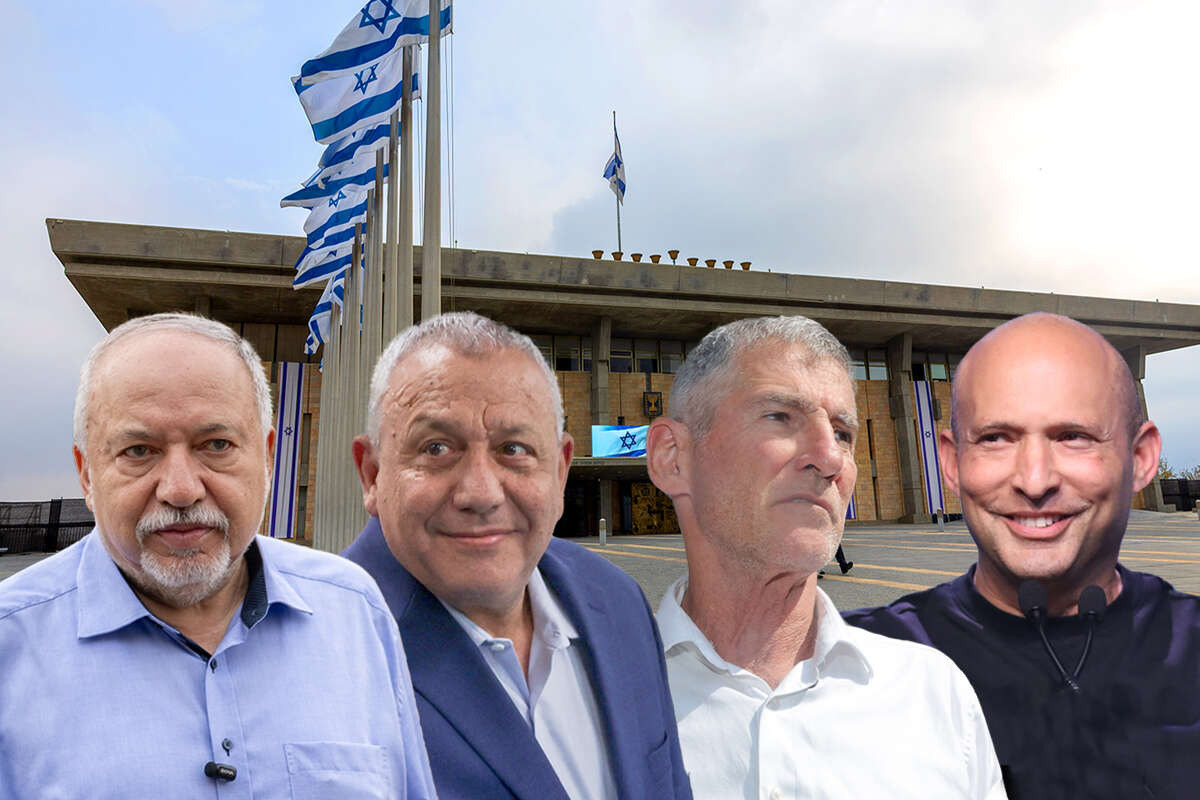
A move to block a unity government
While the bloc's leaders work toward a broader strategy, they face several immediate challenges. The parties agree on the need to seize control of the Knesset, beginning with replacing incumbent Knesset Speaker Amir Ohana using the parliamentary majority secured by Netanyahu's opponents.
But while there is agreement on removing Ohana, the parties remain far apart on who should replace him. Liberman had wanted his close ally, MK Oded Forer (Yisrael Beytenu), to take the position, but announced Monday that he would accept Yair Lapid's request to become speaker. The Bennett-Liberman alliance wants the position to go to someone from its own camp rather than Eisenkot's, in an effort to prevent the latter from pursuing a unity government with Prime Minister Benjamin Netanyahu.
The reasoning is straightforward: Once elected, a Knesset speaker can be removed only by a majority of 90 MKs. Otherwise, the speaker remains in office for the entire parliamentary term. If the position goes to a representative of a party that subsequently remains in opposition, the Knesset could effectively become hostile to the government, preventing it from advancing its agenda. Electing Lapid, who has no intention of joining a Netanyahu-led government under any circumstances, would therefore make it extremely difficult for Eisenkot to enter a unity government while facing a hostile parliament.
Eisenkot has yet to decide where he stands on the issue. Some believe he may seek the speakership for himself or for a close ally in his Yashar! party, such as Hili Tropper or Matan Kahana. If Eisenkot were elected speaker, he could subsequently resign to become a minister, preserving maximum political flexibility, including the option of joining a unity government. Lapid, Bennett and Liberman are unwilling to allow that scenario. Liberman has already sought to constrain Eisenkot's options by publicly endorsing Lapid.
A decision on the speakership could therefore be reached as early as Tuesday, given the limited time remaining before the new Knesset is sworn in.
What comes first?
Even if the bloc's leaders agree on a candidate for Knesset speaker, they remain deeply divided over which initiatives to pursue immediately after taking control of parliament, and in what order. Establishing a state commission of inquiry would appear to be the simplest option. But Liberman warned Monday that "it will be complicated under a caretaker government, and there will be legal difficulties."
Other initiatives would also be difficult to pass, particularly legislation affecting Netanyahu's legal standing. These include a proposed law barring anyone under criminal indictment from serving as prime minister and legislation limiting the number of terms a prime minister may serve. Even if such laws pass, there are concerns within the anti-Netanyahu bloc that the High Court of Justice could strike them down because they are specifically directed at Netanyahu.
There does, however, appear to be a consensus on the appointment of the next state comptroller, Israel's independent government watchdog. Ohana, the incumbent Knesset speaker, previously refused to implement a High Court ruling ordering a new election for the position after it emerged that Likud MKs had been asked to photograph themselves voting for Netanyahu's preferred candidate, Michael Rabilo.
The bloc now intends to use its parliamentary majority to appoint the opposition's candidate, retired Supreme Court Justice Yosef Elron. Additional candidates may be allowed to enter the race later, although that possibility currently appears unlikely.
The objective is to secure at least one lasting achievement for the anti-Netanyahu bloc. Removing a state comptroller from office is extremely difficult, if not virtually impossible, and the position carries a seven-year term.

A double-edged sword
Whatever happens, the anti-Netanyahu bloc faces a host of strategic decisions and an equally daunting number of internal disagreements.
Some political observers believe Bennett and Liberman's support for Eisenkot as the bloc's candidate for prime minister could prove to be a double-edged sword. Their aim, according to this assessment, may be to set Eisenkot up for failure so that one of them can receive the mandate to form a government in the next round.
Many questions are likely to remain unanswered even after Tuesday's meeting. Nevertheless, the bloc's leaders hope to reach at least some preliminary agreements ahead of the new Knesset's swearing-in next week.