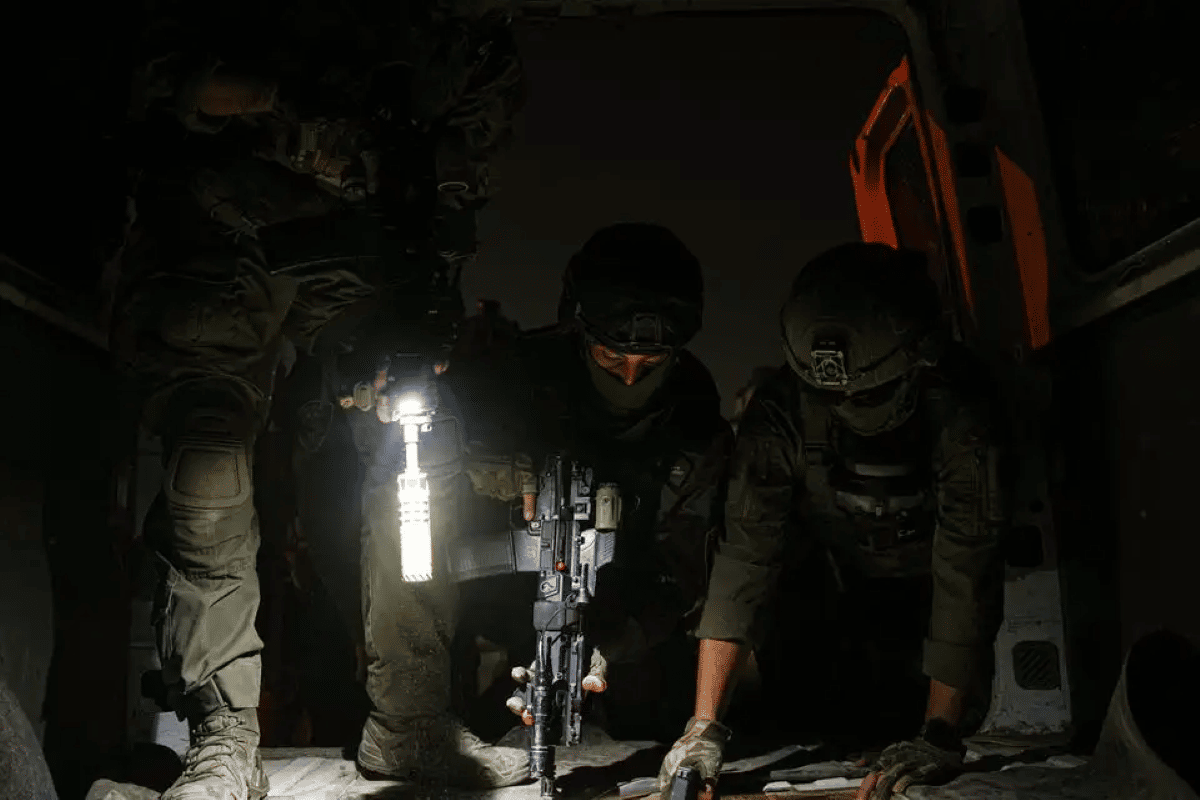
The separation barrier is designed to stop infiltration into Israel. Beneath the surface, however, crossing routes are turning up that present another security challenge. Border Police and IDF forces uncovered one near the village of Al-Ram, north of Jerusalem – an underground passage built on existing sewage infrastructure and suspected of having carried illegal entrants into Israel.
A commercial vehicle parked over the opening concealed it, and entry was possible through the vehicle itself. During the operation, forces located 32 illegal entrants who had crossed into the Beit Hanina (neighborhood in northern Jerusalem) area. Four more suspects were arrested for helping them enter.
This is not the first time underground infrastructure has surfaced in Judea and Samaria. In recent months, shafts were found in Qalqilya and a deep underground cavity in Hebron, though neither was shown to have been used to infiltrate Israel. The Al-Ram passage is different. According to police, it was actually used for illegal entry into the country. The finding underscores how hard it is to detect hidden routes, and it raises concern that similar infrastructure could one day be exploited for hostile security purposes.
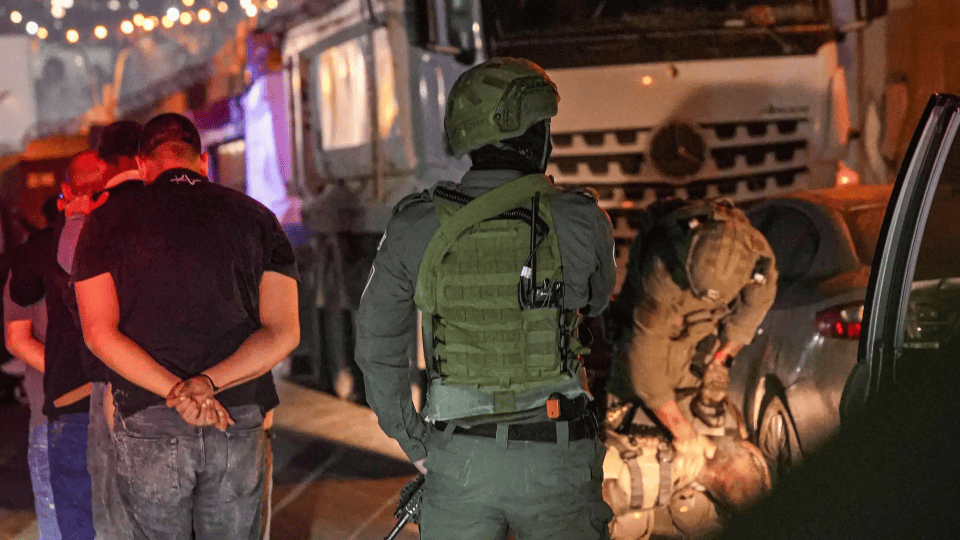
The entrance was hidden inside the vehicle
An intelligence operation by the Border Police in the Jerusalem area exposed the route. Acting on the information, troops from the Northern Battalion, undercover Jerusalem Border Police operatives, and IDF forces from the Binyamin Brigade moved in to locate the passage and arrest the suspects who used it.
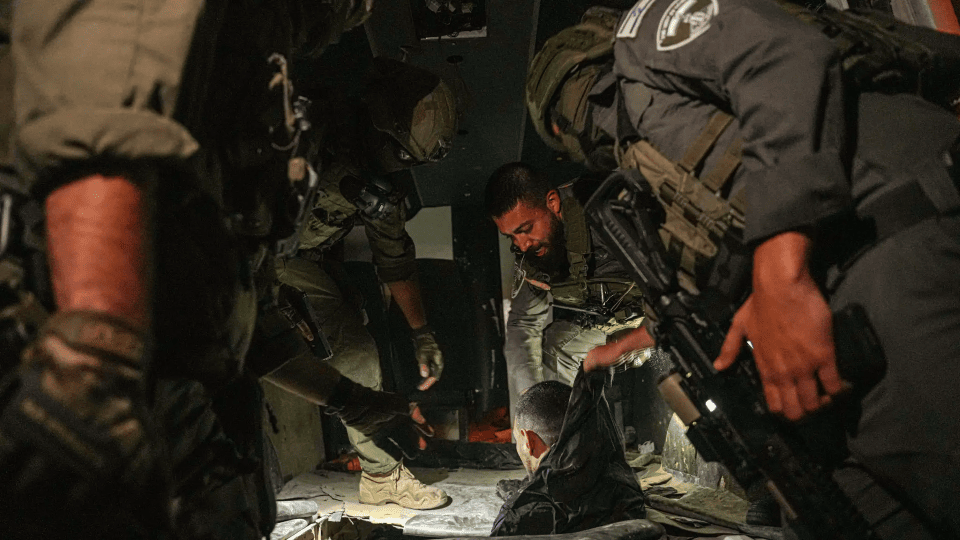
One of the more unusual details was how the entrance was disguised. According to police, a commercial vehicle was placed above the opening, so the underground route could be entered through the vehicle itself. The illegal entrants were located after crossing into Israel through the infrastructure in the Beit Hanina area. All 36 detainees were transferred to the Investigations and Intelligence Division of the Jerusalem Border Police for further handling and investigation.
From Qalqilya to Hebron
Security forces have found excavations and underground infrastructure in Judea and Samaria before. In September, police announced that activity in Qalqilya had turned up a tunnel in the digging stage. The initial report said it reached a depth of at least 25 meters (82 feet), with another excavation just beginning. Weapons, ammunition, and additional equipment were seized at the site, and four suspects were arrested.
The following day, however, the IDF issued an unusual clarification that contradicted the police announcement. The military said two shafts about 12 meters (39 feet) deep had been found. After an examination, it ruled out the presence of a tunnel route and also ruled out that the shafts were near the border barrier. As a result, the Qalqilya findings cannot be presented as infiltration tunnels toward Israeli territory.
Another case surfaced in October, when the IDF operated in Hebron after the shooting attack at Yehuda Junction that killed two soldiers. Near the home of one of the terrorists, forces found an underground cavity about 15 meters (49 feet) deep. Inside it was an electronic device that was sent for examination. The IDF made clear that the cavity had no exit opening and was not near an Israeli community.
The challenge beneath the border
In Qalqilya and Hebron, no tunnel leading into Israel was verified. In Al-Ram, by contrast, police reported infrastructure that was actually used to move illegal entrants. That sharpens the question of how to deal with existing underground crossing routes, which do not necessarily require digging a new tunnel.
The security concern is that infrastructure of this kind could be exploited in the future by hostile actors, and not only for illegal entry. Police, however, did not report that the route was used for terror activity or that it passed directly beneath the separation barrier.
After the passage was exposed and the arrests were made, Jerusalem Border Police investigators opened additional investigative steps to clarify how the infrastructure was used and to identify those involved. Now, alongside enforcement against illegal entrants, the question arises of how to detect and block hidden entry routes beneath the ground.