In recent years, Israel has stood on the brink of a constitutional crisis and a potential clash between branches of government. At times, it seemed the country was just one step away from plunging into an abyss of chaos from which no one knew how to escape. What unfolded in Poland over the weekend offered a stark illustration of what happens when that line is crossed. One can only hope that the bitter spectacle in Warsaw will serve as a warning to the rival camps in Jerusalem as well.
Poland's constitutional crisis has been brewing for years. Its roots lie in a deep ideological and political confrontation between two rival blocs, each representing a different segment of Polish society. Unlike Israel, however, the central political divide is not simply between the Left and the Right. Although left-wing parties remain active in Poland and participate in Tusk's governing coalition, the country's politics have long been dominated by a fierce struggle between two competing forces on the Right.
On one side stands the center-right, represented by the Civic Platform party. On the other is the conservative Right, led by the Law and Justice party. Control of Poland's constitutional court, known as the Constitutional Tribunal, has become one of the central battlegrounds in that struggle, with both sides resorting to increasingly aggressive measures in their efforts to shape the judiciary.
The battle over Poland's Constitutional Tribunal is generally traced back to 2015. At the time, the governing coalition led by Civic Platform realized its days in power were numbered. Before losing control to its bitter conservative rivals, it sought to consolidate its influence over the tribunal.
Five judicial terms were due to expire around the transition of power. Three vacancies arose during the outgoing parliament's term, while two were due to arise after the newly elected parliament took office. (For those wondering, in Poland, as in other Western democracies, elected officials play a central role in appointing judges.)
Although Civic Platform routinely presents itself as a defender of the rule of law, a position that has earned it the support of European Union institutions and much of the continent's mainstream media, its outgoing parliamentary majority sought to fill all five vacancies before relinquishing power.
The move proved controversial. Poland's Constitutional Tribunal subsequently ruled that the outgoing parliament had been entitled to elect judges for the three vacancies arising during its term, but not for the two seats that would become vacant after the new parliament convened.
The battle over judicial appointments
Law and Justice refused to accept the outgoing government's appointments and decided to respond in kind. Immediately after the newly elected members of parliament took office, the new majority moved to appoint five judges of its own. The Constitutional Tribunal's rulings established that the three judges lawfully elected by the outgoing parliament should have been recognized, while the two remaining vacancies were for the incoming parliament to fill.
But the rival camps refused to resolve the dispute on that basis. The new Law and Justice government challenged the earlier appointments, and the refusal to recognize judges selected by the opposing camp helped trigger a constitutional confrontation that would shape Polish politics for years.
As the years passed and Law and Justice remained in power, it strengthened its influence over the Constitutional Tribunal through additional appointments. In 2022, Bogdan Święczkowski was appointed to the court, and in December 2024 he was elevated to its presidency.
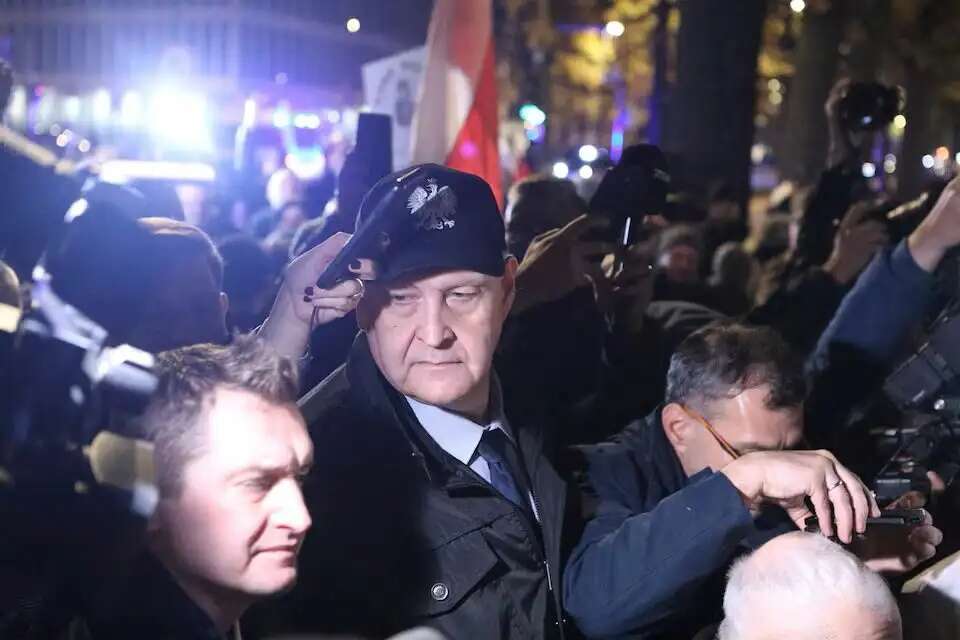
Then came another change of government. Civic Platform returned to power at the head of a coalition led by Prime Minister Donald Tusk, determined to reverse what it regarded as the previous government's politicization of the judiciary and restore the constitutional court's legitimacy. The Tusk coalition selected six new judges, but Polish President Karol Nawrocki, who is aligned with the Law and Justice camp, accepted the oaths of only two. The remaining four appointments were rejected on procedural and constitutional grounds, but the judges refused to accept the decision.
Although the legal framework requires Constitutional Tribunal judges to take their oaths before the president, the four instead took their oaths in a ceremony before parliament. The governing majority recognized their authority, while Nawrocki and Constitutional Tribunal President Święczkowski rejected the validity of the alternative ceremony and disputed their right to exercise judicial powers.
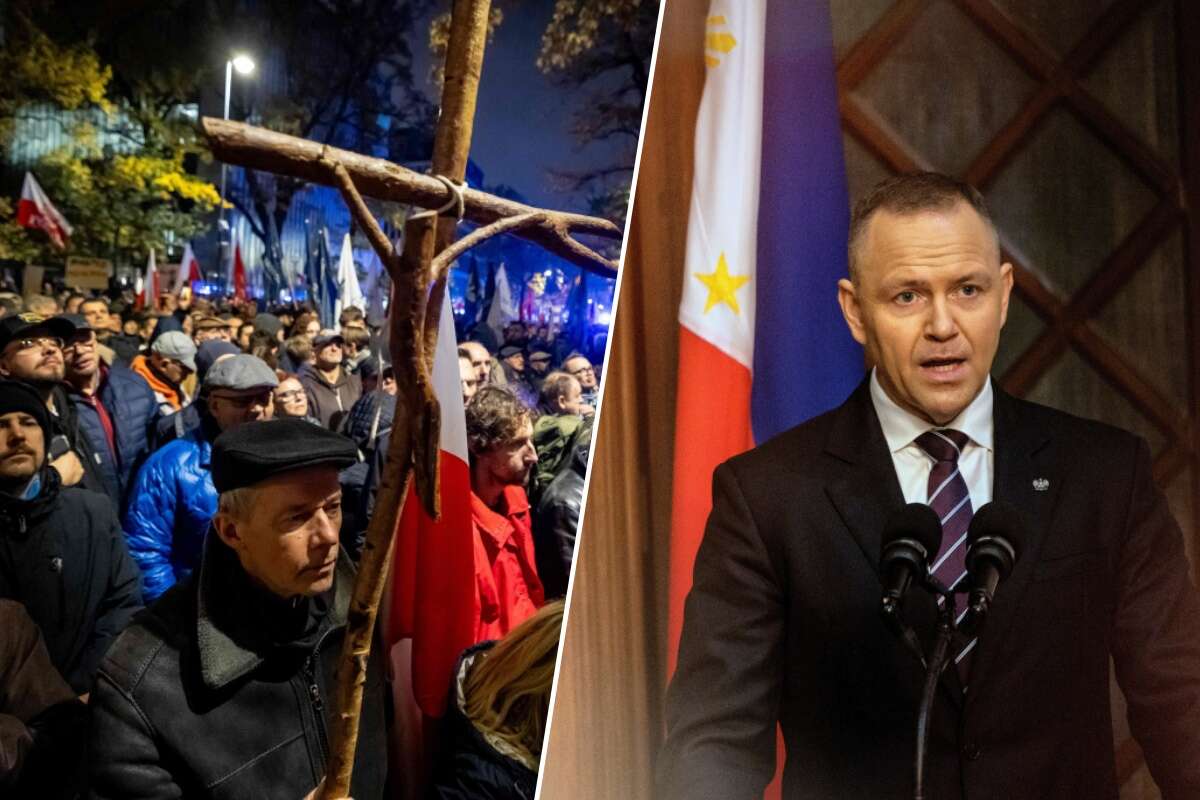
About two weeks before the latest confrontation, the governing majority also advanced the appointment of Maciej Berek, a close associate of Tusk. The move fueled speculation that Berek could eventually replace Święczkowski as president of the Constitutional Tribunal.
The appointment signaled that Tusk was prepared to back his nominees despite resistance from the presidency and the tribunal's existing leadership. His opponents were equally unwilling to retreat, raising the prospect of competing claims to judicial authority, with each political camp recognizing a different set of judges.
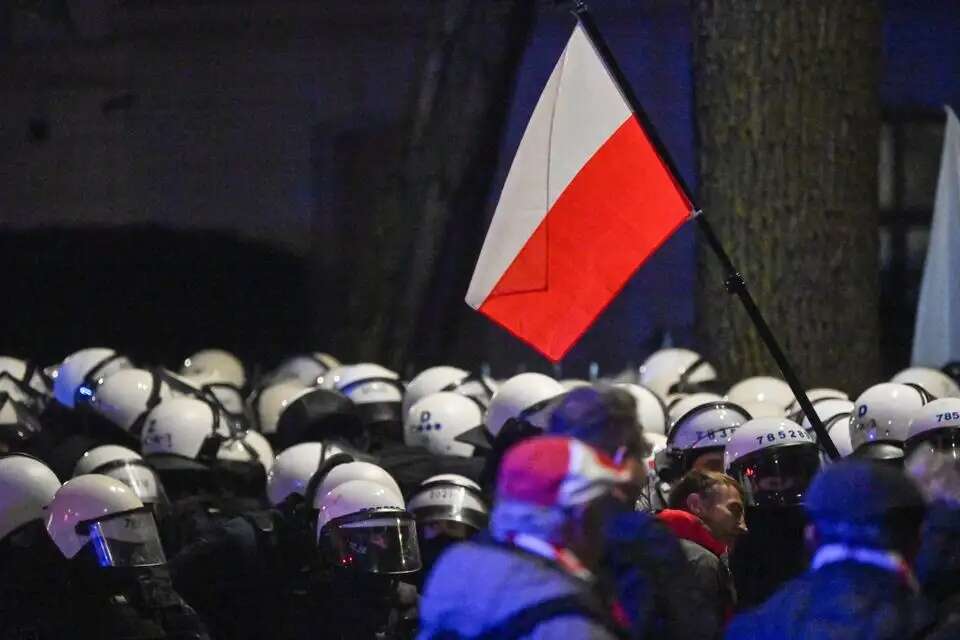
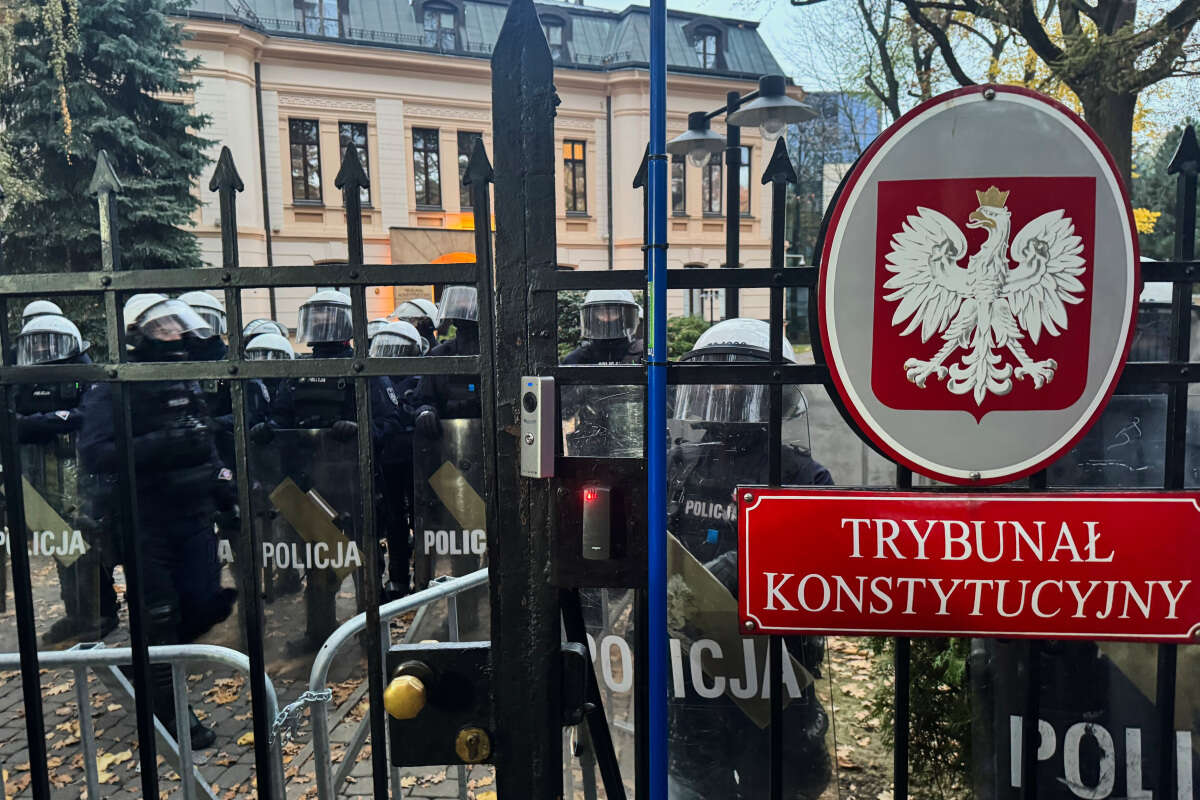
The confrontation moved beyond words over the weekend when police and security personnel became involved in efforts to secure access to the Constitutional Tribunal building for judges backed by the governing coalition.
Reports distinguished between police securing the area outside the tribunal and State Protection Service officers accompanying judges into the building. Police disputed claims that their officers had entered the building themselves, while the precise chain of command and the extent of any direct instructions from Tusk remained contested.
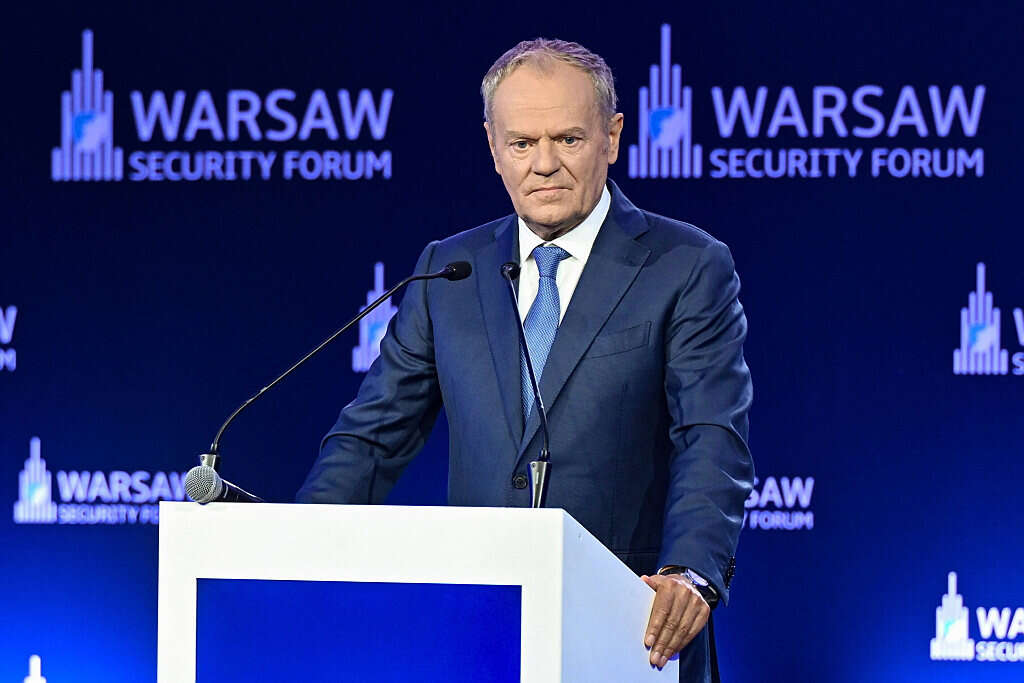
Once the judges gained access, a decision was announced suspending Święczkowski and his deputy from their functions. Święczkowski and President Nawrocki responded with a dramatic warning, portraying the governing coalition's actions as an attempted coup against Poland's constitutional institutions.
The accusations also flowed in the opposite direction. Justice Minister Waldemar Żurek, who also serves as Poland's prosecutor general, called for prosecutorial scrutiny of the confrontation and the conduct of officials involved. However, the available reporting did not establish that a formal criminal investigation had been opened against both Nawrocki and Święczkowski personally.
The result is a situation in which Poland's police and other state institutions risk finding themselves caught between rival claims to constitutional authority, with neither political camp prepared to yield. A further escalation could see both camps calling on their supporters to take to the streets to "defend democracy." For the first time since the collapse of communist rule in Poland, the prospect of a constitutional confrontation descending into violence is becoming a serious concern. Where such a crisis might end is anyone's guess.