Anyone who has ever filed an insurance claim knows the feeling of helplessness. A car accident, a burst pipe flooding the living room or the need to cover medical treatment can send policyholders into an exhausting ordeal of emails, photographed receipts, endless phone calls and searches through piles of paperwork. The process is slow, the bureaucracy is overwhelming, and the money meant to provide relief when it is needed most often arrives only after weeks or even months.
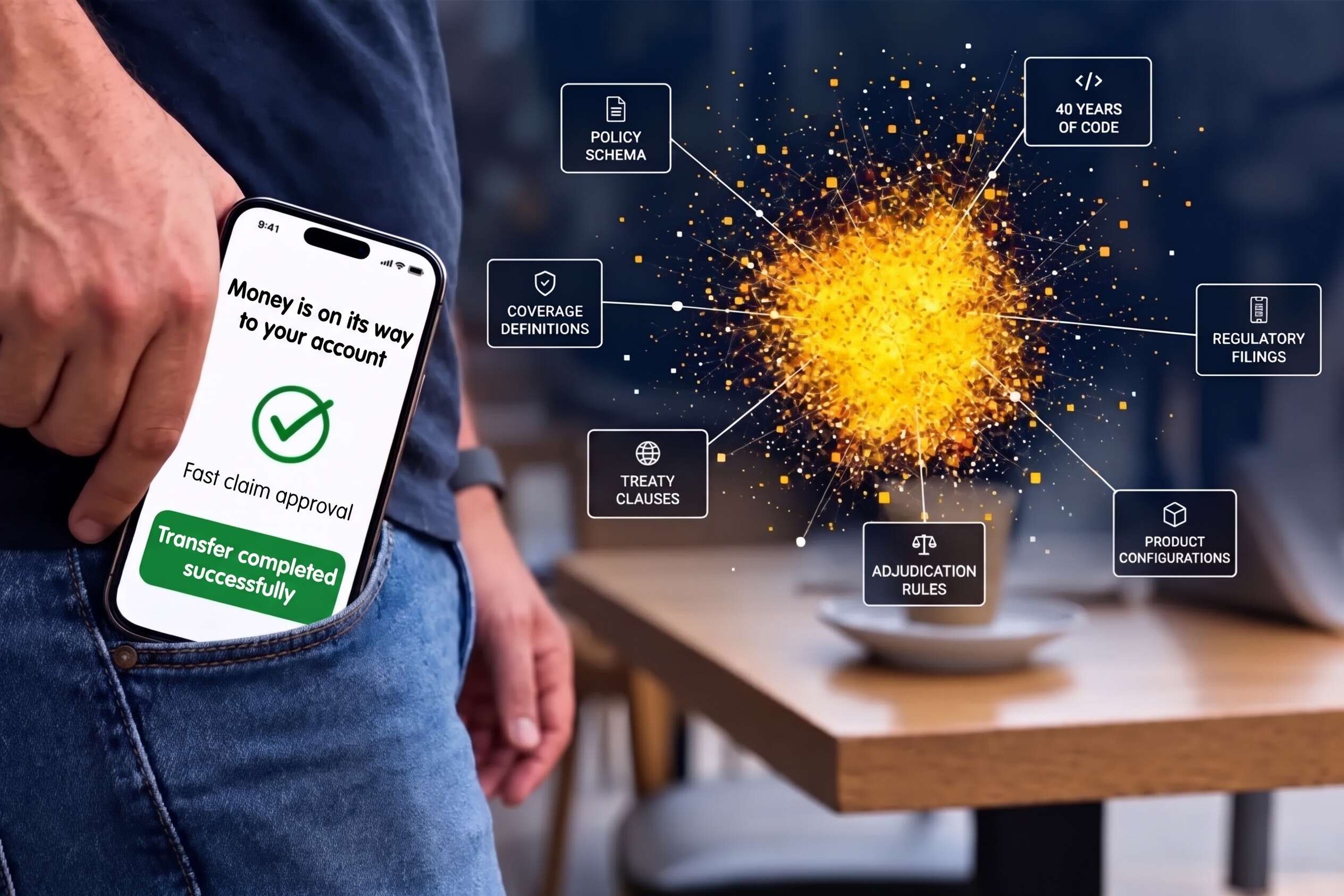
But behind the scenes, a quiet revolution is underway that could reduce those waiting times to just seconds. The shift is toward straight-through processing (STP), a model in which insurance claims are handled automatically and compensation is transferred directly into bank accounts at the push of a button, without human intervention.
In a world where consumers have grown accustomed to the instant service offered by giants such as Amazon and Netflix, few are willing to tolerate cumbersome forms and months of waiting. The expectation is now simple: Report an incident from a smartphone and receive the money immediately.
The technology behind the policies
Most policyholders in Israel and around the world are familiar with the major insurance brands. In Israel, these include Harel, Clal, Phoenix and Menora Mivtachim, while overseas there are hundreds of international insurers. But most of these companies do not develop their own internal software systems.
That is where Sapiens comes in. The technology company, which originated in Israel and operates its main development center in Holon, is considered one of the world's leading providers of core software systems for the insurance industry. Sapiens' core platforms effectively serve as an insurance company's central nervous system. They manage the entire life cycle of an insurance policy, from collecting customer information, pricing policies and calculating premiums to billing, managing pensions and provident funds, and processing complex claims involving property, vehicles, property and casualty insurance, liability, health and life insurance.
Deeply embedded in Israelis' finances
The company's systems support the pension operations of leading Israeli financial institutions, including Menora Mivtachim, Clal Insurance and Finance, and Altshuler Shaham. Together, these institutions manage hundreds of billions of shekels in Israeli retirement savings and depend on the stability of Sapiens' technology. For decades, the insurance industry was weighed down by deeply entrenched conservatism. Its systems ran on aging, cumbersome servers, where even routine updates could require months of painstaking work and lead to technical problems.
As Guy Moas, Sapiens' group vice president of development for life and pension products, explains, the shift in thinking was far from straightforward.
"Our goal isn't to process 100% of cases automatically and blindly," Moas said. "It's to take all the simple, clear-cut and straightforward claims and settle them in seconds, without any human intervention."

The blockbuster acquisition
The past year marked a dramatic turning point in Sapiens' history. Late last year, private equity firm Advent International completed its acquisition of the company. The company's annual customer conference, Sapiens Ignite 2026, was held in Nashville this year for the first time as a unified global event, bringing together approximately 500 participants from 183 insurance and financial companies across 21 countries.
Opening the conference with a candid acknowledgment of the company's historical shortcomings and the radical transformation it had undergone was Mike Ettling, who had led Sapiens as executive chairman and interim CEO since the acquisition. Ettling described how the company dismantled its decentralized operating model in favor of a single global functional organization, consolidated hundreds of internal systems into one unified framework, relocated its headquarters to London and, over the course of a single weekend, decided to commit fully to cloud computing and artificial intelligence.
Alongside the organizational overhaul, Ettling announced onstage that he was stepping down as interim CEO and that Paul Wheeler had been formally appointed Sapiens' permanent chief executive, following his leadership of the company's operational transformation in recent months.
Speaking from the stage in Nashville, Wheeler laid out the next phase of the company's vision: "We're bringing a disruptive agenda to the insurance industry."

The breakthrough that began in Holon
While Sapiens showcased its technology to global insurance giants at the US conference, the brains behind the system were developed at the company's research and development center in Holon.
One of the conference's defining moments came when company executives invited two Israeli AI developers onto the stage: Moshe Latin, a systems architect, and Steve Kailin, a senior systems architect and director. Recognized as pioneers in the field, the two received applause from senior insurance industry executives.
Onstage, Latin recalled the moment the team made its breakthrough.
"We started our journey with Anthropic's Claude model, but we saw that even the best model in the world simply couldn't understand insurance," he said. "We realized that this approach wasn't working and that no advanced model understood the language of insurance. We understood that we had to invent the Sapiens Brain. Once we developed it, suddenly the autonomous agents worked with complete accuracy, without any hallucinations or deviations."

Chief technology officer: 'It took 40 years'
In an exclusive interview at the Nashville conference, Sapiens Chief Technology Officer Glenn Ceniza discussed the expertise of the company's Israeli development team and explained why conventional chatbots struggle with the complexities of insurance.
"The internet, by default, simply doesn't understand the depth and complexity of the insurance world," Ceniza said, explaining the need for Sapiens Brain.
"It took our company 40 years to build the design documents, the memory and the knowledge of how insurance software works," he said. "You can take the smartest kid in the world, with phenomenal reasoning abilities, but if you haven't trained him and he has no memories, he'll make bad decisions. That's what Sapiens spent 40 years building, and we encoded it into the Brain."

'Israelis are entrepreneurs at heart'
Asked about the company's development expertise, Ceniza had particular praise for its Israeli engineers.
"Israelis are entrepreneurs at heart," he said. "They will always challenge the norms, never take anything for granted and try to invent something new."
He also predicted a complete transformation in how consumers interact with insurance companies.
"We've spent the last 20 years building static web forms, and every time a customer wanted something new, we built another form. That's over. In a world of generative UI, the entire interface will be driven by agents that dynamically create the screen based on who you are and what you're trying to do at that moment."
The economic test: Why insurance premiums will have to fall
One of the biggest questions for policyholders is whether the enormous savings insurers stand to achieve will ultimately translate into lower costs for consumers.
Yaron Lavi, Sapiens' chief product officer, told Israel Hayom that the answer lies in the basic forces of market competition.
"Ultimately, this should bring costs down," Lavi said. "Think about it. This is an extremely competitive market. If one company is the first to introduce the technology and manages to improve efficiency, it will eventually generate savings that it can pass on to customers.
"The other companies won't be able to afford to fall behind and will have to adapt. Once they're all operating more efficiently and their cost structures come down, insurance premiums will have to fall."
Lavi also highlighted a fundamental difference between insurance and other financial services.
"Insurance isn't like banking or health care. People rarely switch banks or health funds, but in insurance, consumers have no loyalty. They move from one company to another every year based on price. If one company can offer something better and cheaper, it will change the entire game."

The adoption test: How will the Israeli market respond?
Beyond the potential savings and efficiency gains, the biggest question is how quickly Israeli insurance companies will choose to adopt the new AI models.
According to Michael Ryder, Sapiens' chief customer success officer, the answer will depend largely on competitive pressures.
"Ultimately, Israeli insurance companies will adopt the technology according to the business pressure they're under," Ryder said. "If they're facing competition and don't want to lose customers, they'll run ahead."
The writer was a guest at Sapiens Ignite 2026, the company's annual customer conference.