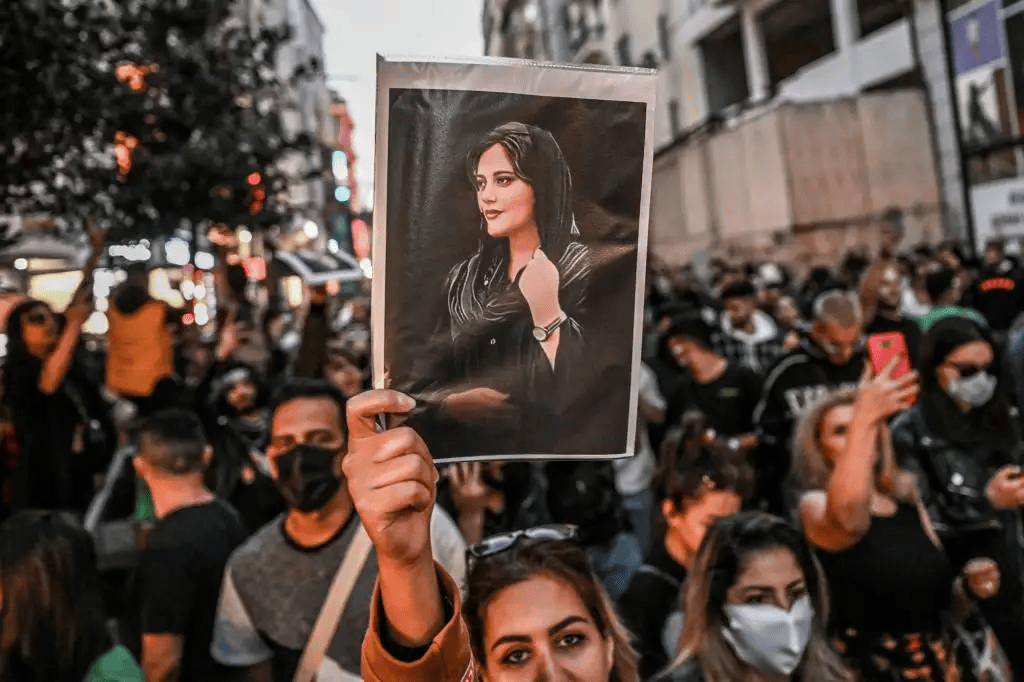
On September 16, 2022, Mahsa (Jina) Amini, a 22-year-old Iranian Kurdish woman, was arrested by the morality police in Tehran on the claim that she had not worn her hijab properly. She was taken to a police station, where, according to testimonies from other women, she was beaten severely until she collapsed. Mahsa was hospitalized, where she died two days later. The regime's version was that she died of heart failure, but the public knew the truth.
Her tragic death at the hands of the regime's security forces immediately became the spark that ignited one of the most turbulent waves of public rage in the history of the Islamic Republic, the first to break the wall of fear.
That protest gave birth to the slogan "Woman, Life, Freedom," which perhaps captured, more than anything else, the profound transformation Iranian society is undergoing, a shift from a conservative, patriarchal society to one in which women are breaking barriers and fighting for their right to live by their own choice.
At least 537 protesters lost their lives in that struggle, as the regime responded with brutal force and live fire. That protest forged a new, uneasy status quo between citizens and the regime. Iranian society entered a period of quiet transformation, one in which the collective consciousness shifted in ways that could not be undone.
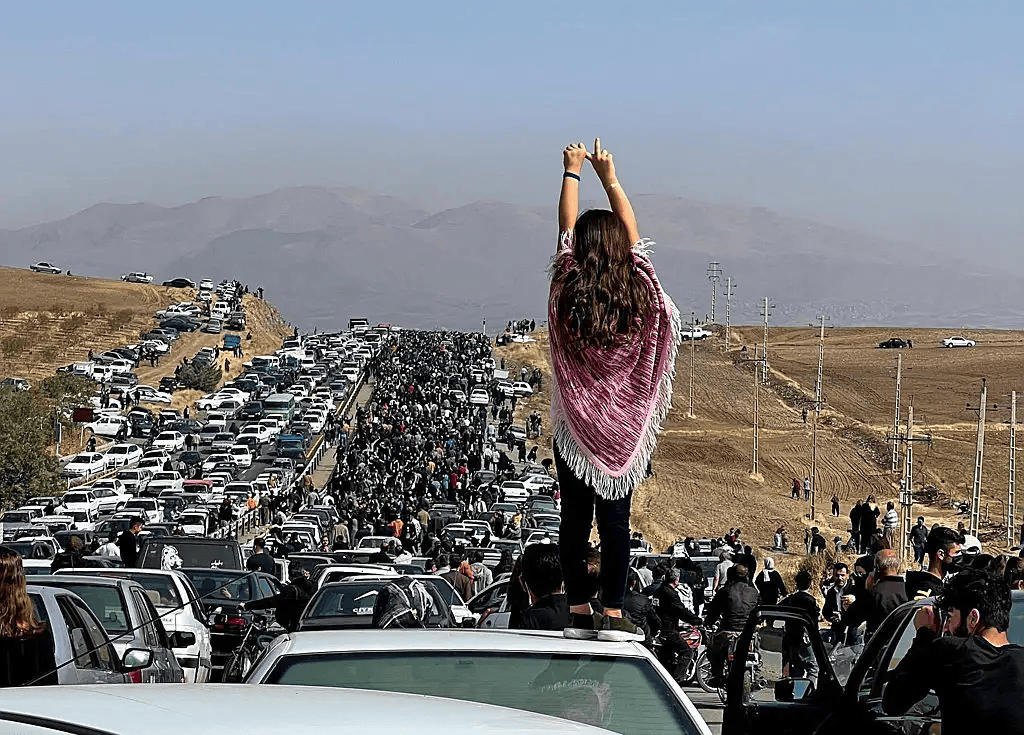
Another dramatic, horrific, and jarring turning point came in January of this year, when Iranians from across the country and from every walk of life erupted into an unprecedented wave of protests against the regime. These were the most powerful demonstrations yet, in which every barrier between the people and the machinery of the state completely collapsed.
The human cost of these events was almost unbearable. In fact, to this day no one knows the exact figures with certainty, but even the regime has been forced to grudgingly admit that the death toll may have crossed 30,000. To this day, this wave of protests has been followed by staggering numbers of arrests and executions unlike anything seen before, which have dramatically widened the river of blood now separating Iranian society from the regime.
But the greatest achievement of these dramatic moments isn't measured only in visible changes to public life. It lies, first and foremost, in the shattering of a psychological barrier, the sense of helplessness itself. For decades, the regime cultivated a sense of total helplessness among the public, the perception that the machinery of repression was all-powerful and that any resistance was doomed to fail from the start.
The moment millions stepped out to face live fire without fear shattered that myth for good. Even when people seemingly return to their routines, or are forced to bow before state violence, the demand for justice, for a life of free choice, and their disgust with the regime never leave them.
This is what produces the complex psychology of a society caught in between. On one hand, there is deep exhaustion, economic collapse, international isolation, "Big Brother"-style digital surveillance, and a heavy price paid in blood, all of it creating an immense psychological burden. But this exhaustion does not signal a return to the old obedience. Rather, it exists alongside a consciousness no longer willing to accept the establishment's legitimacy. The expectation of change has ceased to be a purely political matter and has become an inseparable part of the individual's identity, especially for a younger generation that doesn't speak the language of the 1979 revolution at all.
Looking ahead, the power structure of the regime itself is also facing a profound transformation. In the past, it was Ali Khamenei alone who authorized merciless violence against citizens to save the regime at any cost. Today, the leadership itself is undergoing structural and psychological change amid unprecedented erosion, with the incoming supreme leader still unseen by the public.
What is emerging, then, is a regime that has lost the moral trust of its own people and now survives solely on mass terror and bloodshed, an institution operating on borrowed time.
The calm currently hanging over Iran's streets isn't resignation. It's a society catching its breath and bracing for what comes next. It's the quiet of a society gathering its strength and preparing itself mentally. The embers are smoldering beneath the ashes. In cemeteries, many citizens still mourn the deaths of loved ones from the protests earlier this year, while inflation drives economic collapse, and other hardships weigh on the daily life of the average Iranian citizen.
But the knowledge that the current reality is temporary has become a psychological anchor for a society waiting for its next opportunity. Four years ago, it was Mahsa Amini's death that first triggered a head-on collision between an unbearable reality and a single spark. This dynamic is expected to return and ignite an unrestrained reaction at any moment, from a public on edge that has lost its trust and its fear.
Dana Sameah is an independent researcher, lecturer, and expert on Iranian society, focusing on protest movements, women, and Gen-Z dynamics in the Islamic Republic.