A new academic study has concluded that The New York Times' reporting on the war in the Gaza Strip since the Oct. 7 massacre has displayed a severe and persistent bias against Israel, obscuring the Hamas terrorist organization's responsibility for the continuing conflict and largely overlooking Israeli casualties.
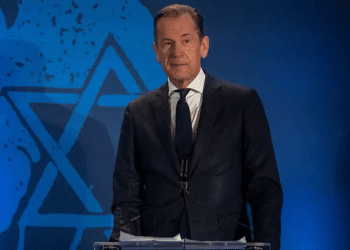
The study, conducted by Yale School of Management Professor Edieal Pinker and published in the academic journal Studies in Conflict & Terrorism, closely examined 1,559 articles published by the newspaper between Oct. 7, 2023, and June 7, 2024.
An extensive analysis of the research, published by the New York Post, found that the newspaper consistently assigned "near-exclusive agency and responsibility" to Israel while diminishing Hamas' role in sustaining the fighting and largely omitting the human toll paid by Israel, both among soldiers and civilians.
"The coverage describes Hamas's October 7 attack followed by Israeli military violence and mounting Palestinian casualties, while largely omitting Israeli casualties post-October 7, Hamas fighter casualties, and post-October 7 Palestinian violence," Pinker wrote in the study.

Palestinian suffering appears repeatedly, Israeli suffering largely gone
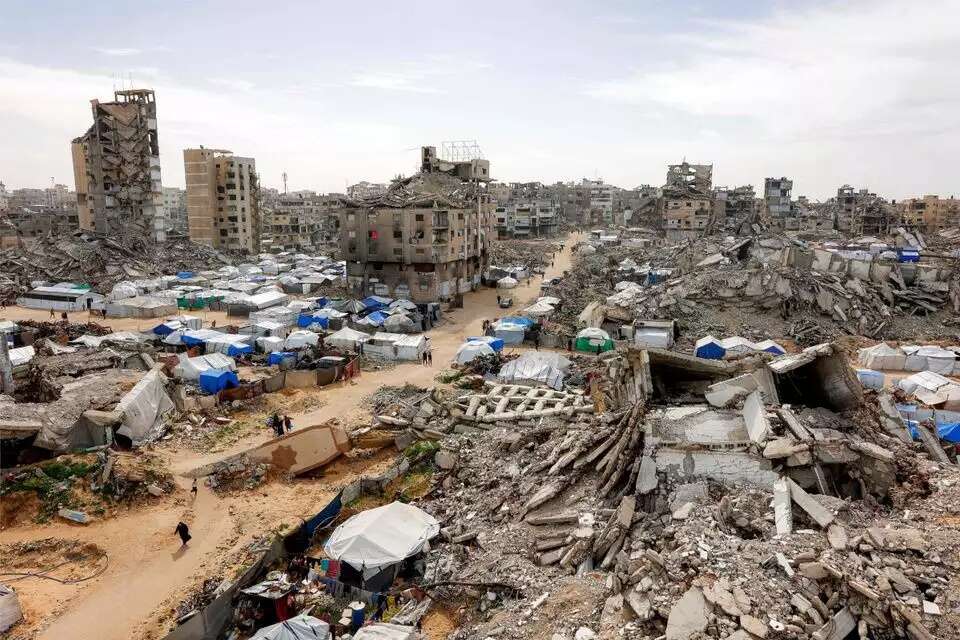
One of the study's most striking findings concerns the way the human dimension of the war was presented. According to Pinker, personal accounts of Palestinian suffering appeared in the newspaper on average two out of every three days.
Pinker argues that the Times' coverage produced a distorted narrative in which Israel appeared to be the "sole aggressor" in the war, while Palestinians were portrayed as "passive victims," with insufficient attention paid to continuing terrorist attacks, rocket fire or Hamas' use of civilians as human shields.
Comparable accounts of the suffering of Israeli civilians and soldiers, by contrast, were rarely given similar prominence in the newspaper. Pinker said the same pattern applied to terrorist attacks that took place during the study period in Judea and Samaria, where Israeli victims received little coverage in the influential US newspaper.
The New York Times has previously rejected allegations of bias, saying it has covered the war "with more rigor than virtually any other US news organization, reporting on the conflict from all angles."
The newspaper added that it remained open to good-faith disagreement but would not alter its coverage to reinforce entrenched positions. However, when the New York Post approached the Times for comment on the findings of the completed study, the newspaper did not respond.
Modern-day blood libels
The newly published study is only the latest controversy surrounding The New York Times' coverage of Israel. In May, in what Israeli officials described as one of the gravest modern-day blood libels against the State of Israel, the Times published an opinion column by journalist Nicholas Kristof alleging widespread sexual abuse of Palestinians by Israeli security personnel.
Kristof's column described what it said was a pattern of sexual violence involving soldiers, settlers, Shin Bet interrogators and prison guards, and cited reports alleging that sexual violence had become a "standard operating procedure" in the treatment of Palestinians. The column contained graphic and disturbing allegations, including claims that Palestinians had their genitals pulled or severely beaten, that men suffered injuries requiring the removal of testicles and that objects were used to sexually assault detainees.
Israel's Foreign Ministry responded by calling the article "one of the worst blood libels in modern media." Israeli officials said the column represented an extraordinary inversion of reality in which Israel, which suffered sexual violence perpetrated by Hamas terrorists during the Oct. 7 massacre, was itself cast as the perpetrator.
The ministry also charged that the article was part of a false and coordinated anti-Israel campaign aimed at damaging the country internationally, including in its dealings with the UN secretary-general. Prime Minister Benjamin Netanyahu and Foreign Minister Gideon Sa'ar subsequently instructed officials to initiate legal proceedings against the newspaper.
An earlier controversy erupted in July 2025, when a New York Times front-page report on the humanitarian situation in the Gaza Strip, headlined "Young, Old and Sick Starve to Death," featured a photograph of an emaciated 18-month-old boy in his mother's arms as an illustration of the hunger crisis in Gaza.
About a week after publication, The New York Times acknowledged that the child, Mohammed Zakaria al-Mutawaq, suffered from serious pre-existing medical conditions affecting his brain and muscle development. The New York Times did not remove the article, instead adding an editor's note with the additional medical information. By then, images of the child had already appeared in a number of other major media outlets, including CNN, The Guardian and the BBC, as well as the generally pro-Israel British tabloid the Daily Express.