Opposition comedian Hossein Akbari has a recurring character he likes to impersonate: Iranian government spokeswoman Fatemeh Mohajerani. With the help of a black hijab, thick-framed glasses and a squeaky voice, he effortlessly slips into character and "answers" questions purportedly put to him by journalists in the audience.
Recently, the questions directed at Akbari/Mohajerani have increasingly focused on the deteriorating economy and the severe hardship facing Iranians buckling under the strain. In one video he recently posted on Instagram, which was shared by Israeli Iran expert Dr. Tamar Eilam Gindin, Akbari offered some creative solutions for hungry Iranians.
"Instead of meat, eat chicken, and if there's no chicken, eat eggs," he said in a nasal voice, wearing a smug expression. "Instead of rice, eat barley, and instead of milk and yogurt, drink water. Very simple."
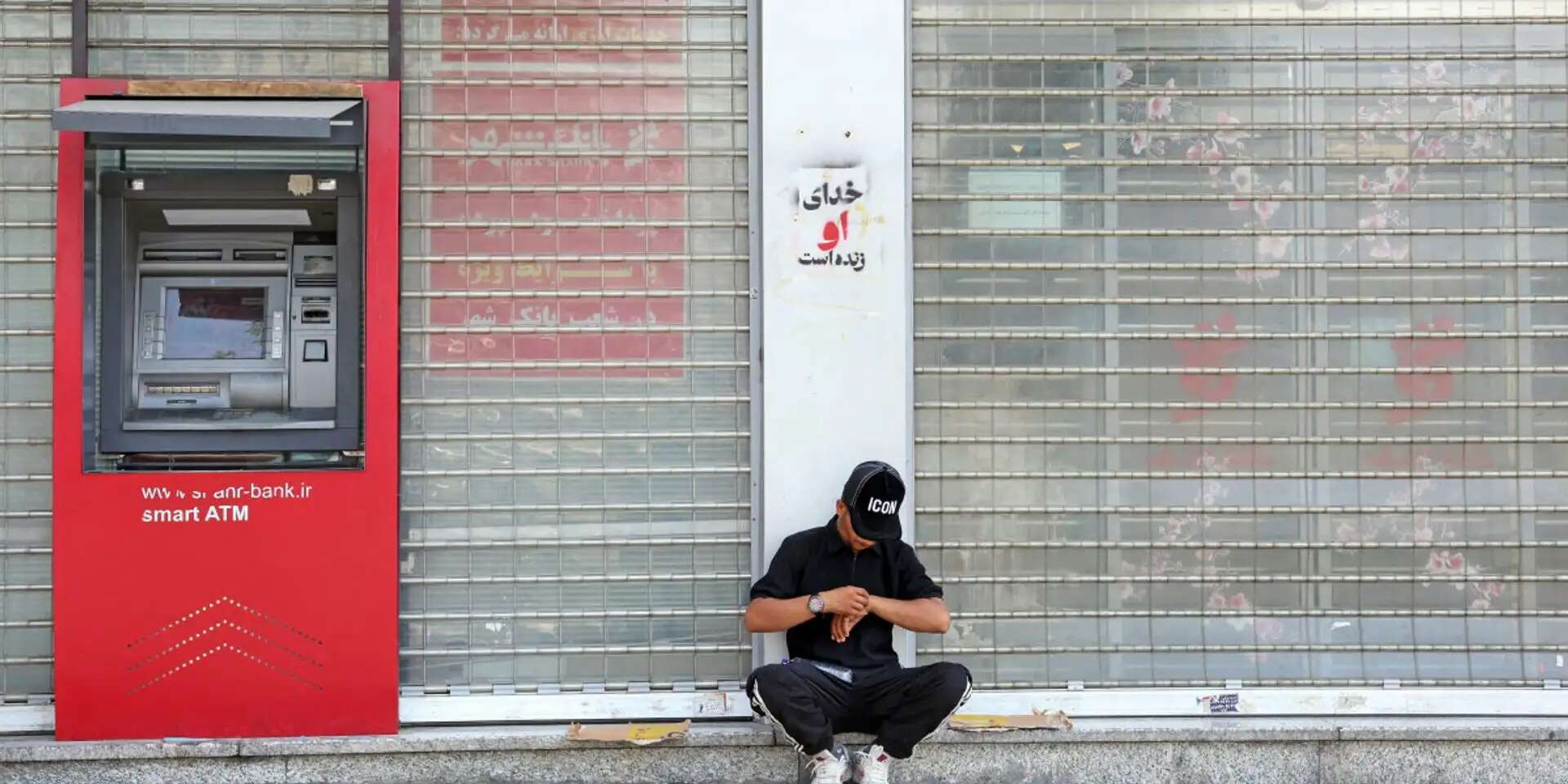
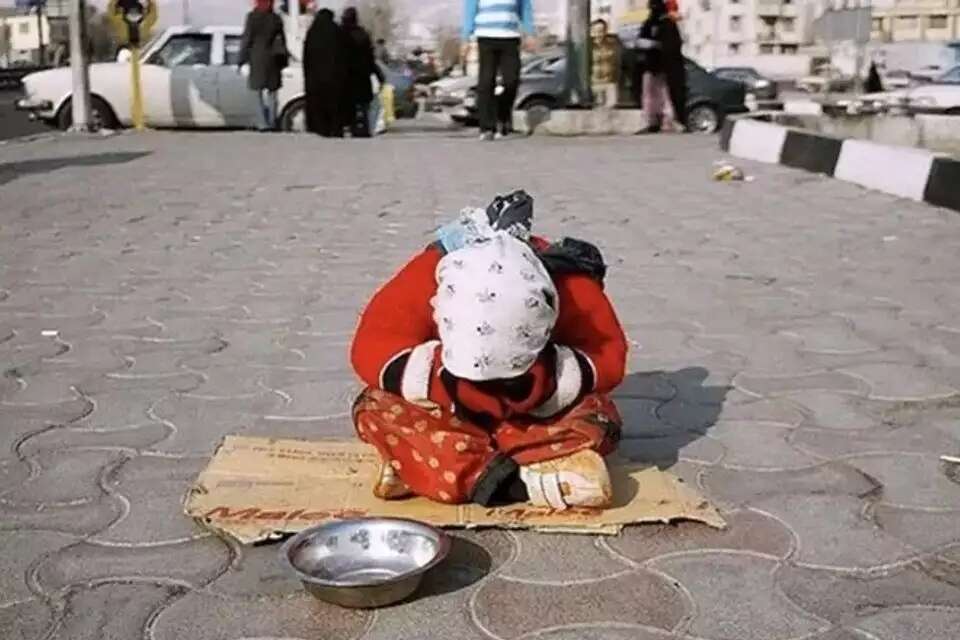
The Iranian opposition enjoys mocking the ayatollahs' regime, and Akbari's amusing video did indeed receive tens of thousands of likes. But the reality in Iran is anything but funny. The country's economy has been in free fall for some time as a result of mismanagement and international isolation, but in recent months it has plunged into an acute crisis caused by a combination of tighter sanctions, the US naval blockade and damage from the war with Israel and the United States. The collapse of the local currency, runaway inflation, soaring unemployment, a sharp economic contraction and severe shortages of basic goods, food and medicine have made life in Iran anything but a joke.
Changes in consumption habits
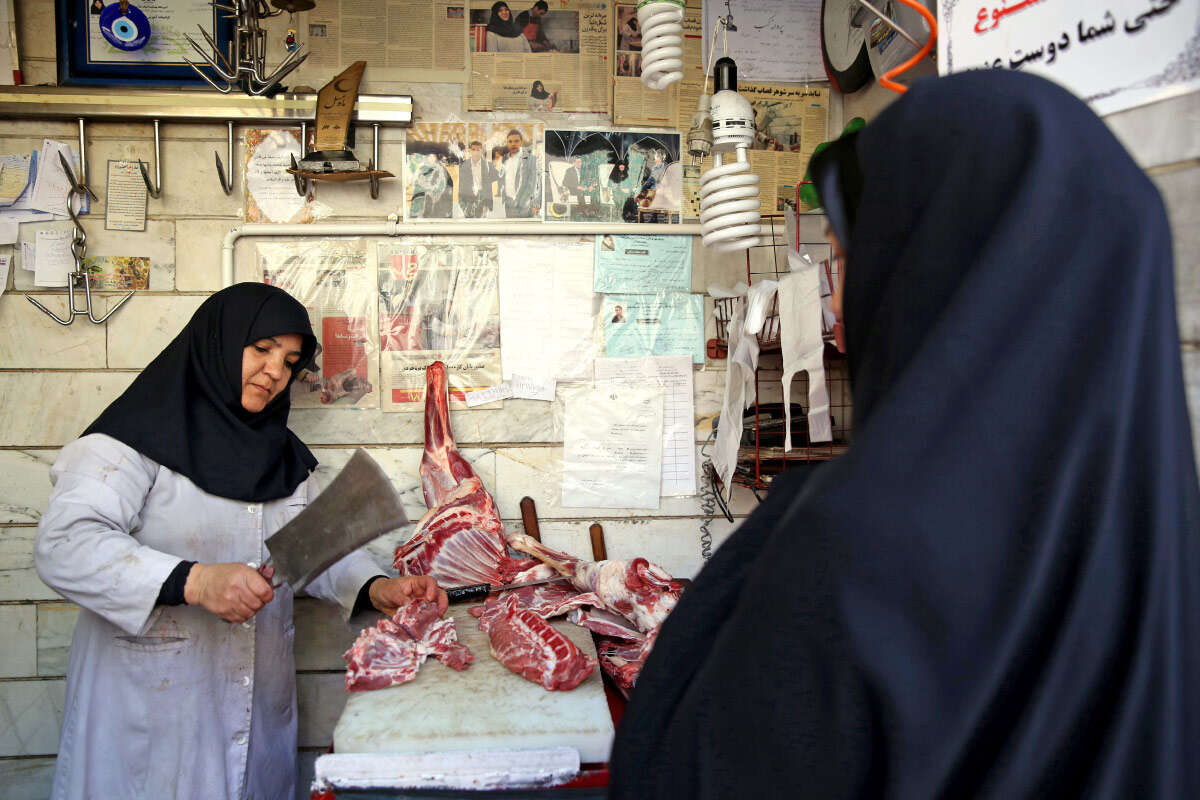
Akbari's decision to focus specifically on shortages of meat and milk was no coincidence. Prices for meat and dairy products in Iran have risen by more than 100% over the past year, while average per capita consumption of red meat has fallen to less than 500 grams (1.1 pounds) a month.
In one video leaked from inside Iran, a young man can be seen waving a thin slice of cold cuts and complaining that it cost him 79,000 rials. Per capita dairy consumption in Iran has fallen from about 100 kilograms (220 pounds) a year at the beginning of the previous decade to less than 40 kilograms (88 pounds) today.
On social media, Iranians complain that they have shifted to diets based almost entirely on carbohydrates or cheap, low-quality products. The government has introduced an emergency program of cash grants and electronic coupons to prevent mass hunger, but many stores refuse to accept the coupons because of delays in banks transferring the money. Medicine prices have also risen by hundreds of percent, forcing people to forgo treatment for chronic medical conditions, while hospitals report severe shortages of basic medical equipment and anesthetics.
Even the country's marriage rate has fallen dramatically, while the number of young women choosing to freeze their eggs and postpone having children has surged in the hope that conditions will improve in the future. According to figures published in international media, more than 1 million Iranians have lost their jobs because of factory closures, infrastructure destruction during the military campaign and the naval blockade.
Conditions have become so dire that even Iranian President Masoud Pezeshkian was forced to apologize to the public.
"We express our regret that these problems exist, because we are in the midst of an all-out war, economic, military and security," he said last week. "As the government, we are seeking with all our being to steer inflation, public problems, people's livelihoods, people's jobs, people's future, and people's lives towards dignity and pride."
Pezeshkian and the Iranian government still have a great deal of work ahead of them. This week, following a Trump-style buildup replete with grandiose declarations, US Treasury Secretary Scott Bessent announced an expansion of economic sanctions on Iran. From now on, the Americans are threatening to sever economic ties with any country that does business with the regime.
"Those who tie themselves to Tehran should expect to share the isolation of a dying regime," Bessent said. According to Bessent, his objective is to "cut off every economic lifeline keeping the tyrannical regime afloat until Tehran stands alone," in an effort to force the Iranians back to the negotiating table, reopen the Strait of Hormuz and abandon their insistence on retaining enriched uranium.
But, experts in Israel agree that the overall pressure will not necessarily force the Iranian regime to back down. It could even have the opposite effect. Iran's tightly controlled media and the regime's harsh enforcement against anyone who criticizes it make it extremely difficult to understand the true situation inside the country. Yet this week, unusually, the Iranian reformist newspaper Shargh, which remains part of the regime's media establishment, published an extensive article on what it described as a "repair economy" among Iran's middle class.
According to the report, soaring spare-parts prices have made repairs to cars and electrical appliances an expense that many families can no longer afford. It described Iranians continuing to live with a broken air conditioner in their car or with washing machines, vacuum cleaners and cooking appliances that no longer work, not because they would rather buy new ones, but because they cannot afford either repairs or replacements.
The owner of a repair shop told the newspaper that in the past, several appliances would already be waiting for repair by the morning.
"Today, most customers come in only to ask how much the repair will cost. They hear the price, say 'thank you' and leave," he said.
Dental clinic managers quoted by the semi-independent Iranian website Fararu said patients were postponing treatment or replacing fillings, crowns and implants with tooth extractions, which are cheaper.
"People in Iran simply don't have money anymore, and we're not talking about the poor. We're talking about the middle class, people who in principle are not opposed to the regime, but are actually the people on whom the regime rests," said A., an Iranian-born Israeli who follows developments in his native country as an analyst for the Israeli Telegram channel Iran News.
A. asked to remain anonymous out of concern for relatives who still live in Iran.
"In the past, Iran developed a phenomenon of 'wealthy poor.' These were people who didn't have much cash in their pockets but maintained a high standard of everyday life. They traveled, sat in cafés, went to the theater and so on. Today, that class is sliding toward the poverty line, meaning families that have no food in the refrigerator, and some that don't even have enough money to buy a refrigerator."
According to A., resourceful Iranians have found ways to cope with the economic distress.
"For example, there's a new trend that's gaining momentum," he said. "Movie lovers, and film is extremely popular in Iran, are giving up expensive cinema tickets and inviting friends to watch movies together at home. These aren't people who rebelled and went out to protest against the regime's tyranny, because their economic situation was good and they lived comfortable lives. This is a clear example of what is happening to the educated, urban middle class as it deteriorates. And when that happens, the regime begins to realize it has a problem."
A cry for help from the grave
Another way to gauge conditions inside tightly sealed Iran is through videos smuggled out of the country to opposition websites abroad, using Starlink terminals and other creative methods. In recent weeks, dozens of videos have appeared online depicting economic hardship in a country that only 15 years ago ranked third in the world in crude-oil exports.
"There's no gasoline, no diesel and no electricity, and they're saying that soon there won't be any gas either," an Iranian man says in one such video as he passes a long line of cars waiting for fuel in the Caspian Sea city of Amol.
یکی از محاطبان ایندیپندنت فارسی روز دوشنبه دوم شهریور ماه ویدیویی از صف طولانی بنزین در شهر آمل استان مازندران را برای ما ارسال کرده است.
او میگوید: «نه بنزینی هست، نه گازوئیلی و نه برقی هست و وعده بیگازی هم میدهند... هیچ چیز در ایران درست نیست و حال همه بد است.»
همزمان با… pic.twitter.com/gPSrWRbqu0
— independentpersian (@indypersian) August 24, 2026
In another video, an Iranian woman complains that "second-grade fruit has reached more than 300,000 tomans (about $1.60). They're selling second-grade fruit from pickup trucks for 200,000 tomans a kilogram (about $1.07), and at some of the trucks they won't even let you choose the fruit by hand. They sell it mixed together. What worker has the purchasing power for prices like these?"
Another video from Iran shows a supermarket with shelves that are almost entirely empty. In another, a baker says he threw away hundreds of kilograms of dough that spoiled because of frequent power outages. Another clip shows a grocery store owner complaining that no one is willing to buy cooking oil from him anymore because the price is prohibitive. The price of oil, he said, has risen 120%.
همه میگن به خاطر وضعیت اقتصادی کشور به زودی دیگه مواد غذایی کالاهای اساسی تموم میشه.
ولی ظاهرا این اتفاق همین الان افتاده...
رفتم سوپر مارکت که برای بچه های خرید کنم، دیدم بعضی از قفسه ها الان خالیه.
آخرش چی میشه؟ pic.twitter.com/MsP4xvr6Rp— Andreas (@AndreasGudi) August 24, 2026
Videos posted on social media last week also showed empty markets in Tehran and Karaj, with vendors complaining that no one was buying their fresh produce.
"We are running out of some of the foreign products like foreign shampoo and conditioner, toothpaste," an Iranian shopkeeper said in a recent CNN report. "We have limited stock and it's now too expensive for most people. I see a lot of videos that Iranian citizens smuggle out to opposition channels," said Dr. Yossi Mansharof, an Iran researcher at the Misgav Institute for National Security and Zionist Strategy. "What you see in these videos is growing pressure on people's daily lives, manifested in the cost of living, and many complaints from citizens saying, 'The money that used to be enough for me to buy this much now buys far less.'"
As reflected in the videos described above, Iran's economic distress is not confined to food and basic goods. There are also fuel and electricity shortages and even water disruptions. According to the state-owned Water Resources Management Company, roughly 30% of Iran's reservoir capacity is empty. The company says the continuing drought is making it difficult to supply water to heavily populated provinces, including Tehran, Razavi Khorasan, Qom and Hamadan. The Iranian regime is failing to provide its citizens with even the most basic services.
"People are complaining about unbearable conditions," Mansharof continued. "Temperatures reached 50 degrees Celsius (122 degrees Fahrenheit) in southern Iran this week, and people are uploading videos of themselves frying eggs using the heat of the sun while power outages continue in the background. The caption on one video was, 'Life is unbearable.' You see the meat refrigerators in supermarkets standing empty, vendors losing money and small-business owners posting videos saying they are considering not opening their stores in the morning."
The videos circulating online must, of course, be treated with caution. In the age of AI and fake news, it is difficult to know which are genuine and whether they document a widespread phenomenon or have been manipulated for propaganda purposes against the regime. Recently, however, official figures coming from regime spokespeople themselves have also supported the contention that Iran is in a deep economic crisis.
For example, Central Bank of Iran Governor Abdolnaser Hemmati recently acknowledged that Iranian oil exports had ground almost to a halt, that oil and tax revenues had been hit, and that $12 billion that was supposed to have been made available through arrangements with Qatar had still not been released. Iraq, which had promised to address its debts to Iran, is also delaying payments because its revenues have slowed, he said. "Anyone who asks me for money, I tell them: Sorry, we don't have any."
Mohammad Mohammadi, head of the provincial water company in Ilam, has also said the antiquated distribution network is unable to cope with population growth and summer demand. To address the problem, the company reduces water flow at night so reservoirs can refill for the following day.
Mehdi Mahyaei, the deputy governor for development affairs in Golestan province, announced this week that gas outages lasting 60 to 90 days were expected during the winter.
"The admission of the severity of the economic situation is coming from the very highest levels," A. of Iran News said. "Qalibaf is dealing with it, Pezeshkian talks about it almost every day, and the issue has reached the pro-regime press. After the leadership began considering raising fuel prices, one pro-regime newspaper published an opinion piece saying there is an appropriate time for every measure and every action, and that if the government had any sense, it would not even consider something like that when people's livelihoods are in such terrible shape.
"You can see that suddenly, perhaps because of the economic pressure, Iranian commentators are talking about concessions in negotiations with the US. Suddenly, one of Khomeini's grandsons is speaking at his mausoleum and saying that real strength means peace. Everything there is in tremendous turmoil."
The price of sanctions
Economic pressure on Iran is nothing new. Beginning in 2006, the UN, followed by the US and European Union, began imposing sanctions on Iran and squeezing its economy in response to advances in its military nuclear program.
After sanctions were eased following the nuclear agreement during the Obama administration, they reached a new peak in 2018 when Donald Trump withdrew the United States from the agreement and launched his "maximum pressure" campaign. Iran's economy suffered severe blows, but it was strong enough to survive and allow the regime to continue developing its nuclear program.
According to World Bank data, measured in purchasing power parity and constant prices, per capita GDP actually improved after sanctions were tightened, and in 2025 it was almost 10% higher than in 2018, when Trump began his maximum-pressure campaign. Sanctions slowed Iranian growth, damaged investment and aggravated inflation, but Iranian experts have argued that an economy can limp along for a very long time without collapsing, particularly when the state can redistribute income to poorer segments of society and when the public places a high value on national independence.
"There is a debate in Iran about whether sanctions are responsible for 40% or 60% of the current economic crisis, but there is no question that they carry considerable weight," said Dr. Raz Zimmt, director of the Iran and Shiite Axis Program at Israel's Institute for National Security Studies.
"When a country has been under sanctions for so long, obviously it has an effect. To that I would add structural problems in the Iranian economy: mismanagement, decisions driven by political interests, corruption and excessive involvement by the Islamic Revolutionary Guard Corps in the economy."
What dramatically intensified the economic pressure on Iran, of course, was the US naval blockade declared in April this year following Operation Roaring Lion and the failure of negotiations with Iran. Before the blockade, Iran was exporting more than 2 million barrels of oil a day. By May, the figure had fallen to less than 100,000. Now, according to a report by the Washington-based Foundation for Defense of Democracies, every day the blockade continues costs Iran $435 million in lost oil revenue, the country's main source of income.
"To that, of course, you have to add the damage caused by the war," Zimmt said. "Pezeshkian himself provided a figure of $270 billion in war-related losses. You also have to remember that during the wave of protests in January, the regime shut down the internet for weeks. That had a cumulative effect on a great many small businesses that were simply cut off from the internet. All these things together are having a dramatic effect on the economy."
That effect is reflected in the raw numbers. Immediately after the start of the US blockade, Iranian inflation began to surge, rising from an annual rate of 54% to more than 70% today. Over the past year, the rial's exchange rate against the dollar has roughly doubled, the price of a basic food basket has more than doubled, fertilizer prices have risen 300% and pesticide prices 150%, placing enormous pressure on Iranian agriculture.
According to Iranian economist and former minister Massoud Nili, almost 16 million people have joined the population living below Iran's poverty line over the past seven years, an unprecedented figure.
"As I see it, the main problem is inflation, because ultimately that's what affects most of the public," Zimmt said. "With all due respect to the unemployment figures, the rial-dollar crisis, the lack of investment in critical infrastructure and so on, ultimately what bothers the average citizen most in everyday life is that until now he paid X for rice, and now he's paying three times X."
"Look at what has happened to the Iranian citizen recently," Mansharof added. "He's living through trauma that began with the regime's violent response to the January protests and continued with a war in which bombs fell in the heart of Tehran. Add the economic crisis and you understand the distress Iran's citizens are living through."
Backed into a corner
The dramatic erosion of Iranian purchasing power and the continuing trauma have also brought groups that were previously quiet into open protest. Just this week, Social Security and industrial-sector retirees held coordinated demonstrations in several Iranian cities, chanting: "Our table is empty!"
The leaders of the Islamist state may not currently fear losing their grip on power because of a few pensioners carrying signs in the street, but the Iranian government, which is responsible for citizens' everyday lives, is certainly worried.
"There are two issues the Iranian government is dealing with right now," Zimmt said. "The first is how to update the vouchers it provides to the public to help people buy basic goods. There is currently a dispute between the government and parliament over whether these subsidies should be increased for everyone or only for the weaker sectors. The second issue is fuel rationing."

Fuel quotas, for example, have been reduced, and a severe shortage of gasoline and diesel has recently been felt, particularly in Iran's northern provinces.
"All these things have social consequences," Zimmt said. "Everyone remembers what happened in November 2019, when fuel prices went up and riots erupted."
The government's intense focus on the crisis stands in stark contrast to the leadership's continued refusal, under new Supreme Leader Mojtaba Khamenei, to make concessions in negotiations that could ease external economic pressure. Iranian Parliament Speaker Mohammad Bagher Qalibaf recently warned: "No matter how much military power we have, if the people are hungry, and if there is no flow of capital and no economic growth, we will not be able to endure."
Pezeshkian has also called for an end to the war, although he did not explicitly link the call to economic conditions.
"There is a profound failure in the management of the economy, and that is what is driving President Pezeshkian, who is an elected politician and therefore understands the public's distress, to push for a return to the negotiating table and seek an agreement," Mansharof said. "Qalibaf talks extensively about the economic gains Iran would reap from an agreement. The government is under enormous pressure to obtain money that would allow it to get its head above water."
But the government's economic interests do not always correspond with the political leadership's position.
"The more pressure Iran comes under, the more the regime actually projects pressure to continue the war," Mansharof said. "They understand they're in trouble and that they have two levers: keeping the Strait of Hormuz closed and exploiting the vulnerability of the Gulf states. The more cornered the regime feels, the more it feels compelled to strengthen its deterrence, and it steps up its threats on both fronts. At the same time, civilian repression is being intensified in order to reduce the possibility of renewed protests."
"On the one hand, you can see senior officials at the top of the Iranian establishment today, people who were always more pragmatic in any case, genuinely pointing to the need to return to negotiations and the importance of resolving the economic crisis," Zimmt said. "But ultimately, Iranian policy isn't becoming more moderate. It's becoming less moderate.
"Pezeshkian and Qalibaf apparently haven't managed to convince Mojtaba that Iran needs to back away from its demands. The current Iranian leadership, because it is more extreme and because it apparently sees little prospect of reaching a long-term agreement with the Americans, has little motivation to agree to more significant concessions than those it has already accepted.

"There is a theory that if, in another month or two, the Iranians conclude they can no longer withstand the economic pressure, they may choose to overturn the table and start attacking oil infrastructure in Saudi Arabia, because from their perspective that would be the only way out of the deadlock."
According to Zimmt, the economic crisis is also no guarantee that the current regime will be destabilized. "The economic crisis in Iran is causing a very significant erosion of the middle class, which is increasingly falling below the poverty line," he explained.
"When a struggling teacher has to start wondering where he's going to get rice to bring home, he's preoccupied with survival and has less time and energy to go out and demonstrate. And that's without even taking into account the question of how much desire the Iranian people have left to take to the streets after two wars and the trauma of the brutal suppression of the January unrest."
At the Mossad, at least during David Barnea's tenure as director, there was strong faith in economic pressure as a lever for driving protests and bringing down the regime.
"At the Mossad, they also believed the Kurds would bring down the regime," Zimmt said. "The idea that a prolonged economic crisis generates public irritation and dissatisfaction is obviously correct. But an angry citizen doesn't necessarily go out into the street. From there to bringing down a regime, the path is far from straightforward."
"There is a consensus that if the Iranian regime feels it is about to fall, it will go to war, even a bloody one, before it agrees to give up, in the spirit of Samson's biblical cry, 'Let me die with the Philistines,'" said A. of Iran News, who grew up in the country and is intimately familiar with the mentality of its leaders.
"We, in Israel, need to be prepared for that possibility. At any moment, they could launch missiles at us."