Judea and Samaria.
Israel's political echelon devoted considerable effort this week to trying to determine who told Israel Hayom about the IDF warning published here last Saturday that Judea and Samaria was on the verge of a violent eruption amid a sharp rise in nationalist crime and the failure to deal with it.
The intense focus on the publication stood in inverse proportion to the woefully inadequate attention paid to the reason for it: nationalist crime. Instead of doing what was required and tackling the problem head-on in an effort to prevent the very violent eruption the IDF was warning about, the country's leaders rolled their eyes and treated war almost as a foregone conclusion.
Their efforts were clumsy. First, they falsely claimed that the IDF had issued no such warning at all and that the report had been politically motivated, the work of officers promoting agendas at odds with those of the government. As fate, and reality, would have it, Prime Minister Benjamin Netanyahu and Defense Minister Israel Katz visited Central Command on Sunday and heard the same message again from the IDF chief of staff, the head of Central Command and other officers. To the best of our knowledge, the warnings are also backed by letters sent to Netanyahu and Katz, as well as assessments written by senior Military Intelligence officials.
When the attempt to attribute political motives to the IDF failed, other efforts at spin and misdirection followed. One argument was that nationalist crime would not trigger the violent outbreak, but rather the succession struggle after the death of Palestinian Authority President Mahmoud Abbas. Another was that the Palestinians' dire economic situation in Judea and Samaria would be the catalyst.
Those arguments did not hold water either. Not because there is no substance to them. People have been discussing what happens after the death of 90-year-old Abbas for two decades, while the economic situation in the West Bank has hardly troubled the government until now, despite a host of warnings and proposed solutions from experts in Israel and abroad. They did not hold water because that was not what the IDF had said.
With their options running out, the country's leaders shifted the discussion elsewhere: away from the problem and toward its consequences. Almost miraculously, the term "turning the guns" returned to the public discourse, referring to a scenario in which weapons supplied, most of them with Israeli approval, to the Palestinian Authority are turned against the IDF. The chief of staff and other officers were asked to come up with a solution. They requested, and were given, several weeks to formulate a comprehensive plan.
It is good that the prime minister and defense minister are concerned about the possibility of a violent eruption whose consequences could be severe. It is good that they are demanding that the IDF prepare in advance so that Israel is not caught with its pants down, as it was on Oct. 7, 2023. That is a worthwhile lesson for those responsible for that disaster, who failed to fulfill their responsibilities then, continue to evade them to this day and allowed Hamas to grow to monstrous proportions on the argument that it was good for Israel.
Precisely because Netanyahu and Katz are so eager to project responsibility, "Look, we ordered preparations," it is astonishing how they flinch when confronted with the problem itself.
It is worth returning to the IDF's original warning, the one that sparked the entire debate. Nationalist crime, the General Staff concluded, constitutes a "major inflammatory factor," and "it is evident that the illegal actions taking place in Palestinian villages are rousing the (Palestinian) public from its apathy and creating fertile ground for incitement against Israelis, against the security forces and against the State of Israel, and could lead to a gradual escalation with far-reaching consequences for Israel's security situation."
The IDF also warned that unless immediate, coordinated action was taken by multiple agencies to bring the phenomenon under control, there was "serious concern about an imminent outbreak." Its representatives added that alongside the urgent need for more effective and determined interagency action, "one cannot ignore the deafening silence of elected officials, or worse, the clear encouragement for entering Areas A and B," the parts of the West Bank under varying degrees of Palestinian Authority control, "which is what creates friction between the populations."
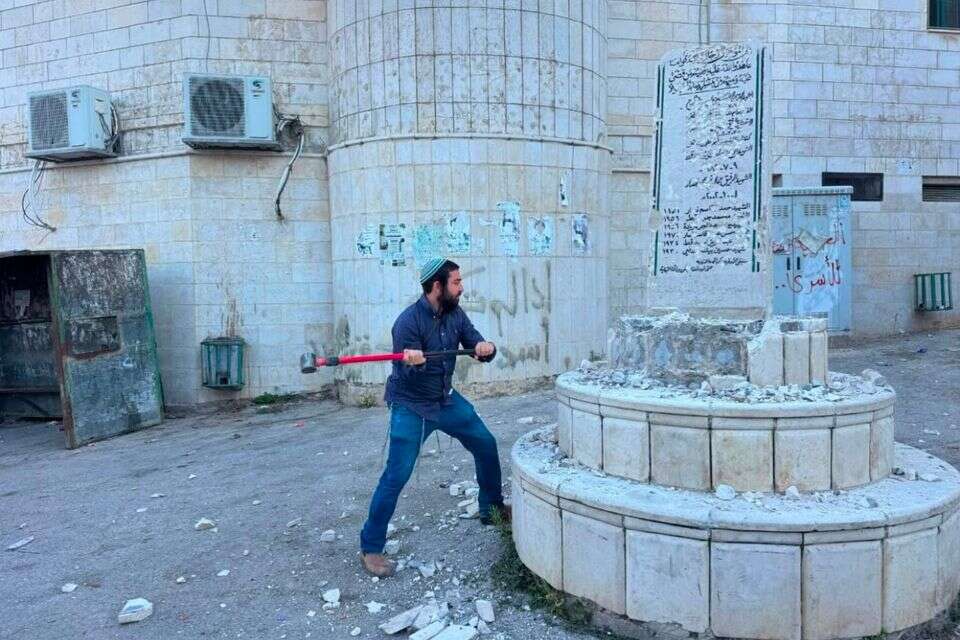
Politicians needed exactly two days to prove the IDF right. On Tuesday, MK Zvi Sukkot went to the Palestinian village of Madama, south of Nablus, to film a video of himself smashing a monument erected in memory of perpetrators of terrorist attacks. At first glance, there was something almost comical about the hapless Knesset member, armed with a small hammer, failing even to put a scratch on the monument. But when the camera pulled back and IDF soldiers could be seen in the background, the scale of the incident became clear. The damage Sukkot failed to inflict on the monument, he inflicted on the State of Israel.
The IDF quickly distanced itself from the incident and, in an extraordinary statement, accused Sukkot of deceptive and manipulative conduct. It emerged that several weeks earlier, he had requested permission for a "monuments tour" and had been refused on the grounds that troops would be needed to escort him and that forces were already stretched to the limit, particularly because of nationalist crime in the village of Qusra. Sukkot threatened to go on his own. The IDF feared provocations that could trigger a violent Palestinian response in the village, and it was agreed that the tour would be postponed and carried out in coordination with the military.
This week, it went ahead. The troops, in this case an Artillery Corps battalion deployed to the sector, had no idea they were about to become props in a publicity stunt. Once they realized what was happening, they quickly brought the show to an end and removed Sukkot and those accompanying him from the village.
Sukkot is a well-known provocateur. On the eve of Oct. 7, he erected a sukkah in the Palestinian town of Huwara, then a hotspot for terrorist attacks. Later, at the height of the Force 100 affair, involving soldiers suspected of abusing a Palestinian detainee, he broke into the Sde Teiman military base. In each case, the law and the soldiers appeared to concern him less than the provocation.
The IDF was right this week when it said such actions divert forces from other essential missions and put soldiers at unnecessary risk. Any hope that Sukkot, or someone above him, would do something about it was once again disappointed. Netanyahu belatedly issued a brief, generic statement in which he avoided mentioning Sukkot by name. Finance Minister Bezalel Smotrich, head of Sukkot's Religious Zionist Party, rushed to blame the Left. Katz remained silent.
The ways of the universe are wondrous. At the beginning of the week, the defense minister issued one of his characteristically long and cumbersome statements explaining why his attacks on Turkish President Recep Tayyip Erdogan were justified. Suddenly, faced with a bizarre Knesset member capable of causing immense damage, he loses his nerve.
And the damage is indeed immense, and it keeps mounting. Once again, Israel is being accused around the world of provocations. Some are even accusing it of deliberately destroying memorials, without knowing or understanding that this was a monument honoring terrorists. Israeli public diplomacy, as usual, is failing to provide balance or proper perspective. But then, what can it really say when the offender is an elected official who deliberately went looking for a confrontation in the heart of a Palestinian village?
That criticism can be dismissed with the familiar claim that it is antisemitism or anti-Israel hostility. That no matter what Israel does, the world will hate and criticize it. That what matters is not what the Gentiles say but what the Jews do, to borrow David Ben-Gurion's famous formulation.
Well, that is not entirely accurate. The world is in an uproar, including Israel's closest friends in the US. Including people in the administration. Including calls for action. There is hardly a meeting or conversation in which nationalist crime does not come up, accompanied by a request, or demand, that Israel "do something," precisely what the IDF has been asking, or demanding, as well.
Judea and Samaria II.
The IDF has been examining the possibility of Palestinian security forces "turning their guns" on Israel for many years. The first, and effectively the only, time this happened in an organized fashion on orders from above was during the 1996 Western Wall Tunnel riots. Yasser Arafat ordered the Palestinian public and security forces into the streets to confront the IDF. The fighting ended with 17 Israeli soldiers and about 100 Palestinians dead, along with hundreds wounded.
The prime minister at the time was Benjamin Netanyahu. He was new to the job, and it was his first major, formative security crisis. Although the Palestinians acted in an organized fashion, under clear orders and with the declared intention that this would be their war of independence, Netanyahu did not move to crush the Palestinian Authority. He did the opposite: He drew closer to it, embraced Arafat and cultivated a relationship with him, and later transferred most of Hebron to Palestinian control.
During the Second Intifada in 2000, Arafat ordered senior Hamas and Palestinian Islamic Jihad operatives released from prison, and they went on to lead a major wave of terrorism, while he took care to avoid formally involving the Palestinian Authority itself. There were, admittedly, Palestinian police officers and security personnel who participated in terrorist attacks, openly or behind the scenes, including several people close to Arafat, foremost among them Marwan Barghouti. But the Palestinian Authority itself deliberately remained outside the campaign because Arafat hoped to ride the wave of terrorism all the way to a Palestinian state.
Since the Second Intifada ended roughly two decades ago, the Palestinian Authority has cooperated with Israel in fighting terrorism.
This is not done out of any love for Israel. Ramallah fears Hamas and similar groups even more than Jerusalem does. Nor is the cooperation complete. The Palestinians often operate at half speed, whether because of a lack of motivation or a lack of capability. Even so, what they do is better than nothing. It both saves the IDF troops and casualties and serves Israel's interest in distinguishing terrorist groups from more moderate elements and giving priority to the latter.
Incidentally, it was successive Israeli governments that determined this was in Israel's interest, including the current government, which instructed the IDF to preserve its cooperation with the Palestinian security forces, including at a meeting held at the beginning of this week.
Yet that same government is pursuing a double policy, or really a triple one. With one hand, it works with Abbas' Palestinian Authority and makes sure to keep it alive so that Israel does not have to govern 3 million Palestinians itself. With a second hand, until Oct. 7, it worked to weaken that same Palestinian Authority while strengthening Hamas in Gaza, which it regarded as an asset, a formulation associated with Smotrich. And with a third hand, it is now providing a tailwind for nationalist crime, knowing that it could ignite the territory and lead to a broad confrontation, including with the same Palestinian Authority and the same security forces with which Israel insists on maintaining cooperation.
Confused? So is the IDF. That is why more and more voices in the General Staff are expressing concern that someone is trying to drag Israel deliberately into a war. Until now, the fear was that this would happen in Gaza. The main concern has now shifted to Judea and Samaria. All that is missing is the match that sets the whole thing alight, and for that there is Sukkot, and many Sukkots roaming the territory creating mayhem from which the great conflagration could erupt and lead to a war of Gog and Magog.
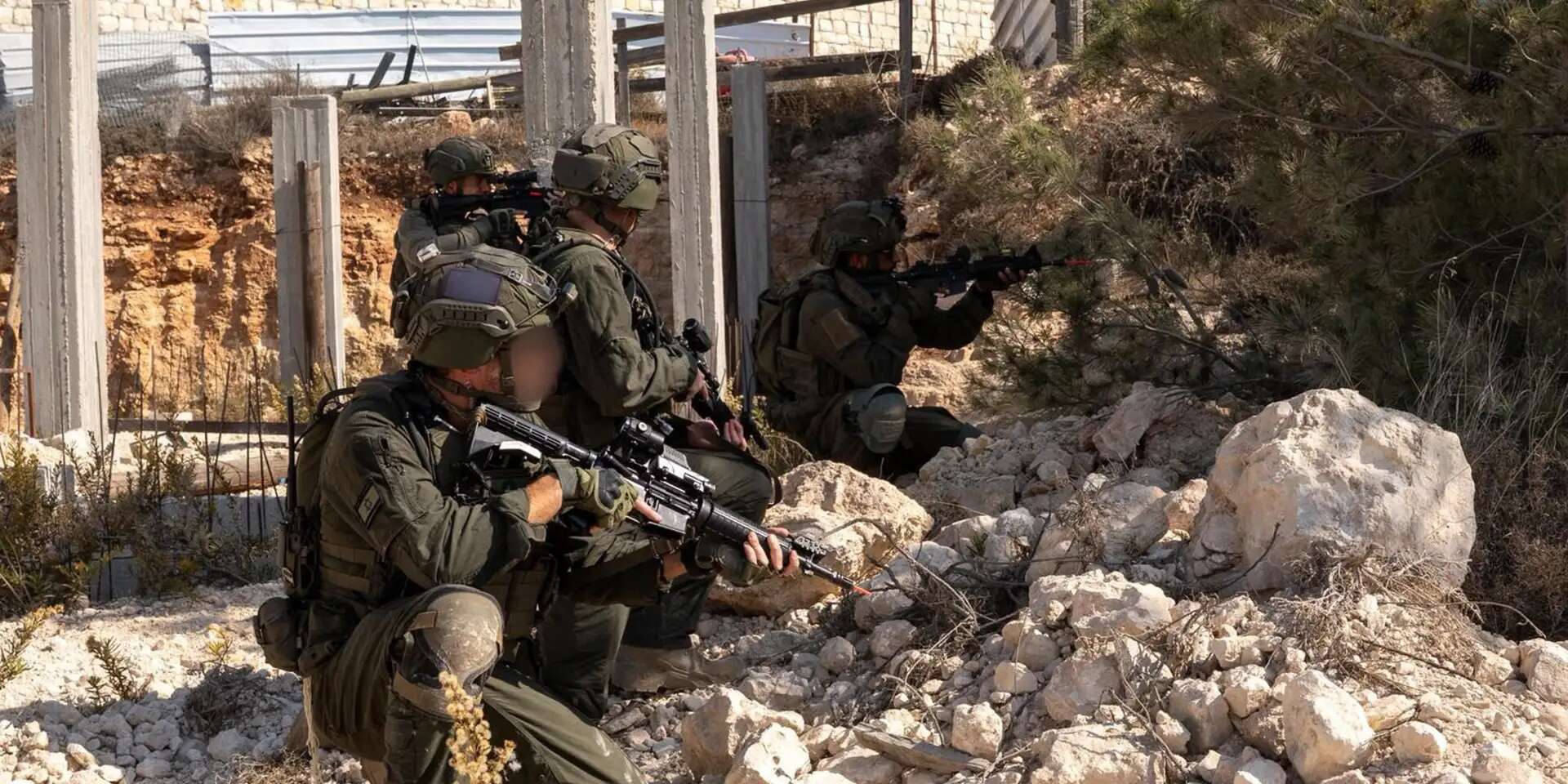
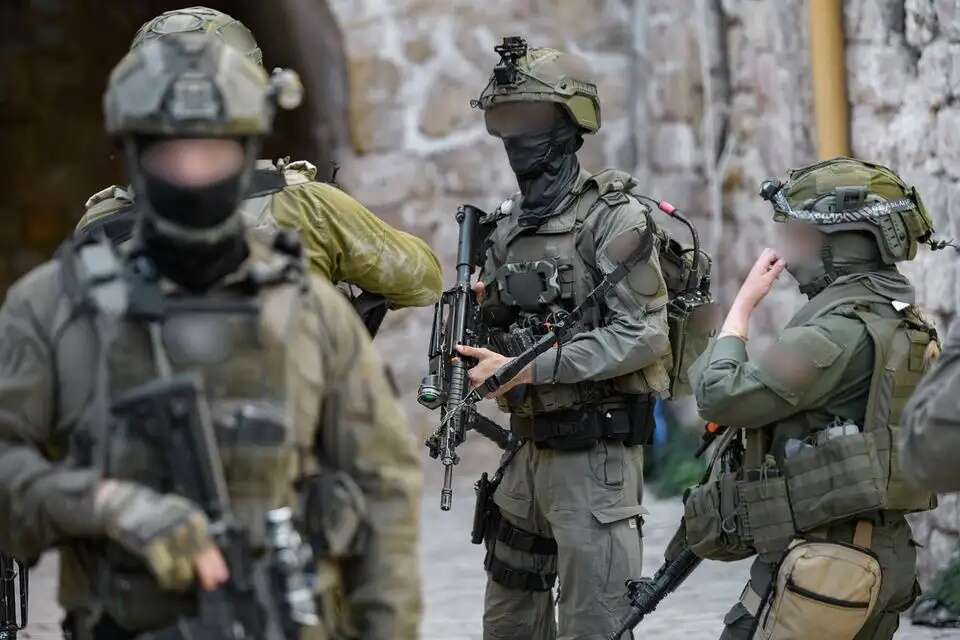
In the absence of backing from the political echelon, whose silence has become its policy, the IDF is acting alone. There are already 26 battalions deployed in Judea and Samaria, more than in any other sector, including beyond Israel's borders in Gaza, Lebanon and Syria. That is nowhere near enough to confront the threat as Israel enters the month of the Jewish holidays, a period prone to violence, as well as an election season prone to provocations. The IDF will devote the coming weeks to preparing for a broad campaign, as it has been instructed to do. But its senior commanders cannot shake the feeling that the people responsible for them in the government are not merely failing to extinguish the threatening fire, but are actually fanning the flames.
Three points in closing.
First, there is the claim that anyone who criticized Sukkot supports monuments to terrorists. That is utter nonsense, of course, a pathetic and offensive spin intended to shift responsibility away from those whose actions endanger the country's security. Those monuments should be demolished. But the body that should demolish them is the IDF, as it does in many cases, including recently.
Second, there is the manpower shortage. A broad war in Judea and Samaria would require an enormous number of troops because of the close proximity and constant friction between Jews and Palestinians and on both sides of the Green Line, Israel's pre-1967 boundary. The entire reserve army would be mobilized again, and forces, particularly active-duty units, would have to be diverted from other combat zones. A government demanding that the IDF prepare for such a scenario should simultaneously work to close other fronts and, above all, increase the number of soldiers available to the military, rather than exempting tens of thousands from service to meet coalition needs.
Third, there is the matter of personal example. When a Knesset member takes the law into his own hands, the public does the same. First in Judea and Samaria, then everywhere. That is the prelude not only to nationalist crime but to wholesale lawlessness. Ironically, in this case the man in question is the chairman of the Knesset Education, Culture and Sports Committee. But Sukkot is not alone. Anyone who calls on the public to disregard the law and court rulings is leading the country toward anarchy, which endangers the state's very existence more than any external enemy.
Troy
This week, Netanyahu shared an AI-generated video on social media showing former IDF Chief of Staff Gadi Eisenkot and former Defense Minister Avigdor Liberman riding atop a Trojan horse, with Ra'am party leader Mansour Abbas and former IDF deputy chief and Democratic Party leader Yair Golan hiding inside it. The message was clear: Elect the two men you can see, and you will get the two hiding inside, just as the Greeks did on their way to victory in the Trojan War.
Netanyahu is, of course, entitled to warn against what he regards as a danger, although it is worth asking why Netanyahu himself conducted a long courtship, involving numerous overtures, with that same Abbas. It is surprising, however, that he chose the Trojan horse of all images after it emerged that Qatar had penetrated his office through his advisers and influenced the messaging coming from inside it. The same Qatar that, at the same time, financed Hamas and enabled the Oct. 7 attack, and also funded the spread of hatred and defamation of Israel around the world. And that is no legend fit for mythology or an election campaign. That was an actual, real Trojan horse.