A new deal
Over the past year, the Americans have talked with almost every lowlife in the Middle East. The Iranians are like the don of the crime family. Hamas is his debt collector, way down at the end of the chain, on some street in New Jersey.
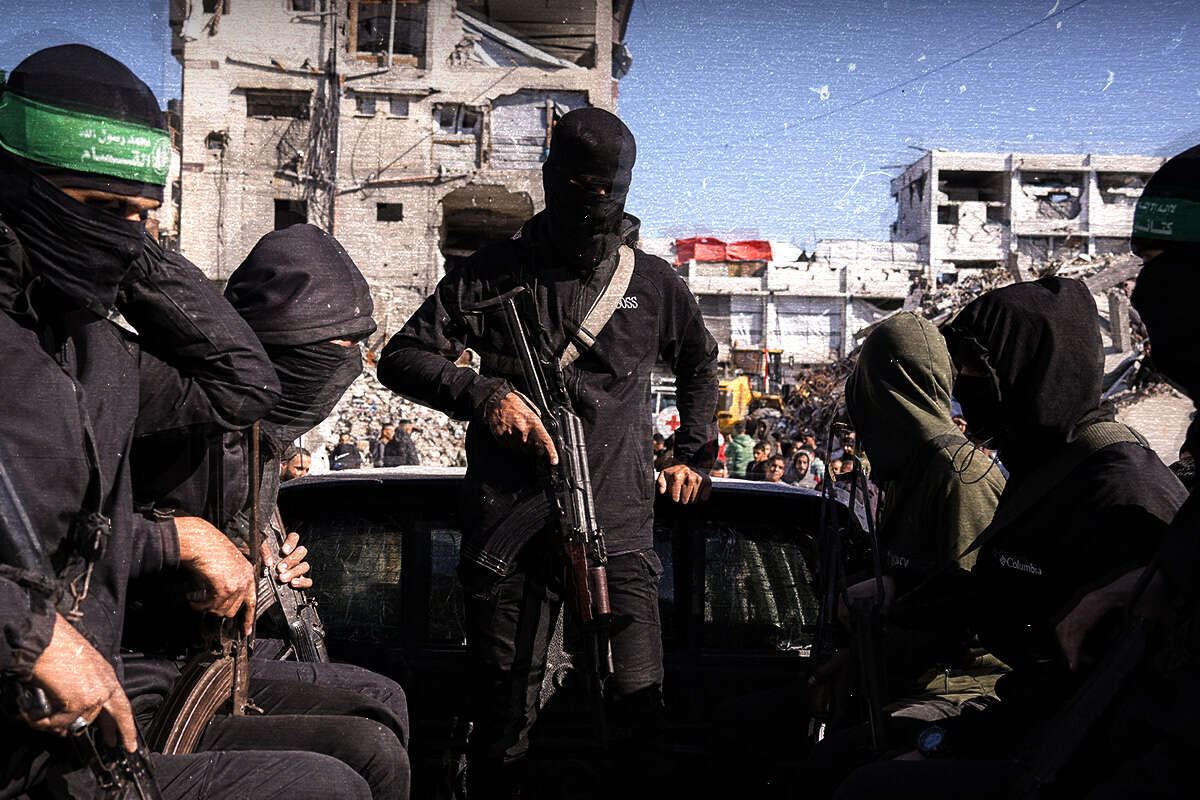
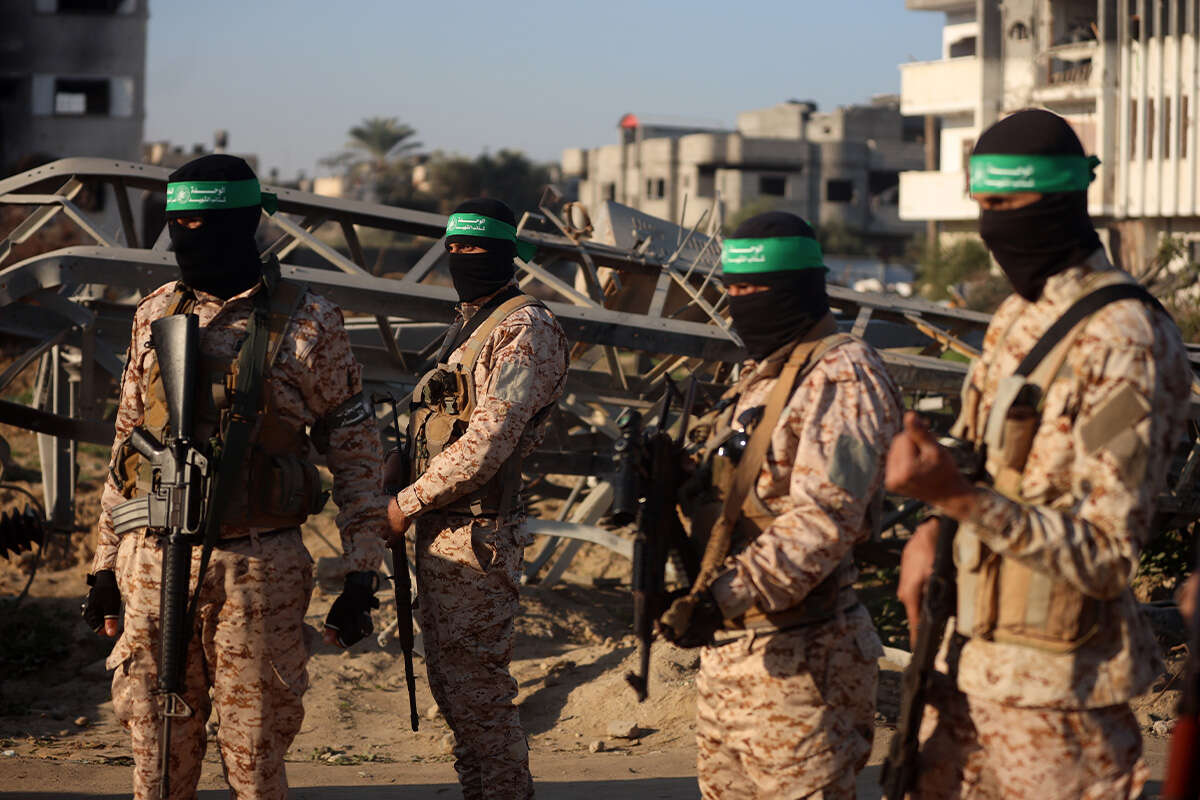
While everyone fixates on the dons, the Americans are once again talking to the debt collectors. On the face of it, Hamas got a big prize: Jared Kushner met with senior figures of the murderous terror organization that murdered and kidnapped dozens of Americans on October 7th. The Americans have an answer: last year we met with them to extract 56 hostages; now—the kidnapped Gaza Strip itself.
We're not as naive as you think, they keep repeating. Time and again we said Hamas will have no weapons and no control over the Strip. The means matter less to us than the end. People forget the meetings with senior Hamas figures, they say. And in the same breath they note that a very, very senior figure in the defense establishment spoke directly, by phone, with the heads of the Nazi organization during the negotiations to free hostages. Why is it permitted for you and not for us, they say.
In Israel, people are appalled at the thought of Qatar and Turkey being involved in the Strip. Contrary to what the opposition says, the two hostile states won't send soldiers into the Strip. But their very presence on the oversight council—the body meant to determine whether Israel is meeting the agreement or not—is untenable, practically and morally.
Most of Israel's concerns were laid to rest after some back-and-forth with the Americans. What remains is the fear that the international body, instead of demilitarizing Hamas, will separate the IDF from Hamas and effectively constrain Israel's moves in the Strip.
At the White House they're angry with Netanyahu, but they've fallen in line with most of his demands. Trump himself has, for months now, pointedly refrained from declaring support for him in the election. But his people are preparing a victory image for Likud: a handover of weapons in the Strip, into American hands, before the elections. The payment, in the form of a partial withdrawal, will be on credit after the ballot boxes close.
Monument to weakness
A giant observation tower looked out for years over Netiv HaAsara. From it Hamas kept watch over the community bordering the northern Gaza Strip, gathering intelligence and, along the way, sowing dread. "The destruction of the occupiers is near," was written in Hebrew on the poster. And in case that wasn't clear enough, a supplementary message: "the Yamit region—Netiv HaAsara," a nod to the moshav of the same name evacuated under the agreement with Egypt. For years Israel held off from destroying the tower—until it emerged that there was truth in the advertising. 19 Israelis were murdered in the community on the morning of October 7th, and but for an operational failure by Hamas, the community's fate would have been that of Nir Oz.
No need to dwell on Zvi Sukkot and his pirate operation to destroy a terror monument. But it is not beside the point to demand answers from the IDF as to why the monstrous monuments to the murderers of Israelis aren't being systematically demolished. In the village of Surda in Binyamin, a monument in the shape of a map of "Palestine," from the river to the sea, has stood for ten years now, bearing a picture of Muhannad Halabi. This is the murderer who stabbed Aharon Banita to death in Jerusalem's Old City during the high holidays 11 years ago. He nearly murdered his wife, Adele, as well, and then murdered Rabbi Nehemiah Lavi, who rushed to help. For ten whole years we've been waiting for someone in the Binyamin Brigade to wake up and destroy the monument on its traffic island. How complicated can it be?
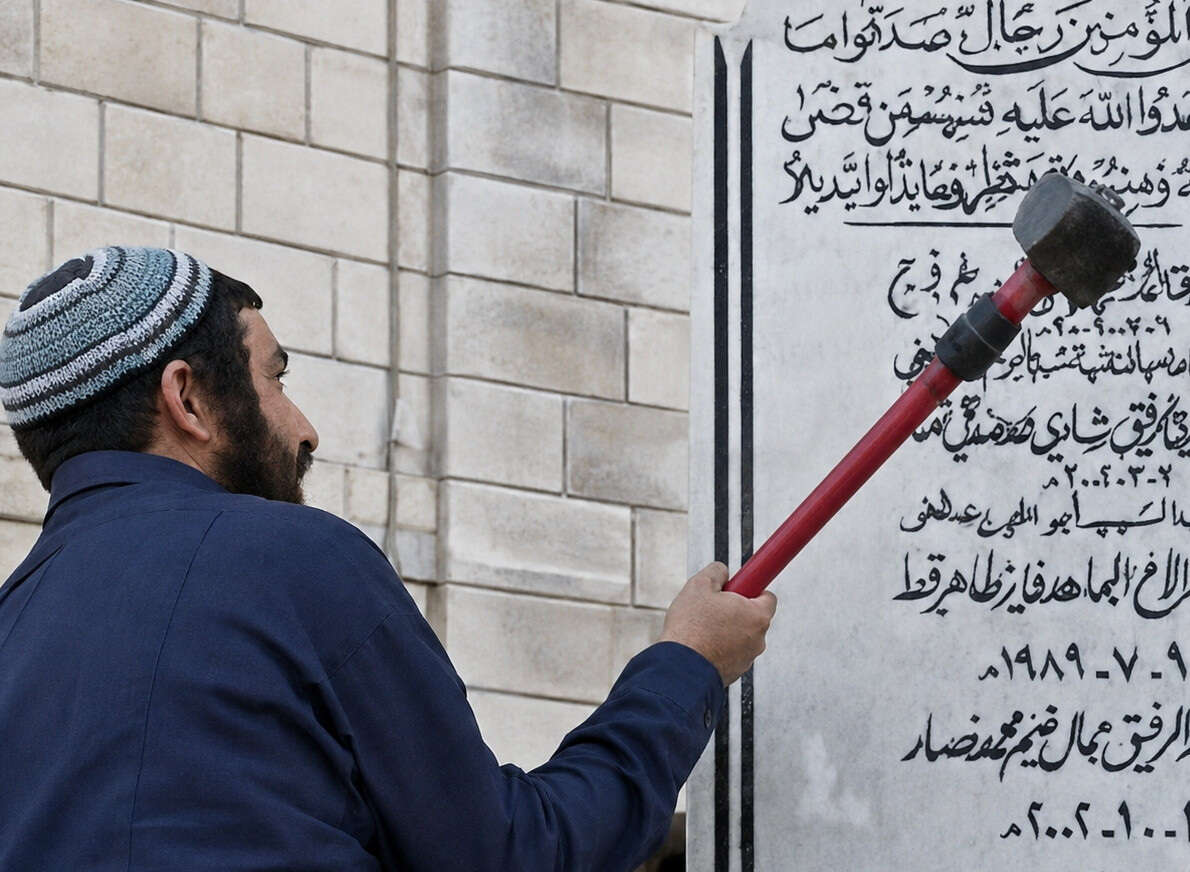
If only the phenomenon were confined to within the Green Line. Deep inside Israel, in the heart of Haifa, the grave of Izz ad-Din al-Qassam still stands intact—one of the first leaders of the organized murder gangs against Jews in the last century, the man for whom Hamas's military wing is named. The tent over the grave was indeed demolished, but the visits to it continue undisturbed.
For Israelis, creatures of Western thought, it's hard to internalize what symbols mean. After October 7th it seemed a change had set in. The demolition of the monuments in Gaza marking the abduction of Oron Shaul and Hadar Goldin, was an important turning point—one that didn't carry on. The existence of the terror monuments is a monument to weakness.
Historic defeat, hysteric victory
There have never been gaps like these between the polls, yet there is one thing the forecasters share, whether they predict a historic defeat for Netanyahu or a hysteric victory: to a one, they find the crossovers between the blocs almost nonexistent.
How many seats can actually move between the coalition bloc and the opposition? The answer is six percent, something like seven seats. Even after you discount those who in the end won't switch blocs, or those who cancel each other out, you can still assume at least three seats can change sides. This is critical, because it's becoming clear that the question of the Zionist majority—or the Jewish one, depending on whom you ask—is turning into the question of the election. After all, Eisenkot spelled out his plan for swearing in a government: those with him will vote in favor, and the Arabs will abstain, with no coalition negotiations and without the touch of a human hand. According to our own Dudi Hasid, the gap between the blocs stands at six seats as of this week—which is really three seats crossing over. If Netanyahu picks them up, Eisenkot's plan is foiled.
Well, the answer is that it's possible, but a stretch. Six percent are undecided, split evenly between those currently intending to vote coalition and those intending to vote opposition. No less interesting is that in the opposition, eight percent—five seats—are torn among more than two parties, which is only natural given that three of the bloc's four parties are new. The confusion peaks among the national-religious: 22 percent. No wonder every list except Ra'am and United Torah Judaism is fielding a knitted-kippah candidate. The bad news for the bloc's parties: only two percent of them, barely a quarter of a seat, are torn between the blocs. A lot of noise, very few results on the ground.
Dial 61
A candidate for a guaranteed slot on Likud recently got a surprising phone call from the office of MK Goldknopf. "Don't rush to sign," they offered him, as friendly advice. "Netanyahu will promise you a minister's post, but Agudat Yisrael won't recommend him to form the government, so it carries no meaning at all."
The polls count Netanyahu's bloc as including the Haredi parties. Is that right? This past Friday, Sol Verdiger, the foreign minister of Haredi Jewry, came to a meeting with Netanyahu. Afterward he drove to Rabbi Lando, leader of the Lithuanian wing, to brief him and to sound out whether there might be room to cooperate after all. "Ich vil nisht heren, a ligner," said Rabbi Landau. Loosely translated: I don't want to hear it, he's a liar. A few days passed, and his emissary in the Knesset, MK Moshe Gafni, put out a three-minute video explaining that Haredi children stand to gain nothing from continued partnership with the right, and that a "decision for the generations" must be taken—meaning, going with Eisenkot.
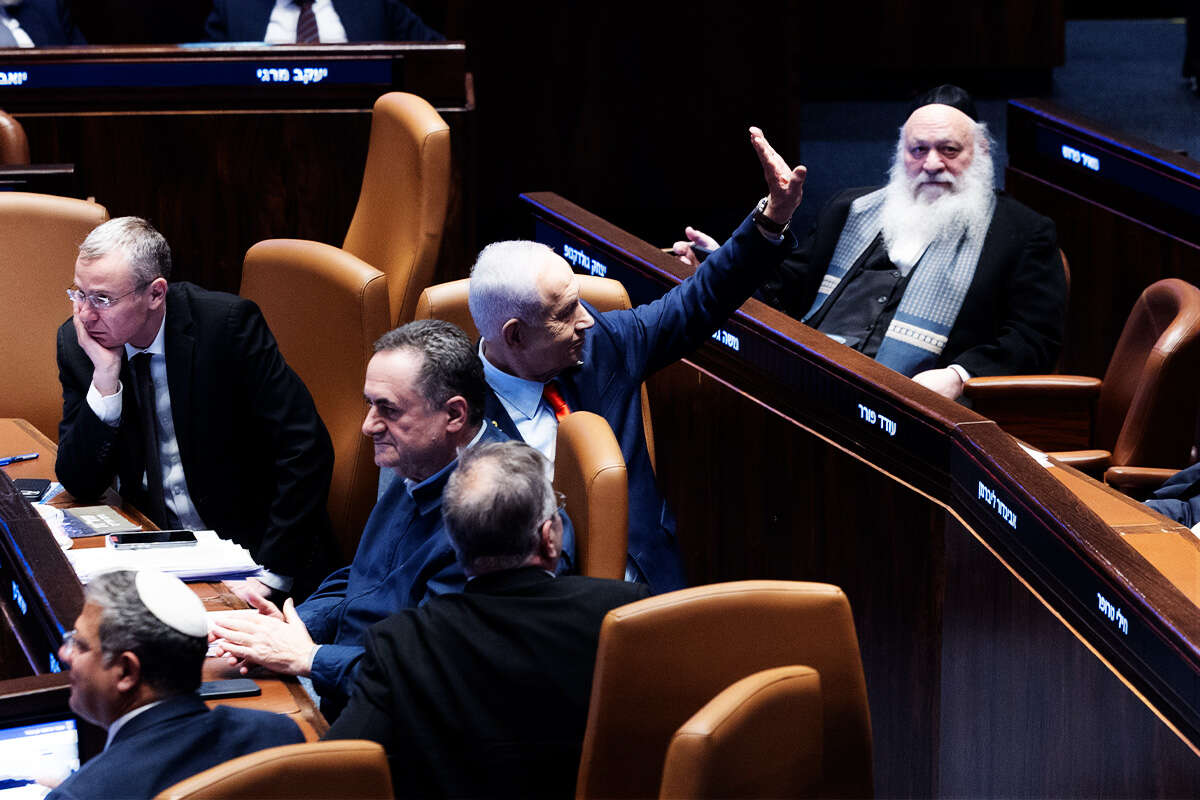
This is a little strange. After all, the entire Haredi legislation marathon two months ago, which cost the coalition some two or three seats, was meant to undo Rabbi Landau's dramatic announcement, "We are not part of any bloc." Did it fail? There are two possibilities. The first: that not only the Hasidim but the Lithuanians too have decided to try their luck on the left, and the Haredi legislation was simply cash up front to keep the elections on schedule. The second: that Gafni and Likud are fully coordinated, and it's simply convenient—certainly for Likud—to keep its distance from the unpopular Haredim. And Netanyahu? He reckons that if he gets 61, the Haredim will have no choice but to go with him. One seat fewer, and they'll scatter in every direction.
Either way, a partnership with Eisenkot still looks fairly remote. Agudat Yisrael's official line is to recommend no one and to go with whoever delivers a draft law. Degel HaTorah hasn't yet officially announced it won't go with Netanyahu. Shas, for its part, swears allegiance to the bloc at every morning and evening prayer, and after Deri's reconciliation with Rabbi Yitzhak Yosef, there's also no one left to jump in and contradict him on the spot, as has happened until now. Here's the problem for the pretender to the crown: the more extreme a party is in its Haredi-ness, the readier it is to cooperate, and vice versa. Eisenkot has already made clear he'll lean on Arab abstention. A coalition of those who serve, propped up with the help of Mahmoud Abbas and Goldknopf, is already a bit much.