Thursday Aug 27, 2026
NEWSLETTER
www.israelhayom.com
  • Home
  • News
    • Israel
    • Israel at War
    • Middle East
    • United States
  • Opinions
  • Jewish World
    • Archaeology
    • Antisemitism
  • Lifestyle
    • Food
    • Travel
    • Fashion
    • Culture
  • Magazine
    • Feature
    • Analysis
    • Explainer
  • In Memoriam
www.israelhayom.com
  • Home
  • News
    • Israel
    • Israel at War
    • Middle East
    • United States
  • Opinions
  • Jewish World
    • Archaeology
    • Antisemitism
  • Lifestyle
    • Food
    • Travel
    • Fashion
    • Culture
  • Magazine
    • Feature
    • Analysis
    • Explainer
  • In Memoriam
www.israelhayom.com
Home Explainer

What Lebanon's Shiites don't tell you about Hezbollah

The struggle over the identity of Lebanon's Shiite community has been unfolding for decades, with senior clerics offering an alternative to the doctrine of wilayat al-faqih, maintaining their independence from Iran and challenging Hezbollah. Behind the political dispute lies a deeper struggle over one question: Who has the authority to speak for Lebanon's Shiites?

by  Dr. Noa Riven
Published on  08-27-2026 17:16
Last modified: 08-27-2026 17:17
Israel wary UNIFIL could return under new Lebanon deal

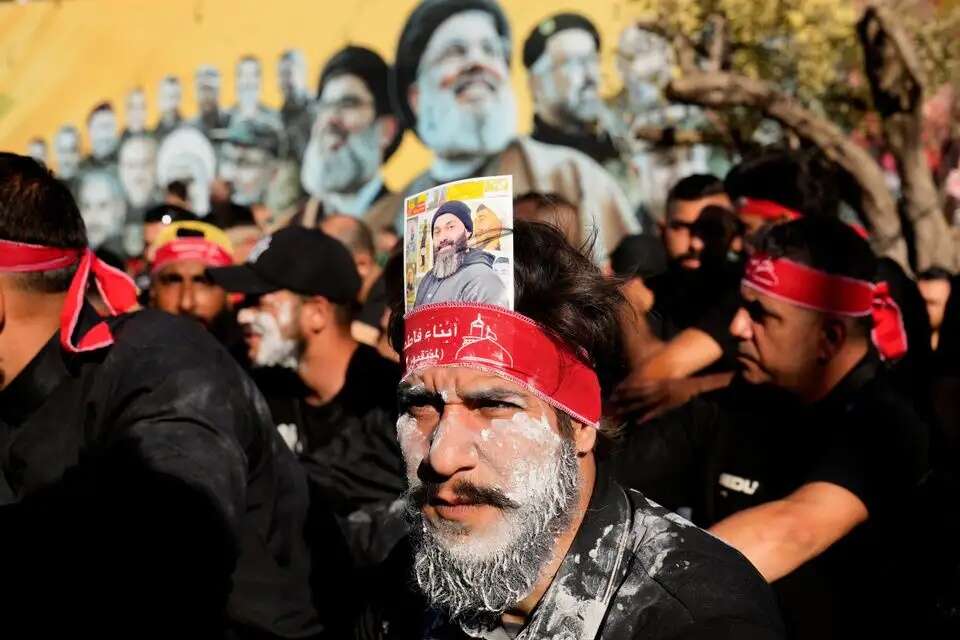
Hezbollah supporters at a procession in Lebanon. Photo AP

Share on FacebookShare on Twitter

When Israelis think of a Shiite cleric in Lebanon, the image that almost automatically comes to mind is that of a religious figure identified with Hezbollah. Over the years, the association between religion, the organization and Iran has become so strong that it is easy to forget an important fact: Some of the most profound opposition to the worldview represented by Hezbollah emerged from within Lebanon's own Shiite religious establishment.

To understand this, it is necessary to go back to the Supreme Islamic Shiite Council, founded by Imam Musa al-Sadr in 1967. Its establishment marked a watershed for Lebanon's Shiites: For the first time, an official institution had been created to represent them within the Lebanese state. But after al-Sadr's disappearance in 1978 and Hezbollah's subsequent rise, a broader struggle gradually emerged over who had the authority to speak in the name of the Shiites: the Lebanese community's own institutions, or a political-military movement also committed to Iran's religious leadership.

One figure who embodied this tension was Sheikh Mohammad Mehdi Shamseddine, who headed the Supreme Islamic Shiite Council until his death in 2001. Shamseddine was not "anti-Hezbollah" in the simple sense of the term and supported resistance to Israel. His importance lay elsewhere: He advanced a Shiite vision centered on the state, citizenship and the belonging of Shiites to the countries in which they lived, offering a significant alternative to the Iranian doctrine of wilayat al-faqih, or Guardianship of the Jurist, on which Hezbollah's religious-political ideology rests.
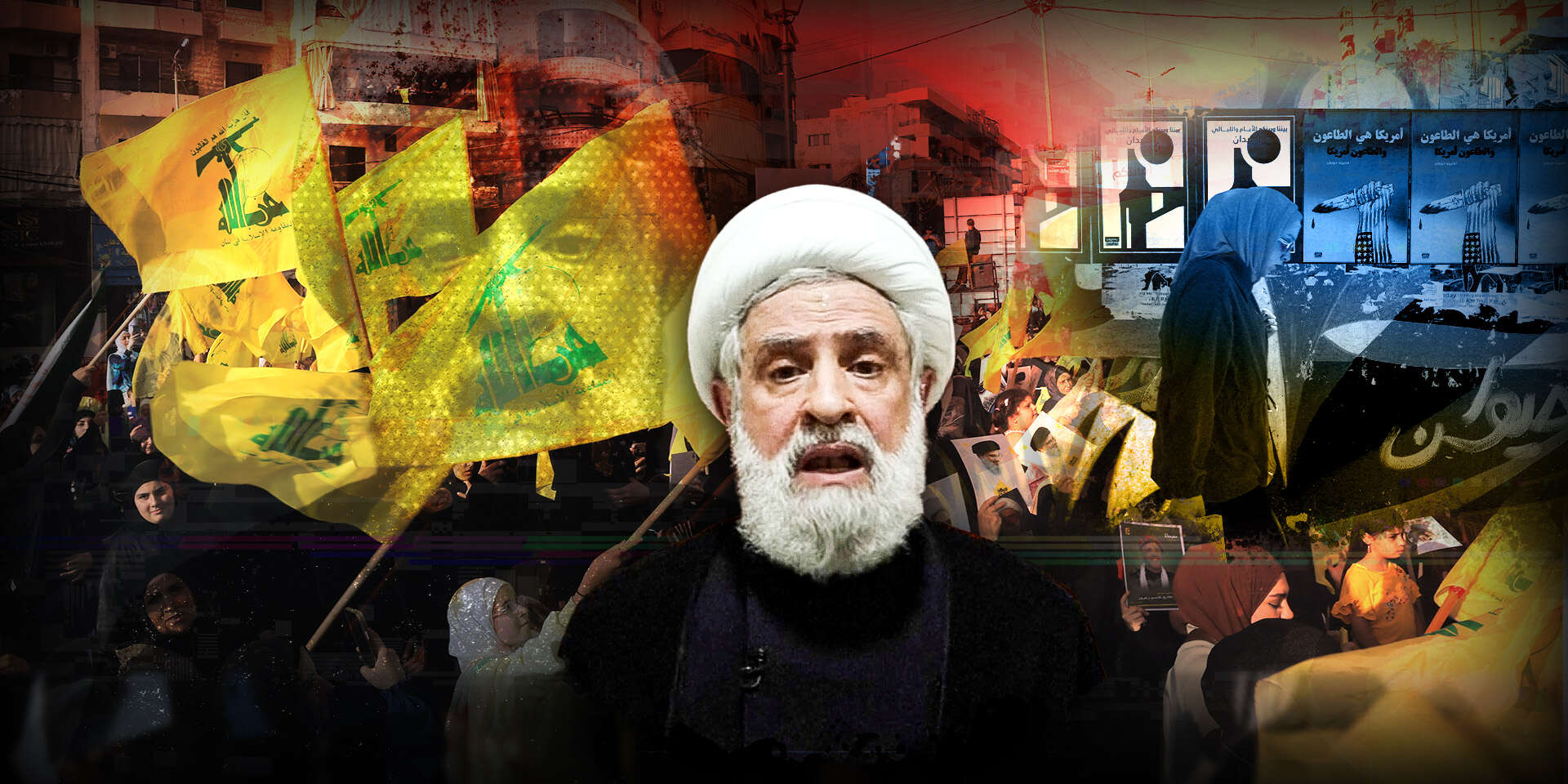
Hezbollah Secretary-General Naim Qassem, with supporters and Lebanese residents in the background | Photo: Reuters, EPA

Grand Ayatollah Mohammed Hussein Fadlallah, one of Lebanon's most senior Shiite clerics, also maintained a degree of religious independence from Iran and did not fully accept the Iranian model of wilayat al-faqih. The very existence of an independent source of Shiite religious authority demonstrated that even within an environment closely associated with Hezbollah, there was no complete ideological uniformity.

In the next generation, the confrontation became far more explicit. Sheikh Ali al-Amin, who served as the Shiite mufti of Tyre and Jabal Amel, spoke out against wilayat al-faqih, Hezbollah's involvement in the Syrian civil war and the subordination of Lebanon's Shiites to the Iranian project. Alongside him were clerics and religious intellectuals such as Hani Fahs, who sought to promote a Shiite identity rooted in citizenship, pluralism and coexistence within Lebanon.

The significance of these voices is greater than the number of people they are able to mobilize. Hezbollah is not merely an armed political party. It also rests on a system of religious legitimacy. When criticism comes from a Shiite cleric, therefore, it touches an especially sensitive point: It challenges Hezbollah's claim not only to be the dominant political force among Lebanon's Shiites, but also to be the natural representative of their religious worldview.

The dispute within Lebanese Shiite society, then, is not only about Hezbollah's weapons or its relationship with Iran. Beneath it lies a deeper struggle that has been unfolding for decades: Who has the authority to define what the Lebanese Shiite path actually is?

The writer is a researcher specializing in Lebanon, Hezbollah and Shiite theology. She is a research fellow at the Middle East and Central Asia Research Center at Ariel University and lectures on the Middle East and Islam.

Tags: HezbollahLebanon

Related Posts

'Israeli terrorists': Why the Qusra controversy angered the US

'Israeli terrorists': Why the Qusra controversy angered the US

by Yotam Deshe

US Ambassador to Israel Mike Huckabee stunned Israeli officials when he described Israelis who had pitched tents near the Palestinian...

US reinstates Iran oil sanctions after tanker attacks in Strait of Hormuz

The consequences of canceling the US strike on Iran

by Vice Adm. (ret.) Eliezer Marom

The cancellation of the US strike gives Iran time to rebuild its missile arsenal and advance its nuclear program. Postponing...

How Iran is preparing to influence Israel's elections

How Iran is preparing to influence Israel's elections

by Danny Citrinowicz

Iranian influence operations are already underway, and Israeli security officials warn of an attempt to deepen divisions within Israeli society....

Menu

Analysis 

Archaeology

Blogpost

Business & Finance

Culture

Exclusive

Explainer

Environment


Features

Health

In Brief

Jewish World

Judea and Samaria

Lifestyle

Cyber & Internet

Sports


Diplomacy 

Iran & The Gulf

Gaza Strip

Politics

Shopping

Terms of use

Privacy Policy

Submissions

Contact Us

About Us

The first issue of Israel Hayom appeared on July 30, 2007. Israel Hayom was founded on the belief that the Israeli public deserves better, more balanced and more accurate journalism. Journalism that speaks, not shouts. Journalism of a different kind. And free of charge.

All rights reserved to Israel Hayom

Hosted by sPD.co.il

  • Home
  • News
    • Israel at War
    • Israel
    • United States
    • Middle East
    • Sports
  • Opinions
  • Jewish World
    • Archaeology
    • Antisemitism
  • Lifestyle
    • Food
    • Travel
    • Fashion
    • Culture
  • Magazine
    • Feature
    • Analysis
    • Explainer
    • Environment & Wildlife
    • Health & Wellness
  • In Memoriam
  • Subscribe to Newsletter
  • Submit your opinion
  • Terms and conditions

All rights reserved to Israel Hayom

Hosted by sPD.co.il

Newsletter

[contact-form-7 id=”508379″ html_id=”isrh_form_Newsletter_en” title=”newsletter_subscribe”]

  • Home
  • News
    • Israel at War
    • Israel
    • United States
    • Middle East
    • Sports
  • Opinions
  • Jewish World
    • Archaeology
    • Antisemitism
  • Lifestyle
    • Food
    • Travel
    • Fashion
    • Culture
  • Magazine
    • Feature
    • Analysis
    • Explainer
    • Environment & Wildlife
    • Health & Wellness
  • In Memoriam
  • Subscribe to Newsletter
  • Submit your opinion
  • Terms and conditions

All rights reserved to Israel Hayom

Hosted by sPD.co.il