During the Combat Antisemitism Movement's sixth-annual Latin American Forum Against Antisemitism in Santo Domingo on Monday, President Luis Abinader made a major announcement: The government of the Dominican Republic will soon adopt the International Holocaust Remembrance Alliance Working Definition of Antisemitism, reported.
Following this action, the Dominican Republic becomes the seventh Latin American state to officially back the IHRA framework. It joins a regional list that includes Uruguay, Panama, Guatemala, Costa Rica, Colombia, and Argentina, the organization noted.
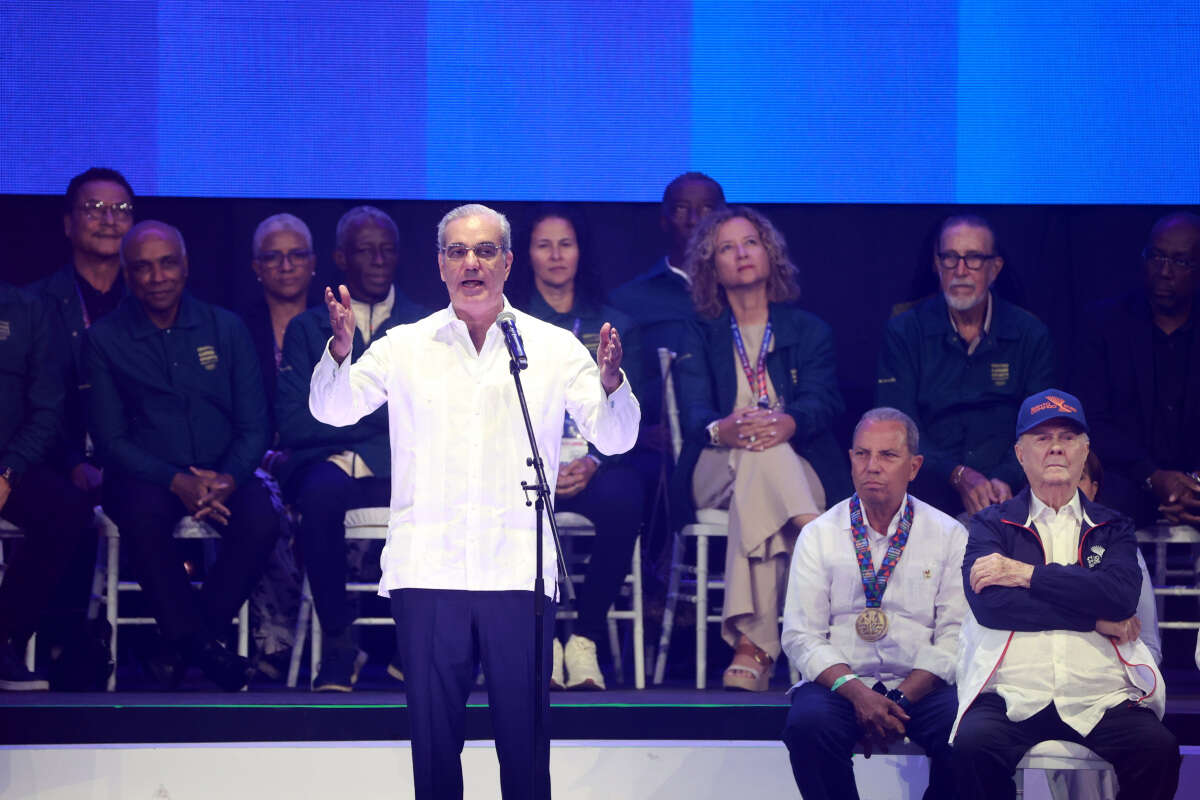
President Abinader addressed hundreds of community activists, religious figures, Jewish organizational delegates, and local and national policymakers gathered for the summit's gala dinner. He said, "Antisemitism is not a problem that concerns only the Jewish people. It is a threat to democratic coexistence and to the rights and freedoms of us all. This fight must be guided by universal principles, not by temporary political circumstances."
"Rejecting antisemitism does not mean taking a position regarding a particular government or conflict," the president stated. "It means stating unequivocally that no political disagreement, no cause, and no circumstance can justify hatred, discrimination, or violence against an individual or a community."
"With this conviction, tonight I announce that the Dominican government has decided to formally adopt the Working Definition of Antisemitism of the International Holocaust Remembrance Alliance," he continued. "I have instructed the Ministry of Foreign Affairs to formalize this decision and make it public."
"This adoption will provide a framework for identifying and combating the different manifestations of antisemitism, while fully respecting freedom of expression and the other rights enshrined in our constitution," President Abinader emphasized. "Through this decision, the Dominican Republic reaffirms its commitment to the memory of the Holocaust, to the protection of Jewish communities, and to the eradication of antisemitism in all its forms. It likewise reaffirms its rejection of every manifestation of hatred, religious intolerance, discrimination, and violence against any people or community. Human dignity is indivisible, and its defense admits no exceptions."
Funding to the tune of 50 million pesos will be directed toward constructing a new complex for the Jewish Museum of Sosúa. The president announced this investment for the site located on the northern coast of the Dominican Republic.
US Special Envoy to Monitor and Combat Antisemitism Rabbi Ambassador Yehuda Kaploun delivered a keynote address as a guest of honor on Monday. He celebrated the Dominican Republic's decision regarding the IHRA, calling the move a "historic moment," according to the outlet.
"What you have witnessed tonight is a government standing up for what is right," he said.
"There cannot be any compromise with antisemitism," Ambassador Kaploun noted. "We will lead by example and we will take positive steps to protect every Jewish community. In America, we have our marching orders. We are holding universities accountable. We are prosecuting hate crimes. We have changed our visa vetting programs. We have withdrawn from major UN bodies that have promoted terrorism and antisemitism."
"Latin America is in the middle of a very transformative time, rejecting a socialist path in favor of prosperity and freedom," he added. "It is my privilege to represent the president and the secretary of state to tell everybody that America stands ready to support our friends in this effort to bring a new Latin America with religious liberty and freedom for everybody."
Beyond his praise for the host nation, Special Envoy Kaploun asked all Latin American countries to follow suit by embracing the IHRA definition. He previously used his platform at the event to press nations in the region to withdraw from the International Criminal Court.
Monday's dinner featured remarks from several other prominent figures. Among them were CAM Executive Director of Latin American Affairs Shay Salamon and Pilar Rahola, a Catalan journalist who chairs the CAM Advisory Board for Latin America.

Salamon directed his appreciation toward President Abinader over the IHRA declaration. CAM served a pivotal function in bringing this adoption to fruition.
Salamon highlighted the unique legacy of the Dominican Republic, which functioned as a refuge for Jewish people escaping the Holocaust. He said, "Almost nine decades ago, many countries knew what was happening. Nearly all of them found an excuse to look the other way. But the Dominican Republic chose to open its doors. And today, almost nine decades later, it welcomes us once again. This time, we did not come seeking refuge. We came seeking allies. And we found them."
"Today, as I look around this room, I can say something that, for me as a Jew, would once have seemed like a dream — we are not alone," he concluded.
Organizers built this year's convention on the momentum generated by earlier regional conferences hosted in Guatemala, Panama, Uruguay, Costa Rica, and Brazil. The summit aimed to establish a collaborative environment for exchanging best practices and devising novel tactics to combat antisemitism throughout Latin America – all while defending interfaith coexistence, pluralism, and democratic institutions, the publication added.
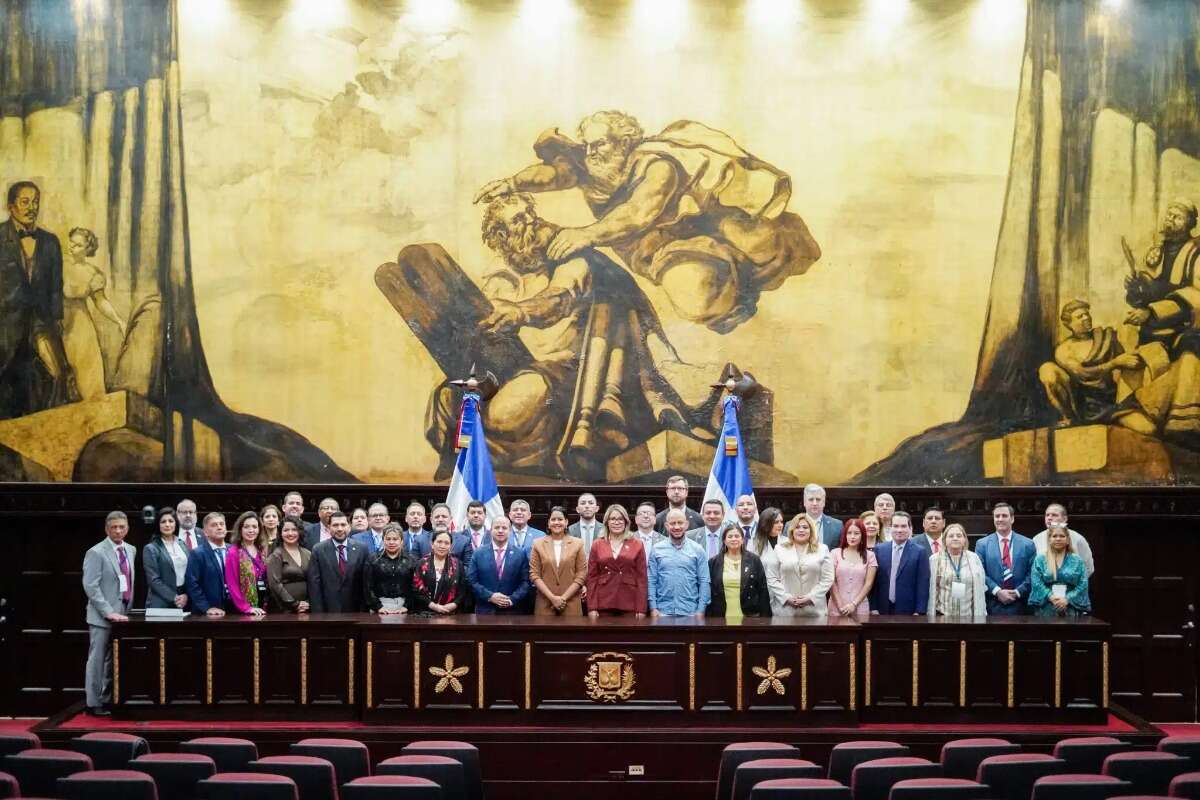
The four-day conference launched on Sunday afternoon. It kicked off with an assembly of CAM's Latin American Legislators Against Antisemitism division, bringing together 45 politicians hailing from 16 different countries. Attendees will finalize their participation by ratifying a joint statement before the event wraps up on Wednesday.
The coalition is united by a mutual objective to eradicate antisemitism across their respective societies. They also seek to protect interfaith harmony, pluralism, and democratic processes throughout Latin America.
The document issues a call to action for businesses, NGOs, civic associations, and all levels of government across Latin America. It asks them to adopt and execute regulations, executive policies, and social media guidelines designed to counter antisemitism and promote zero-hate environments.
CAM launched its Latin American operations over five years ago. The organization has spent that time cultivating robust partnerships with a diverse array of community groups, civil society activists, diplomats, lawmakers, and key leaders across the political, cultural, and religious spectrum to unite against antisemitism.
During this span, CAM en Español developed into a primary force in the fight against Jew-hatred across Latin America. The coalition is driving impactful campaigns in nations including Paraguay, Honduras, Bolivia, Ecuador, Mexico, Costa Rica, Guatemala, Panama, Colombia, Peru, Argentina, Brazil, and Uruguay, CAM said concluded.