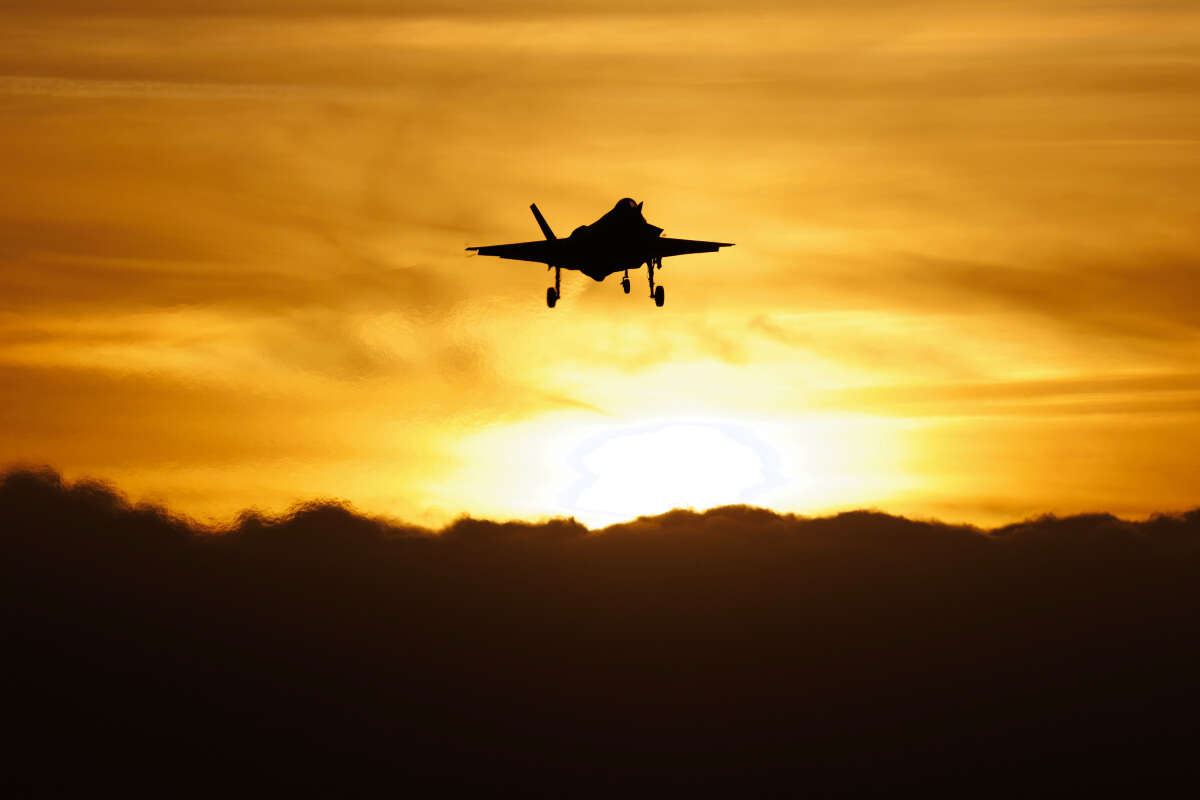
A newly developed air-to-air missile capable of striking targets beyond a distance of 290 miles is currently undergoing testing by the US Navy, Bloomberg reported Sunday. This is an operational reach that far surpasses any previously known missile in its category.

The military branch provided details regarding the physical characteristics of the AIM-424 Malice. The RTX Corp. subsidiary Raytheon engineered the munition to match the approximate size of the existing AIM-120 AMRAAM. This specific design choice ensures compatibility with the internal weapon bays of F-35 and F-22 stealth aircraft.
🚀 Explained: What Is the US Navy's AIM-424 Malice Missile and Why Does Its 465 km Range Matter?
The US Navy is developing the AIM-424 Malice, a next-generation long-range air-to-air missile designed to engage high-value targets at distances of up to 465 km. Expected to arm…— Raksha Samachar | रक्षा समाचार 🇮🇳 (@RakshaSamachar) August 24, 2026
The strategic value of these long-distance weapons became starkly apparent last year when Islamabad claimed it utilized Chinese-manufactured projectiles – reportedly possessing a 186-mile range – to destroy Indian fighter jets.
While extreme-range munitions have the capacity to eliminate critical support aircraft like tankers and command centers, their greatest utility likely involves shielding naval vessels, Griffith Asia Institute visiting fellow and former Royal Australian Air Force officer Peter Layton told Bloomberg.
Layton said, "I think it's meant to counter Chinese bombers firing long range anti ship cruise missiles," before clarifying, "Fleet air defense, not air-to-air combat."
Striking an airborne target from extreme distances presents significant technological hurdles. Forces must rely on highly advanced sensors to locate the enemy aircraft and continuously guide the warhead. Meanwhile, fast-moving fighter jets can often evade the threat entirely by simply flying away in the opposite direction.
The Navy confirmed the existence of the weapon system. However, the military branch refused to specify a timeline for its operational integration.

Extreme-range aerial munitions have largely remained absent from American stockpiles for years. This capability gap emerged following the retirement of the F-14 Tomcat and its exclusive AIM-54 Phoenix missile. Nevertheless, defense planners at the Pentagon have maintained a strong desire to field such weapons once again.
Advancing another extreme-range interceptor program, the military awarded Lockheed Martin Corp. roughly $1 billion this year to initiate production of the AIM-260.
Furthermore, military forces have spent several years operating the AIM-174B – an airborne variant of the SM-6 defense missile – which reportedly features a strike distance greater than 248 miles.
Bloomberg noted that the Malice system received its public unveiling on Saturday at the Navy's Tailhook symposium in Reno, Nevada.