New imaging technology has reignited one of history's great mysteries. An American research team scanned the Durupinar formation in eastern Turkey, about 30 kilometers (19 miles) south of Mount Ararat, using an advanced three-dimensional radar system. The team says the scan revealed, for the first time, a volumetric image of organized internal structures that could match the description of Noah's ark in the Book of Genesis.
The scan was carried out by the research group Noah's Ark Scans, led by researcher Andrew Jones, along with scientist Dr. Khosrow Bakhtar, who developed the imaging system (BakhtarRadar) also used by the US defense establishment.
According to the team, at a depth of up to roughly six meters (20 feet), researchers identified clear angular structures, a central corridor, and a network of spaces converging toward the center, arranged across three underground levels, corresponding to the three-story structure of the biblical ark. The length of the formation, about 515 feet (157 meters), also strikingly matches the 300 cubits (ancient unit of measurement, roughly 1.5 feet each) described in the Book of Genesis. This adds another layer to a debate that already made headlines in April, when unusual radar and soil findings at the site were first revealed.
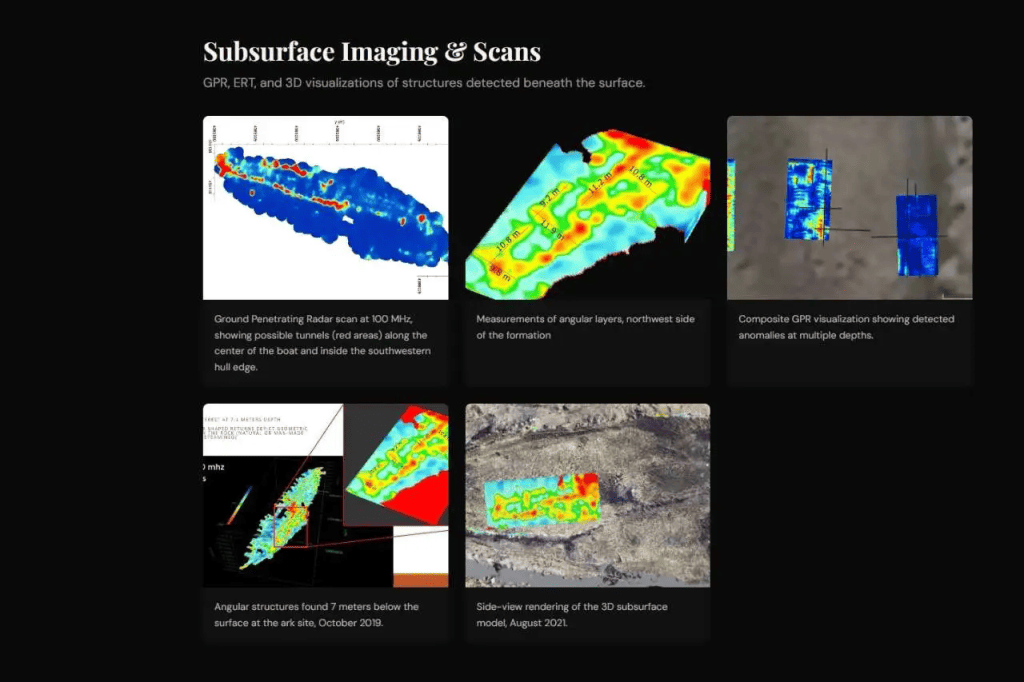
Those same soil findings gave believers in the theory additional support. Within the boundaries of the structure, researchers found concentrations of organic material three times higher than normal and a roughly 38% increase in potassium compared to the surrounding soil, a finding the researchers say could point to wood that decayed over the years. They add that the region's frigid climate may have even preserved parts of the structure as petrified wood.
But this is exactly where the debate begins. Most geologists continue to classify the Durupinar formation as an entirely natural formation, the product of folded rock, mudflow, and erosion. None of the findings have been published yet in peer-reviewed research, only in press statements, and no wood remains, nails, or other man-made materials have ever been extracted from the site. Critics also note that some members of the research team were convinced they had found the ark even before examining the data.
The biblical caveat
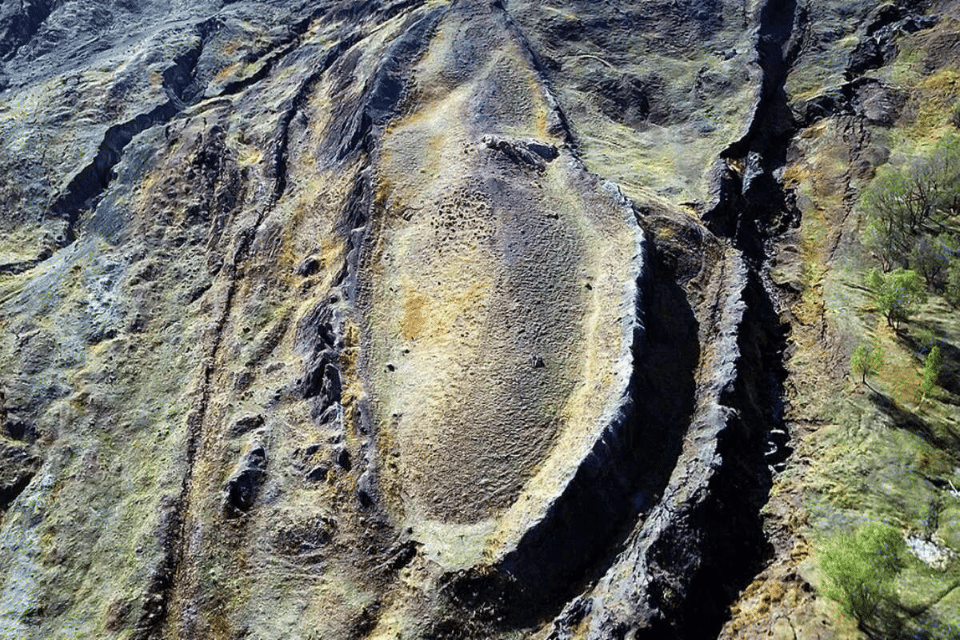
There is also an intriguing biblical caveat. The Torah describes the ark as a box-like vessel, not a ship with a pointed bow as seen at the site. Even a well-known conservative Christian organization, one that believes in the story of the flood, has cast doubt on the findings.
The research team itself makes clear that radar anomalies do not constitute proof, and it plans, in the next stage, targeted core drilling that would allow cameras to be inserted into the spaces and physical samples to be extracted. Until that happens, one of history's great mysteries, one that touches the heart of Jewish, Christian, and Muslim faith, remains a giant question mark.