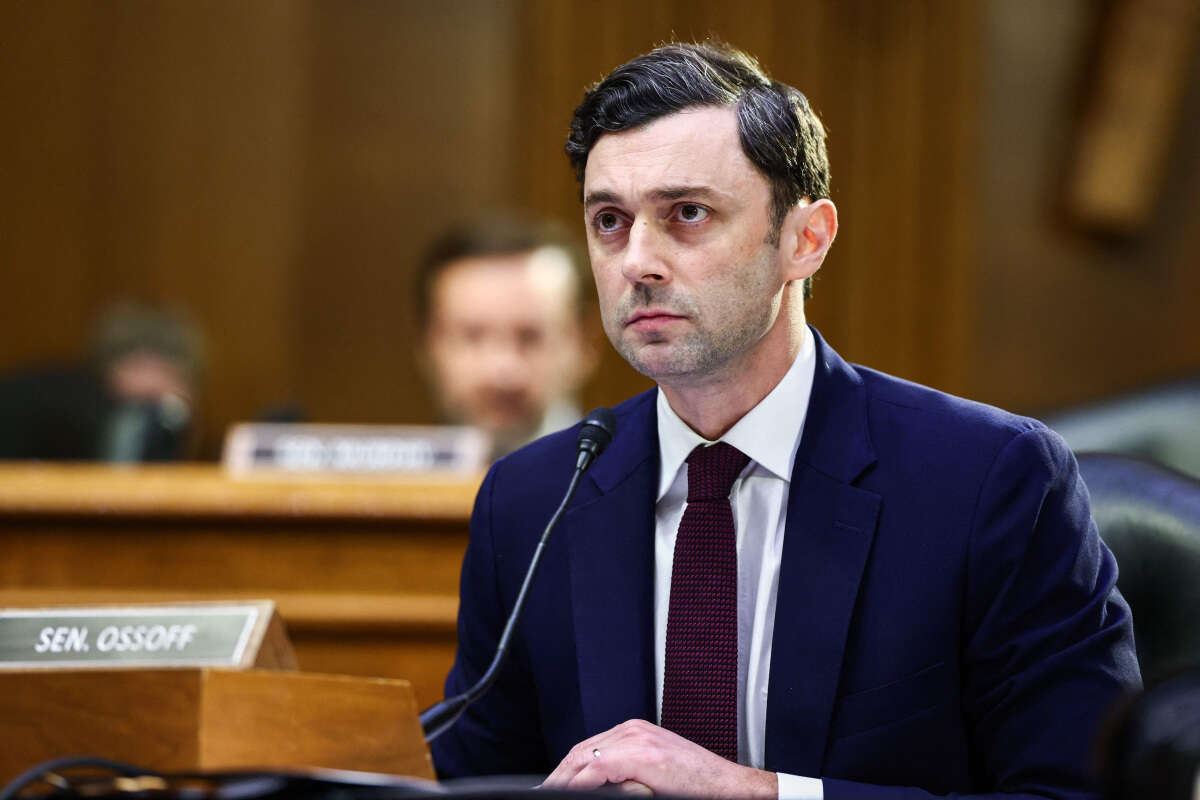
Jon Ossoff, Georgia's Jewish senator, insists he has "zero interest" in the 2028 presidential race. The numbers tell a different story.
An Emerson College poll conducted in July gave Ossoff 13% among Democratic primary voters – tied with Alexandria Ocasio-Cortez for third place behind former Transportation Secretary Pete Buttigieg and California Governor Gavin Newsom. By August, the prediction market Kalshi (a political betting platform) had given him identical odds of winning the nomination.
For now, his real test is closer to home: Another Senate win in November, in a state Trump carried in 2024, would turn idle speculation into genuine momentum.
A childhood shaped by memory
Thomas Jonathan Ossoff was born in Atlanta in February 1987 and raised in the Northlake suburb. His father, Richard, a Jew of Russian and Lithuanian origin, owns an advertising firm. His mother, Heather Fenton, immigrated from Australia and helped found an organization promoting women in Georgia politics. The father's side of the family fled persecution in Eastern Europe. Ossoff has said he grew up alongside relatives who survived the Holocaust while others were murdered.
His mother is not Jewish, yet he was raised in a Jewish home. He attended Hebrew school and, before his bar mitzvah, immersed in a mikveh (Jewish ritual bath) to complete formal conversion. He celebrated the ceremony at The Temple, Atlanta's historic Reform synagogue, and soon afterward made his first visit to Israel. Religiosity fluctuated over the years, he has said, but the bond with Jewish heritage remained "strong and constant." That education, he explained, instilled a commitment to peace, justice, kindness and the defense of the persecuted and the weak.
Even his Senate swearing-in became a declaration of identity. Ossoff placed his hand on the Bible of Rabbi Jacob Rothschild, the rabbi of the synagogue where he grew up and an ally of Martin Luther King in the civil-rights struggle. White racists bombed the synagogue in 1958 because of its activism. Tucked in his pocket that day, Ossoff carried copies of the ship manifests that recorded his great-grandparents' arrival in America, a physical link between Jewish memory and the Black freedom struggle that had shaped him since adolescence, when he interned for civil rights icon and Congressman John Lewis, a man he still calls a mentor.
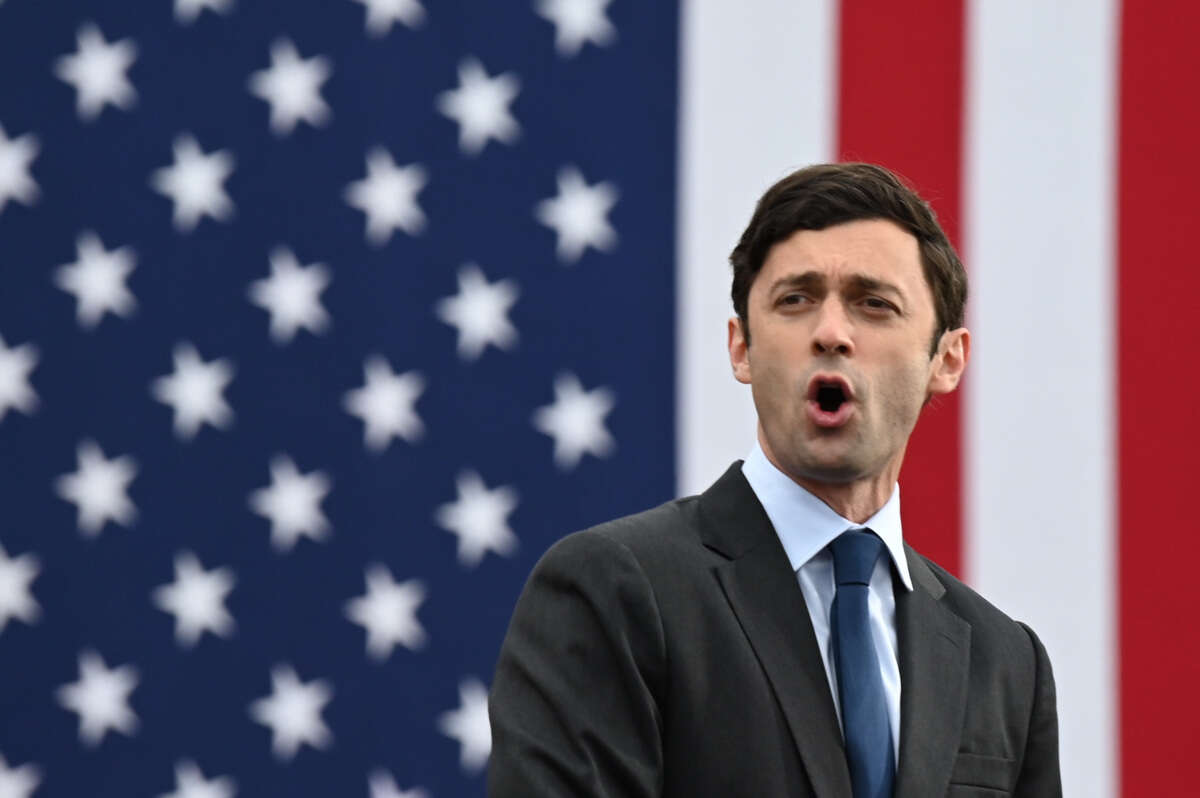
Ossoff studied at Georgetown University's School of Foreign Service and earned a master's in international political economy at the London School of Economics. From 2007 to 2012 he worked as a security and foreign-policy aide to Congressman Hank Johnson. He later ran an investigative production company that produced films on corruption, ISIS crimes and human-rights abuses in Africa. In the Senate he pursued the same direction. Probes he led into corruption and abuse in federal prisons yielded a bipartisan oversight law. He is also advancing legislation to ban members of Congress from trading stocks.
Ossoff's first brush with politics ended badly. He lost a 2017 special House election, the most expensive in its category at the time, to Republican Karen Handel. His 2020 Senate bid against David Perdue turned uglier still, after Perdue's campaign ran an ad that digitally stretched Ossoff's nose, an incident Ossoff branded as naked antisemitic propaganda. He won the January 2021 runoff anyway, becoming both Georgia's first Jewish senator and the Senate's first millennial. Today he's married to Dr. Alisha Kramer, an OB-GYN he met in high school, and the couple are raising two daughters, Eva and Lila.
The Trump foil
No figure looms larger over Ossoff's national profile than Trump. He emerged as a face of the anti-Trump resistance as early as 2017, and the president's second term has only sharpened his rhetoric. Ossoff now argues that Trump's conduct has already crossed every prior threshold for impeachment, has compared him to King Ahab (a biblical king denounced for wickedness) and other "wicked kings" of scripture, and routinely brands him a "crook president."
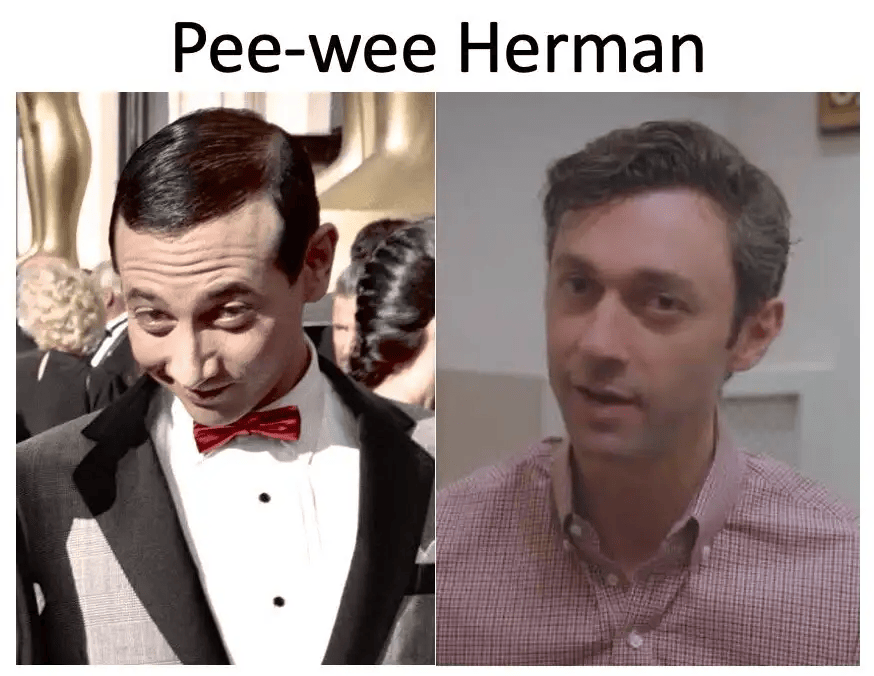
This week he accused Trump of taking the United States into a war with Iran on the basis of lies. Trump responded by mocking Ossoff's appearance and calling him "Pee-wee Herman," after a childish comic television character. The clash allows Ossoff to present himself not just as a low-key legislator, but also as a political fighter against the Republican Party and its leader.
The complex relationship with Israel
His relationship with Israel is complex. During the Senate campaign he declared he was committed to "the security of Israel as the homeland of the Jewish people." He opposes the BDS (boycott, divestment, sanctions) movement and supports a two-state solution. After October 7 he strongly condemned the "indiscriminate and murderous assault on our Israeli allies."
About a month later, in a Senate speech, he stressed that "Israel has an obligation to protect its citizens and a right to do so with force." At the same time he warned that the unfolding humanitarian disaster in Gaza was "both an immense tragedy and a threat to our national security," adding, "As a pro-Israel Jewish American, I urge mercy for the innocent civilians in Gaza."
Despite backing more than $20 billion in aid to Israel over his tenure, Ossoff sided with progressive Sen. Bernie Sanders on two 2024 measures to curb military assistance, though he broke with Sanders on two similar efforts in April 2025. In July he supported blocking rifle sales but not aerial munitions. He justified the first vote by pointing to "the extreme mass deprivation of civilians in Gaza, including the intolerable starvation of children," which he attributed to the Netanyahu government's policy.
Yet he also stated that despite his opposition to the war's conduct, "the US must continue to support the Israeli people" in the face of missile threats from Iran and its proxies. By April 2026, he'd gone further still, backing a block on bomb and bulldozer sales, a move that infuriated some of Georgia's Jewish leaders. Explaining the votes in December 2024, Ossoff tied them to identity. "Growing up Jewish, I grew up among Holocaust survivors," he said, adding that the history instilled in him "core values about human rights." "This is who I am," he told his critics.
That tension, between his Jewish identity, his complicated Israel record and a Democratic Party still figuring out its own direction, may be the defining fault line of any national campaign Ossoff chooses to run.