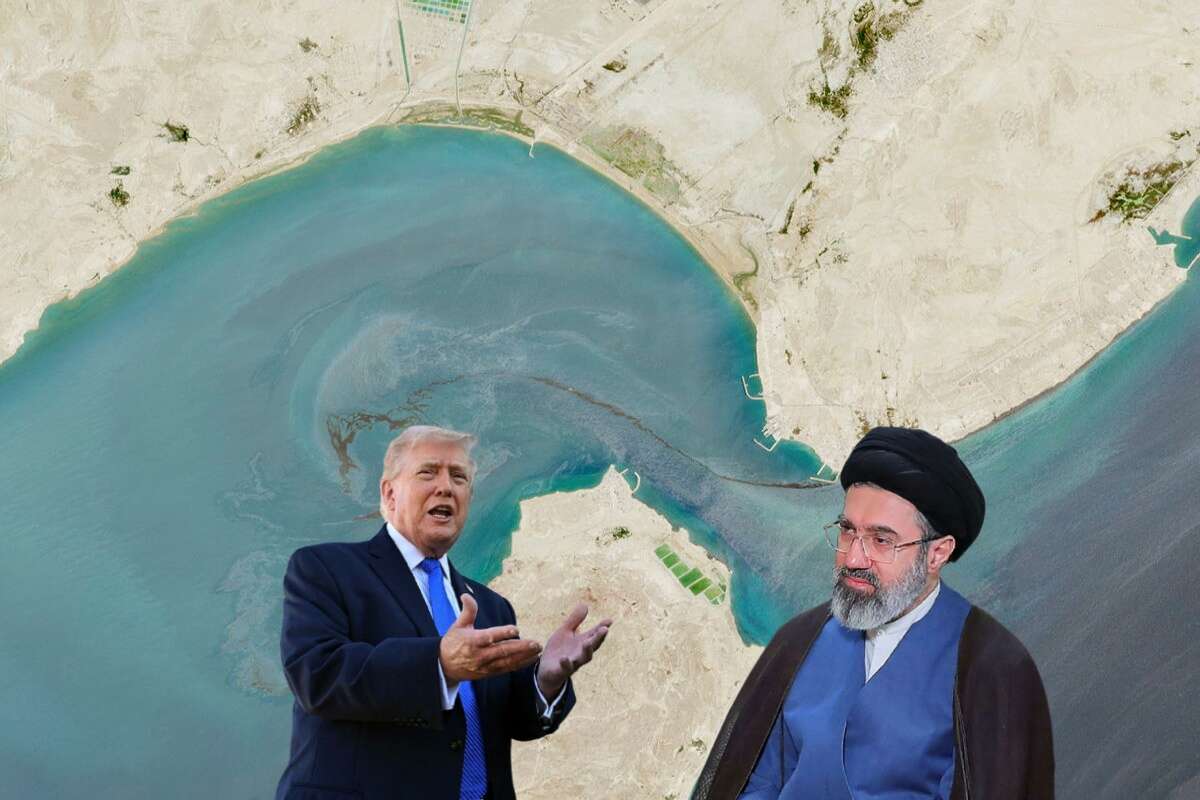
US President Donald Trump's dramatic announcement of an economic "D-Day" against Iran echoes earlier reporting in Israel Hayom on the economic measures expected against Tehran. It is a potential alternative to military conflict, and one that could significantly ratchet up pressure on the regime, possibly even forcing it into submission.
"ANY country that allows its financial institutions, businesses, airports, or government entities to provide any type of lifeline to Iran will itself face TREMENDOUS Economic Consequences," Trump said. "Oil smuggling, swap lines, cash transfers, exchange houses, ship registries, front companies - it all needs to stop NOW. You know who you are."
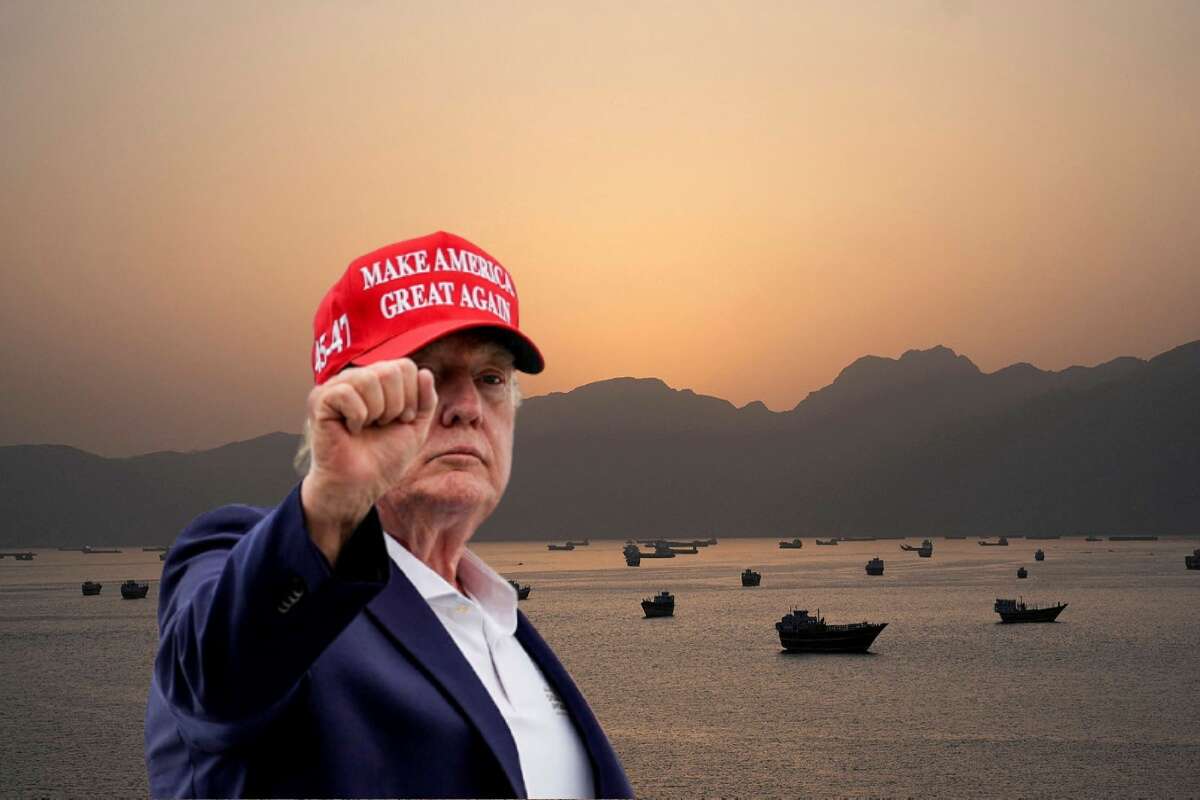
The practical effect of this sweeping move is that any country ignoring the American demand risks getting hit with secondary sanctions – a warning aimed squarely at a handful of nations. Chief among them is China, which continues buying and paying for Iranian oil, handing the regime a vital revenue stream. Various reports indicate Iran is sitting on several tens of millions of barrels of oil aboard tankers in its so-called "shadow fleet" (vessels used to dodge sanctions) in the Indian Ocean, worth roughly $6 billion combined.
Russia, Pakistan, Turkey and Iraq round out the list of countries still trading with Iran and shipping it supplies, mostly by land, with Russia also using Caspian Sea routes. China is powerful enough to shrug off Trump's demand, just as it has for years while dodging sanctions on Tehran. Russia is expected to do the same. The more interesting test case is Turkey, a country the White House considers a friend. How hard Trump is willing to push Ankara on the new policy remains to be seen.
On the financial side, attention is fixed on the UAE. In the weekend magazine of Israel Hayom, we report claims that the UAE unfroze financial activity by Iranian institutions during US-Iran negotiations. The UAE is key for any financial embargo, since many of Iran's financial institutions have operated within its borders – most notably Bank Melli (one of Iran's largest state-owned banks), along with firms tied to Khatam al-Anbiya (the Revolutionary Guards' economic arm).
The UAE flatly rejects the claims of unfreezing activity. "Certain biased platforms are spreading false information about the UAE," Anwar Gargash, diplomatic advisor to the president of the United Arab Emirates, warned this week. "As for the rumors being circulated, such as those about revoking work permits or providing financial aid to Iran, this is false information and part of desperate media campaigns."
As if underscoring that denial, Iran resumed firing on the UAE and its tankers Tuesday, prompting a complete halt in trade between the two countries. Afra al-Hameli, director of the Strategic Communications Department at the UAE Ministry of Foreign Affairs, said that given the regional escalation, which threatens regional and international peace and security, all trade and financial activity with Iran had been suspended until further notice.
In effect, the UAE is now declaring a total rupture in economic and financial ties with Iran. Should that rupture hold, it would represent a major economic blow to the regime in Tehran.
"Under current conditions, oil exports have almost stopped, but our planning was solid enough that we still have sources of foreign currency," Abdolnaser Hemmati, governor of the Central Bank of Iran, said in a televised interview, suggesting some oil wells could soon go idle as the regime bleeds revenue from its most important economic sector.
The IMF projects Iran's economy will shrink sharply this year, contracting somewhere between 5.4% and 6.1% during 2026. Nominal GDP has already plunged around 29% from 2017 levels, and the dollar now buys roughly 2 million Iranian rials.
Which raises the central question: Can economic warfare alone topple the regime?
Brig. Gen. (Res.) Sasson Haddad of the Jerusalem Institute for Strategy and Security argues that the answer requires understanding that Iran effectively runs two economies at once. The regime's own economy, he says, is eroding far more slowly than the country's economy as a whole.
His example is the Nobitex cryptocurrency exchange (an Iranian crypto platform used to dodge sanctions), a key node in a sanctions-evasion network that has moved tens to hundreds of millions of dollars into Iran, some of it destined for the Revolutionary Guards and the central bank. The US Treasury Department is tracking these flows and successfully choking off more of them over time.
This shadow economy allows the regime to partially insulate its own survival from the public's suffering. It can redirect resources inward, sideline the ordinary civilian economy, and keep paying off the power centers propping it up, even as the currency, consumer spending and private business activity deteriorate rapidly.
That is why, Haddad argues, a falling GDP or spiking inflation alone won't break the regime. The real breaking point comes only if it loses the ability to bankroll its coalition of power.
A drop in exports by itself won't trigger a regime collapse in the near term. That would take a combination of vanished oil income, prolonged difficulty accessing foreign currency, inflation that hollows out the value of wages, commercial and civil paralysis, and, ultimately, a fracture inside the power coalition itself.