The struggle to dominate the Strait of Hormuz has transformed into the primary arena of the war with Iran, according to CNN. In recent months, Washington and Tehran have both claimed they possess the upper hand, creating significant uncertainty through their opposing statements.
At this time, the data reveals that Washington is steadily gaining the advantage through its maritime patrols in the passage, whereas Tehran is surrendering a massive portion of its grip on the essential shipping lane, CNN reported.
Over the preceding two weeks, more than 80% of vessel traffic traversing the Strait of Hormuz has utilized the Omani path – a transit corridor approved by the United Nations that Tehran heavily opposes – according to CNN citing data from Kpler, an analytics firm monitoring ships through satellite and transponder signals.
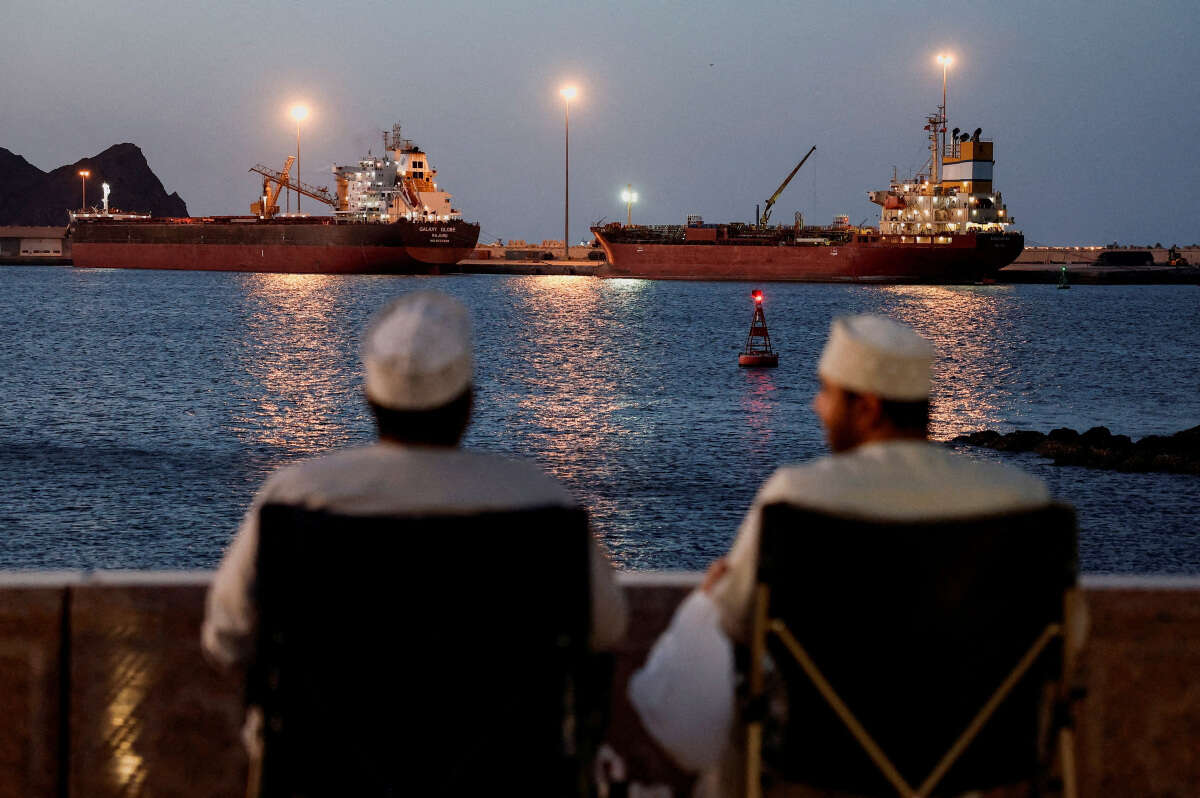
Having declared its sovereignty over the passage, Tehran has targeted multiple ships attempting to navigate the zone via Oman's northern coastline. Brushing aside Tehran's commands, the bulk of vessels have recently chosen to sail the passage while relying on the guarantee of protection from US naval squadrons, CNN observed.
"It increasingly looks like Iran has at least partially lost control of the strait," Kpler lead crude oil analyst Homayoun Falakshahi stated, according to CNN.
This dynamic starkly contrasts with the situation a month ago, when Kpler documented virtually zero ship movement along the Omani corridor. The drastic decrease in vessels traveling Tehran's preferred route has hindered the nation's capacity to charge tariffs on ships navigating the passage – a measure it executed during the spring.
The termination of the Memorandum of Understanding between Washington and Tehran this week technically enables the nation to begin tariff collection again. Yet, Kpler information demonstrates the country has failed to do so, CNN reported.
"Iran's request to collect tolls is something that most Middle East folks don't want to do and haven't been doing," Pickering Energy Partners founder and chief investment officer Dan Pickering explained to CNN. "So the Oman route absolutely makes the most sense."
The United Arab Emirates, Saudi Arabia, and Kuwait have secured Very Large Crude Carriers to export petroleum from the Persian Gulf across the Strait of Hormuz, later transferring the oil to customer ships outside the contested zone in the Gulf of Oman, Lipow Oil Associates President Andy Lipow told CNN.
In an effort to bypass strikes from Tehran, these ships have deactivated their location transmitters, sometimes for consecutive weeks. This untracked navigation appears to have bypassed several monitoring services including Kpler. Even though some ships can be spotted via satellite, tracking them using orthodox methods proves difficult.
Deploying a massive naval contingent in the area, Washington monitors all ships sailing the passage and has recorded much higher petroleum export figures than early conventional forecasts projected, CNN noted.
Last week, US Energy Secretary Chris Wright remarked that combined petroleum movements navigating the passage and rerouted around it equaled about 15 million barrels daily over a seven-day span. This volume approaches the pre-conflict norm of 20 million barrels.
This reality led US President Donald Trump to proclaim Monday that Washington holds "total control over the strait," an allegation he has reiterated consistently during the conflict. The persistent strikes by Tehran and petroleum export figures remaining noticeably below pre-conflict norms demonstrate Washington does not entirely govern the Strait of Hormuz, according to CNN. However, Tehran does not hold total authority either.
"If their goal is to be 'in charge,' then I'd say they were never completely in control to start with," Pickering mentioned to CNN. "It feels like their goal is deterrence, in order to be validated as in-control. I think they are still deterring."
Provided vessels are actually transporting as much petroleum across the passage as Washington contends, Tehran's deterrence and command of the Strait of Hormuz have weakened in comparison to their standing a month or two prior.
Introducing further complications, Tehran and Oman are participating in negotiations to reinstate unencumbered maritime transit across the passage – completely excluding Washington – much to the frustration of Trump. How these dialogues will influence petroleum exports or authority over the maritime route remains ambiguous.
"I would take all the information and headlines 'under advisement,'" CNN reported Lipow as stating. "But it is fair to say that Iran has partially lost control of the strait."