'81, '92 or '99
At the top of Likud a debate is underway these days: does this election look more like the loss of 1992, or the rout of 1999?
As in 1992—when Shamir lost to Rabin and the Oslo Accords were born—this race, too, is marked by the opposition outflanking the right-wing government from the right, against a security backdrop, with a reserve-general chief of staff heading the camp. Back then it was the wave of stabbings and the murder of the teenager Helena Rapp, and the public's belief that only Rabin would know how to deal with Gaza (or at least that Shamir couldn't). Labor blurred its real intentions toward the Palestinians and wrapped them in tough, hawkish rhetoric. Today, too, it's Gaza. Jared Kushner and his people are stunned to learn that Golan, Bennett, Eisenkot, and Lieberman have all lined up against the Board of Peace plan.
The second ingredient was the "Corrupt—we've had enough of you" campaign and a deep disgust set against the backdrop of prolonged rule. The third was wasted votes on a scale that would have had the Environmental Protection Ministry issuing an emergency pollution alert. Back then it was Tehiya; now it's a spectacular collection of party splinters, from Feiglin through Zilikha to Winter—and the danger to Religious Zionism hasn't passed yet either. On the other side, as in 1999, there's a coalescing of the elites around what they see as a battle over the country's future against the danger embodied by Netanyahu and his religious-Haredi coalition. Back then it was a media campaign unprecedented in scope and force, enormous illegal money from abroad, and the worlds of culture, law, and academia mobilizing to change the government. Sound familiar? Maybe—because of October 7th, the [judicial] reform, and the anger at the Haredim. And maybe all of the answers are correct.
Likud has two pollsters (the third, Rafi Smith, was let go after saying in a recent interview that the right-wing bloc wouldn't clear fifty seats). One forecasts grim results for Netanyahu, like the polls on Channels 11, 12, and 13. The other predicts a big win, or close to it. Netanyahu's American polling adviser, John McLaughlin, belongs to the more optimistic camp. The trouble is that this is also what he forecast for Viktor Orbán last April, and we know how that ended.
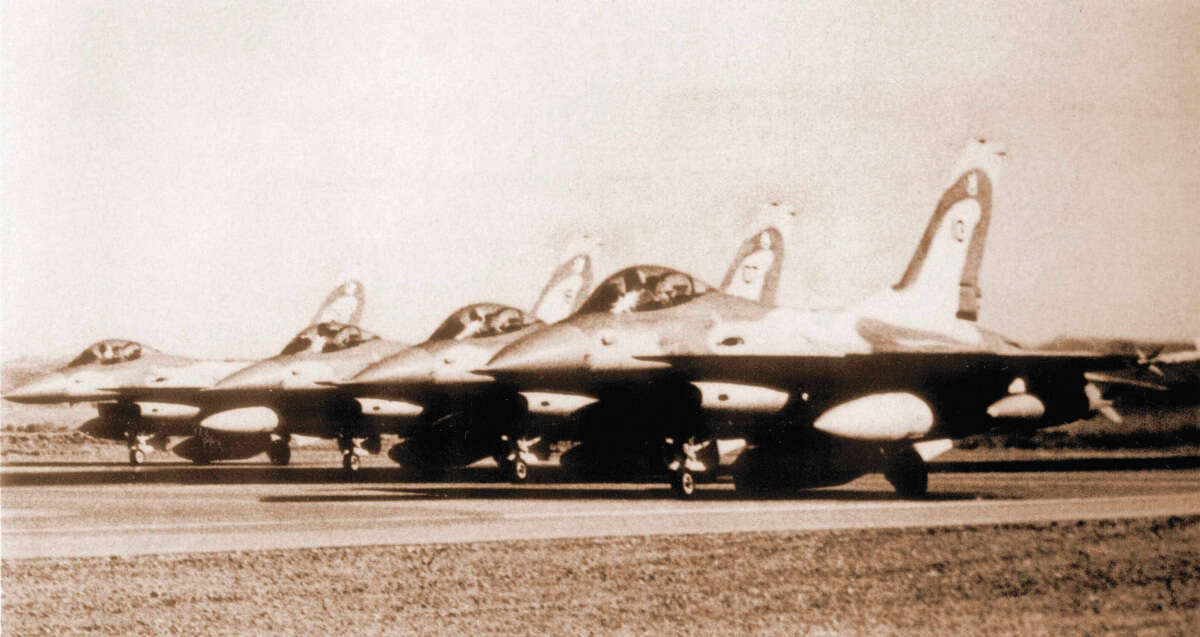
What does the optimism rest on? On the premise that this is actually 1981: a huge victory snatched from the jaws of defeat, against the backdrop of a surprise security triumph and an intra-Israeli tribal war. Back then it was the Iraqi reactor; now it's the Iranian one. "We were hours away from a massive strike that would have destroyed the remnants of the regime," said a senior government figure—also a senior Likud figure—about the offensive Trump stopped at the last minute last week. Maybe in the end it will look similar. For now, at least, the turn hasn't come. In 1981, the defense minister behind the reactor strike, Menachem Begin, didn't need a reserved slot.
Inheritance tax
A nice young aide was in charge of public inquiries at the Prime Minister's Office during Benjamin Netanyahu's first term—inquiries that back then still arrived by mail and fax. His name was Gilad Erdan. A few years later, as Netanyahu was heading toward his second term, Erdan was elected and climbed the list all the way to first place in Likud. When he served as interior minister, he had a nice young aide named Ofir Katz. Another decade passed, and Katz too ran for the Knesset, and won. In this election he posts a rare achievement: the only Katz in Likud who didn't need a reserved slot to be elected in a good spot. Who knows—maybe in his office, too, there are people planning a public career, political great-grandchildren of Netanyahu, with the great-grandfather still among us. In the 2022 election Netanyahu moved heaven and earth so that Tally Gotliv would squeak in, somehow, at the bottom of the list. In the 2026 election he's moving heaven and earth so she doesn't finish too high.
Likud's primary—roughly half an election, thanks to the reserved slots—is nonetheless the real thing: it will most likely set in motion the Likud succession battle for Netanyahu's seat, a battle that has been waiting patiently since the 1990s and was never once turned over. The first generation—David Levy, Dan Meridor, Benny Begin—left Likud slamming the door during the first term. The second—Silvan Shalom, Limor Livnat, Dani Naveh—thought it would beat Netanyahu at the turn of the millennium and was gradually spat out of politics. The third—Sa'ar, Erdan, Kahlon—believed it would inherit him in the natural course of things. When that didn't pan out, they founded parties one after another. The only one who managed to come back is Sa'ar, whose faction kept the government from falling.
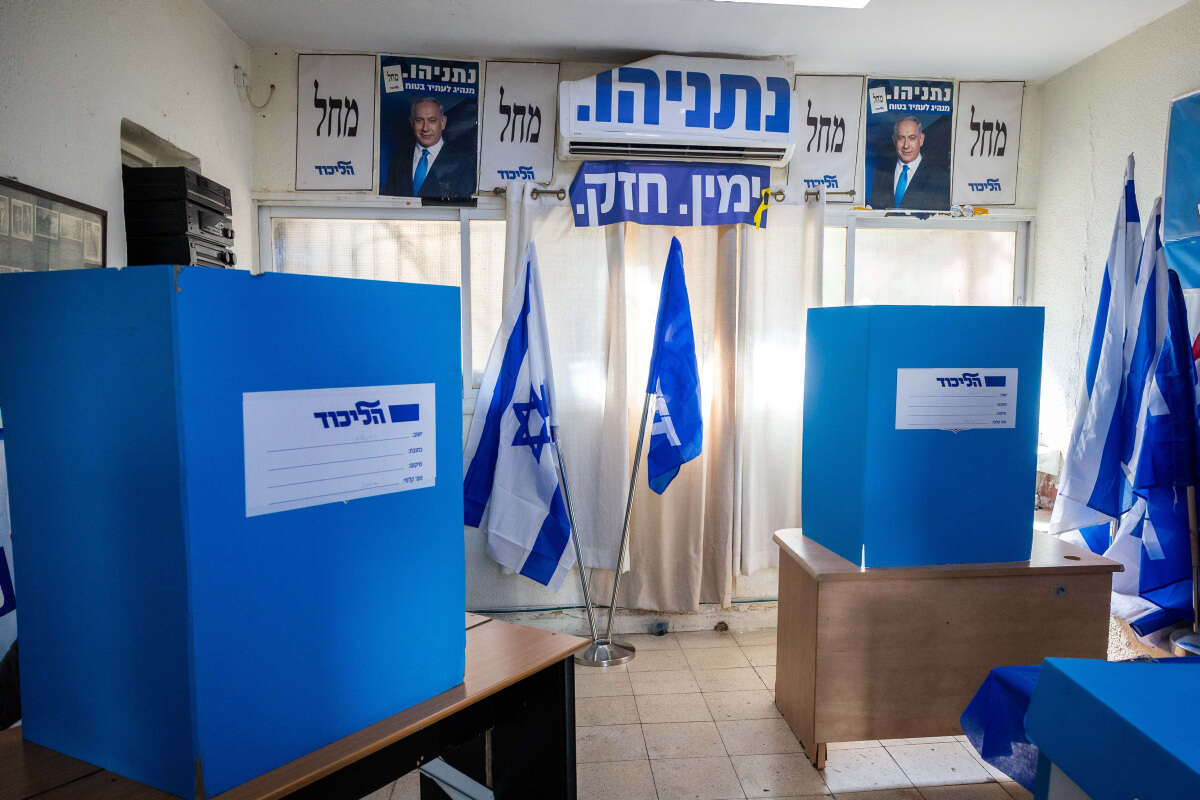
And so the fourth generation—Ohana, Levin, and company—will compete this coming Monday for more than a spot on the list. This will be the starting gun for the role of Likud's fourth-ever chairman. People say it every term, but it still seems that whether Netanyahu wins the premiership again or loses, Likud will have a new chairman heading into the elections for the 27th Knesset, when both the state and the man at its head enter the ninth decade of their lives.
In big tennis tournaments, some players have to fight through every match, while others, by virtue of their ranking, get a favorable draw and are spared the early rounds. So, with all due respect to the primary for the list—and to the question of which 20 sitting MKs get knocked out—the race for the Likud leadership will begin only once the list closes, in early September. Contending in it will be whoever makes it to the top, alongside Defense Minister Katz and Foreign Minister Sa'ar (Laurel and Hardy, Sharon once called them, when they worked as a pair). And perhaps—chiefly—also the two figures Netanyahu has yet to reserve in the top ten. Israeli prime ministers in general, and Netanyahu in particular, never really think about a successor, for the simple reason that none of them ever planned to step down. But if a figure of real weight is slotted in near the top of the Likud list, that will still be the closest thing to a writ of succession.
Splintered unity block
Elections held on the date fixed by law create an optical illusion, as if the campaign were already in full swing. It's a dangerous illusion. In some ways, the elections haven't started. Likud, for instance, has so far spent exactly zero shekels on advertising. Lieberman not much more. There are no lists yet, the Arab parties haven't sorted themselves out, and neither have the splinter parties in the center. What now looks like a law of nature—Eisenkot's clear lead of the bloc—is a very fresh phenomenon, less than two months old.
A certain shift has taken place in the change bloc over the past two weeks. Bennett halted his slide in the polls and found his element: nonstop talk of work plans and on-the-ground conversations, eye to eye, hammering every hard charge about broken promises and signed documents. At the same time—and this, too, is new—Eisenkot's climb has stalled, both in seats and in fitness for the premiership. Inside his party, they blame Lieberman and Bennett. For weeks those two have been explaining that Eisenkot lacks experience and isn't right-wing—so is it any wonder their own supporters are starting to be convinced? In fairness, it's not only them. The former chief of staff himself said, in a wide-ranging New Yorker profile, that "after October 7th the whole country moved right, but I stayed where I was." Where he was is a bit to the left of the zone from which prime ministers are usually thought to be electable.
The bloc's main problem was and remains Yair Golan. It's hard to organize a camp whose leader has only just changed. Had it been clear months ago who the leader was, he would have gone to Golan and cut a quiet deal with him: you dial back the extreme statements and put your candidates into a monastery of silence; we won't try to grab seats on your turf, and the day after the election you'll get the portfolios of your choosing. But right now there's no boss in the house, so Golan has to make sure his party stays big enough. His radicalization bankrolled the Likud campaign, which in turn forced Lieberman and Bennett to declare he'd be a marginal minister ("energy, maybe," said Bennett; "no important portfolio," Lieberman promised). Golan has to respond—and round and round it goes.
The change bloc still faces two big challenges: unification of the Arab parties and unification of the center bloc. If both happen, it will drift well clear of the coveted sixty-one seats. For the moment, to its temporary good fortune, it has no arena of infighting and splintering of the kind the rival bloc is going through as it pushes for broad unity right now.