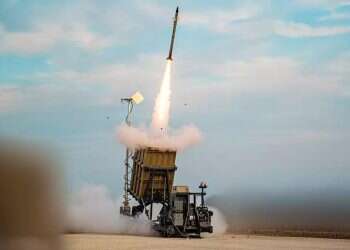
Nearly six months after the second Iran war broke out, the regime in Tehran is working hard to project an image of invincibility. Its senior officials describe the Strait of Hormuz as a "doomsday weapon" that brought the US to its knees. Drones and missiles are being launched at Arab countries around the clock. Maritime security in the Persian Gulf is under constant threat. Some would say the regime has only grown stronger, its position more firmly entrenched and its deterrence more powerful than ever.
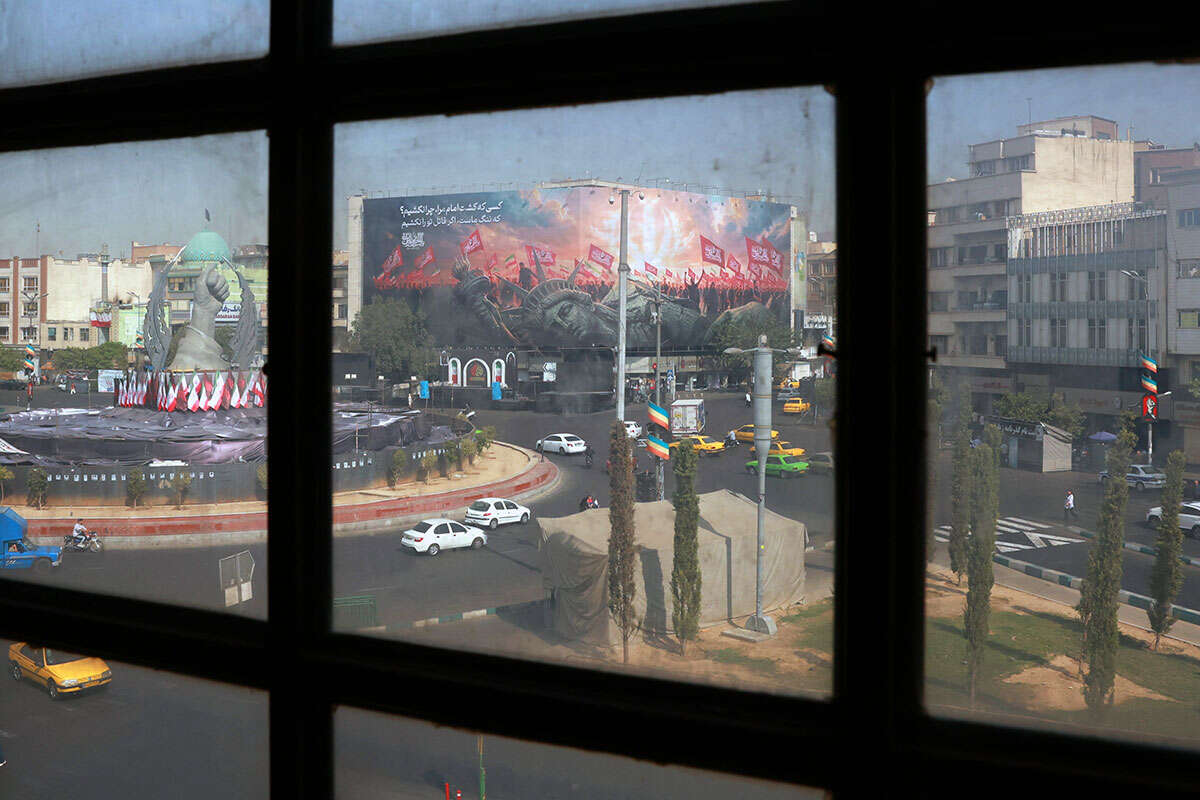
But testimony from inside Iran paints a more complicated picture. On the streets, people are acutely aware of the leadership vacuum and the divisions within the regime. Tensions between the Islamic Revolutionary Guard Corps and the government are worsening by the day. Meanwhile, the Iranian public is being squeezed between the consequences of the economic crisis and brutal repression by regime forces. Hardly a recipe for stability.
Young Iranians are still trying to keep the flame of resistance alive. Time and again, the regime tries to drown it beneath waves of despair, fear and disappointment. Time and again, those attempts fail. That is what happens when reality is worse. The regime has taken everything from them in exchange for illusions.
In an exclusive interview with Israel Hayom, an Iranian political activist offers a rare view from inside the country. Speaking on condition of anonymity, the activist, who belongs to the Progressive Students movement, Daneshjouyane Pishro in Persian, agreed to tell us what is happening behind the iron curtain. In recent months, internet access has been blocked for extended periods, preventing citizens from communicating with the outside world. Some have used VPN connections abroad or other methods to relay messages to relatives.
Unafraid of the long road ahead
In recent years, Progressive Students has been active at universities in central Iran and has supported the Woman, Life, Freedom movement, the protest movement that emerged in 2022 following the shocking death of Mahsa Amini, an Iranian woman whose only "offense" was that the morality police claimed she had not worn her hijab properly.
For now, their struggle is focused on the most basic of freedoms: the freedom to move around without fearing that your liberties will be violated because of what you wear; the freedom to demonstrate without fearing for your life; the freedom to determine your future in genuinely democratic elections, without restrictions and disqualifications imposed by Iran's Guardian Council; the freedom to live with dignity.
"The streets of Iran have become the arena for two confrontations," the Iranian activist said. "The first is between the Islamic Republic and the US and Israel. Government supporters see the fact that the Islamic Republic was not destroyed under the pressure of attacks by the US and Israeli militaries as proof that they and the government defeated the US and Israel.
"They also turn this imagined victory into an issue in their second confrontation. They want to impress the public and tell people, 'You saw that America and Israel couldn't overthrow us? Well, neither can you.'They wave flags as though we, the people, tried to destroy them with bombs and missiles and failed. From the outset, they manufactured an artificial movement (in the streets) to claim that they were the majority. Later, and continuing to this day, they have tried to create an atmosphere of terror. They want to create the impression of an 'immortal government,' an Islamic Republic that cannot be destroyed under any circumstances. But we, the forces that believe in Woman, Life, Freedom, know that we are dealing with a pufferfish, not a shark."
What did you think of the mediated talks between the US administration and the Iranian regime?
"What for? The government of the Islamic Republic has been at war with Iranian society since January 2017, and it has been pushed back continuously in that war. As people who began our political activity during those protests, we can say that we have been through a process and that the situation has changed dramatically.
"In 2017, we were a handful of disgruntled students. We worked hard to instill the desire for revolution among the friends who made up our initial core. Compare that situation with Iranian society today. We have reached the point where we are proposing a political alternative based on networking. We have established contact with many political forces, including parties, organizations and women's freedom groups, and we are working seriously with them. Protesters in Iranian society have good reasons to bring the revolution against the Islamic Republic to victory.
"We think there are two factors that are not being taken into account in these negotiations. First, Iranian society has both the power and the desire to protest for radical, revolutionary change in the country. We want modern, Western lives, free of a backward culture.
"Second is the extremely weak position on the Iranian street of those forces advocating negotiations. The Islamic Republic's power base rests on the Revolutionary Guards and the Basij, and on those who played the role of the people's killers during the protests. The government faction, the gang around Ghalibaf, Pezeshkian and others, does not have the ability to wrest power from the Revolutionary Guards. Quite simply, because under the Islamic Republic the language of government in Iran is the language of force and nothing else. Most of the forces identified with the reformists, such as Pezeshkian, for example, are little more than economic partners with no role in regulating political power."
We are all prisoners
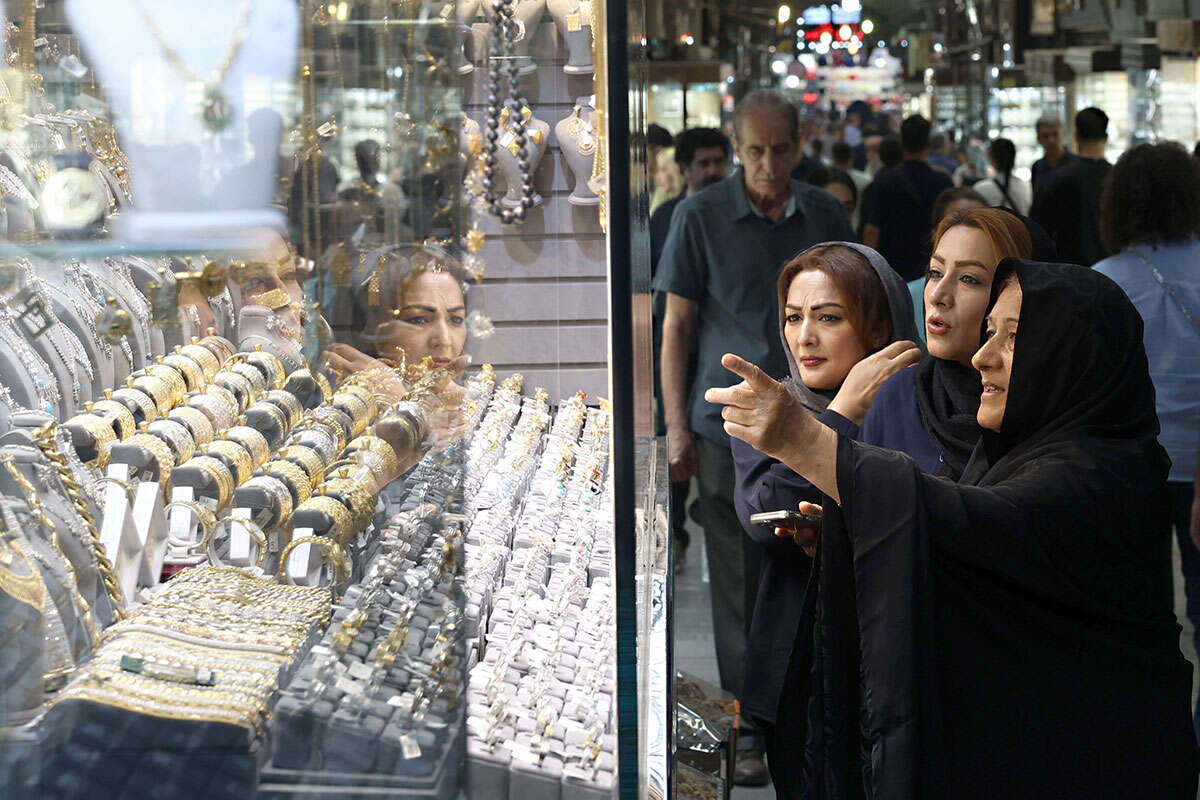
Alongside the political turmoil, Iran's economic crisis is deepening. According to various reports, the country is suffering from severe fuel shortages, a paralyzed banking system and soaring inflation. Added to that is the US blockade, which has brought crude-oil exports to a near standstill.
The Financial Times reported this week that Iran was still receiving income from cargoes that left the Persian Gulf during the ceasefire and were only now reaching buyers in Asia. However, no tankers carrying cargoes have been seen loading at Kharg Island, Iran's main oil-export terminal, which has been idle since the end of July. "It looks as though the Islamic Republic is burning through all its strategic reserves," the activist said. "High prices are making life difficult for everyone, and dissatisfaction is evident across every sector.
"We are not currently seeing food shortages, but that doesn't mean people have access to food or even a minimum standard of well-being. Quality of life in Iran is steadily disappearing. Food prices have risen to the point that meals have to be prepared with very few ingredients. Even the price of legumes has risen sharply. In the past, people talked about how a young person could ever afford a home and a car. Now they talk that way about food, basic-quality groceries and making a living. Buying clothes or going to a cafe has become a huge monthly expense for young people. The situation for families is far worse, and there is an enormous wave of family conflict, mainly because of economic problems."
The domestic pressure is evident not only in economic hardship but also in the regime's continuing repression. At the beginning of this month alone, Iranian authorities announced the execution of two prisoners, Omid Behzad and Pouria Safvat, who had been convicted of "spying and intelligence cooperation with Israel."
In July, human rights organizations reported that dozens of prisoners, including minors, could face execution. Reports indicate that dozens of people are known to have been executed on security-related or political charges. Those, of course, are only the people whose cases are known. The fate of those who are not executed is hardly better. They are given lengthy prison sentences, subjected to flogging or tortured.
"The Revolutionary Guards repeatedly declare that their policy is based on intimidating civilians and people who are not members of the organization," the activist said. "All Iranians, and protesters in particular, have experienced firsthand the brutality of these savages. They know that confronting this force means killing or being killed. The Revolutionary Guards and the Basij have placed ever-increasing pressure on civilians since January. They have effectively taken the families of people killed in the protests hostage so that they will say nothing about their loved ones.
"They have also taken hostage the relatives of people sentenced to death and the families of political prisoners. We have many reports that even second- and third-degree relatives of people sentenced to death are under enormous pressure to conform to government demands. For us, the protesting public that believes in a revolution like Woman, Life, Freedom, the Revolutionary Guards are like prison guards. The only reason they cannot kill all of us is that there would be almost nothing left of society. Otherwise, they would do it."
The divisions that followed
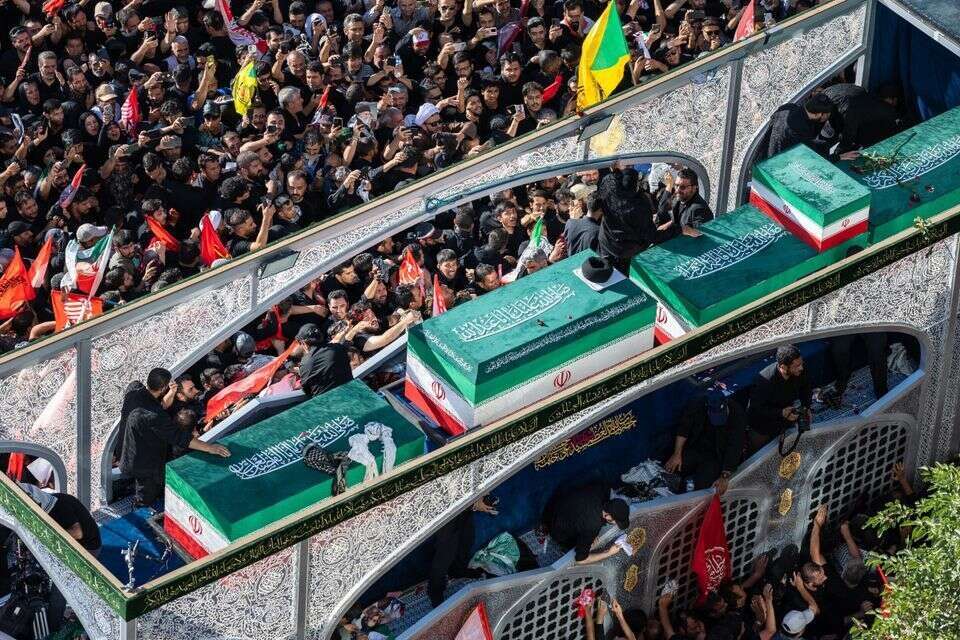
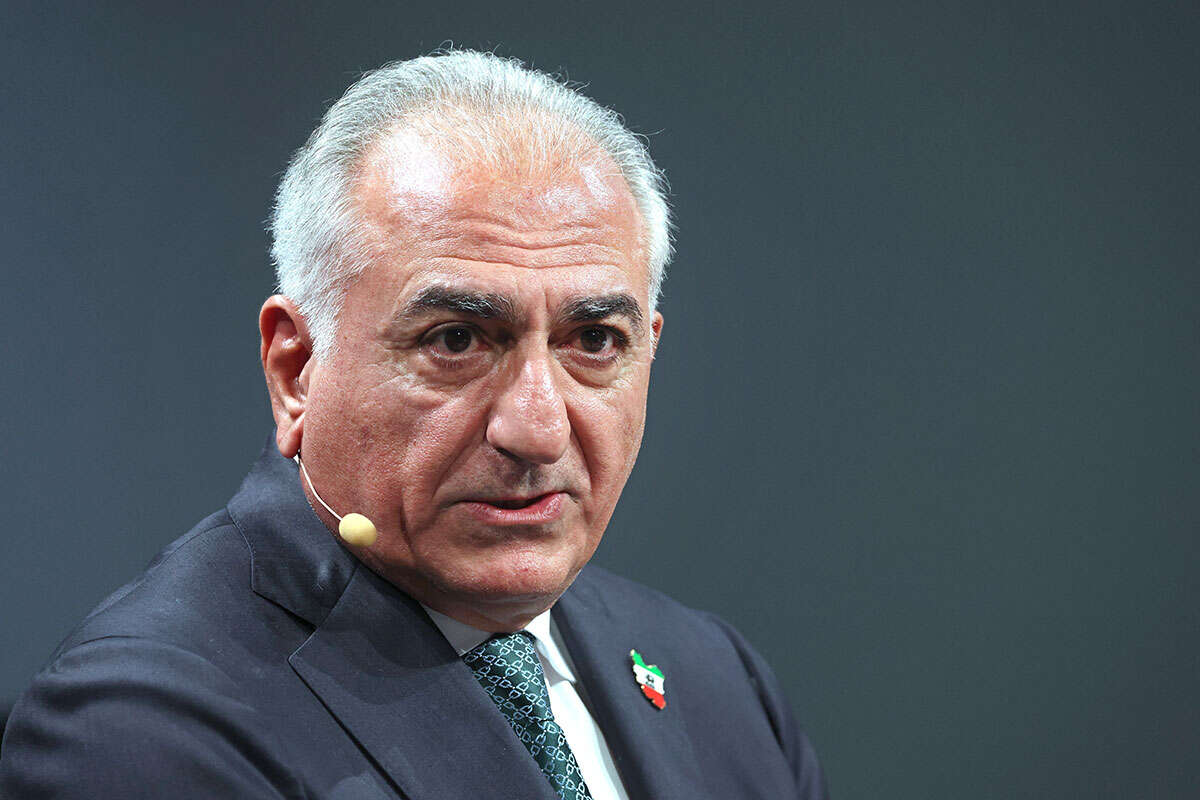
After regime leader Ayatollah Ali Khamenei was eliminated in the opening strike of the war, his son, Mojtaba Khamenei, was chosen as his successor under pressure from the Revolutionary Guards. Only this week, long after his appointment, footage of the younger Khamenei was released. It did not put to rest reports about his poor health, difficulties communicating with him or questions about who is actually running the country.
One of the regime's most powerful figures is Ahmad Vahidi, a veteran Revolutionary Guards commander. Vahidi is wanted by Argentina over his alleged involvement in the 1994 bombing of the AMIA Jewish community center in Buenos Aires and previously served as Iran's defense minister. Rumors about Mojtaba Khamenei's condition were fueled by the fact that he confined himself to written statements and avoided public speeches.
Another prominent figure is former Revolutionary Guards commander Mohsen Rezaei, who was appointed this week as secretary of Iran's Supreme National Security Council after serving as Mojtaba Khamenei's military adviser. In July, Rezaei described the Strait of Hormuz as "more important than dozens of atomic bombs."
For the regime's opponents, these are signs of weakness that cannot be ignored. "Ali Khamenei, the former leader of the Islamic Republic, managed the power structure in such a way that the reins of government were concentrated in his own hands," the Iranian activist explained. "After him, given that he had no complete political trust in any of those who survived the war, we can say with a high degree of confidence that the power vacuum is far more significant than the roles being played by Mojtaba, Vahidi or Ghalibaf's gang.
"In our assessment, the division of forces within the government looks like this: There is the fundamentalist gang close to Khamenei, the supposed 'believers' in the 'cause of resistance.' They were given the task of physically suppressing the people and controlling the country's military and security sphere. Then there is the reformist gang, which was instructed by Khamenei to provide the political groundwork required for the repression carried out by the regime.
"In reality, these are two arms of the same body, and Ali Khamenei used to be at its head. The separation between them was the elder Khamenei's trick for preserving his legitimacy, and it worked for decades. He managed to engineer both Iran's security sphere and its political sphere. But now this project has lost not only its leader, but the only person capable of maintaining a balance of power between those two arms in response to changing conditions at home and abroad," he added.
"The elimination of Ali Khamenei was the smartest decision ever made. These two arms are at odds with one another and will probably spend some time fighting over how political roles, repression and the military-security sphere are divided between them. We have to make the most of this situation and exploit the confusion among our enemies. It appears that neither of these two arms is capable of completely replacing the other."
Let change grow from within
The student movement is not interested merely in bringing down the regime. It wants to establish an entirely different system of government. When the war began, one of Israel's stated objectives was to create the conditions for regime change. In that context, reports emerged of plans developed within the Mossad to install former Iranian President Mahmoud Ahmadinejad as the country's leader. As expected, the proposal drew fierce criticism in Israel, since Ahmadinejad was one of the most antisemitic and repressive presidents in the history of the Islamic Republic. There is also Iran's national trauma over past attempts by Western powers to engineer regime change.
Against that background, the movement stresses that it opposes foreign intervention aimed at installing a new ruler. Instead, it advocates assistance for existing domestic movements. "We want to establish a government in Iran in whose formation the people themselves will genuinely participate," the activist said. "We do not rely on coups or foreign intervention to determine the fate of Iran's government. We support political, military and international assistance to create civilian and military resistance cells against the Islamic Republic. We have the courage to say that we will bring about the fall of the Islamic Republic by every possible means.
"For us, a democratic government is one grounded in the experience of the Woman, Life, Freedom movement. We see that movement as an ideological foundation for changes in Iranian society. A major grassroots intellectual movement that succeeded in changing the DNA of political struggle in Iran is now our compass. We understand that the existence of a genuine political alternative capable of confronting the executioners and taking power from them requires political clarity and a spirit of progress.
"We are realistic about politics, and when major changes such as war occur, we implement our long-term policies very quickly. Our response to the events that followed the 2022 Woman, Life, Freedom protests, such as the Oct. 7 massacre, the fall of Bashar Assad in Syria, changes in Iraq and other developments that weakened the Islamic Republic and political Islam across the region, was to propose a political alternative centered on Iran. We have a plan, and it is already being implemented."
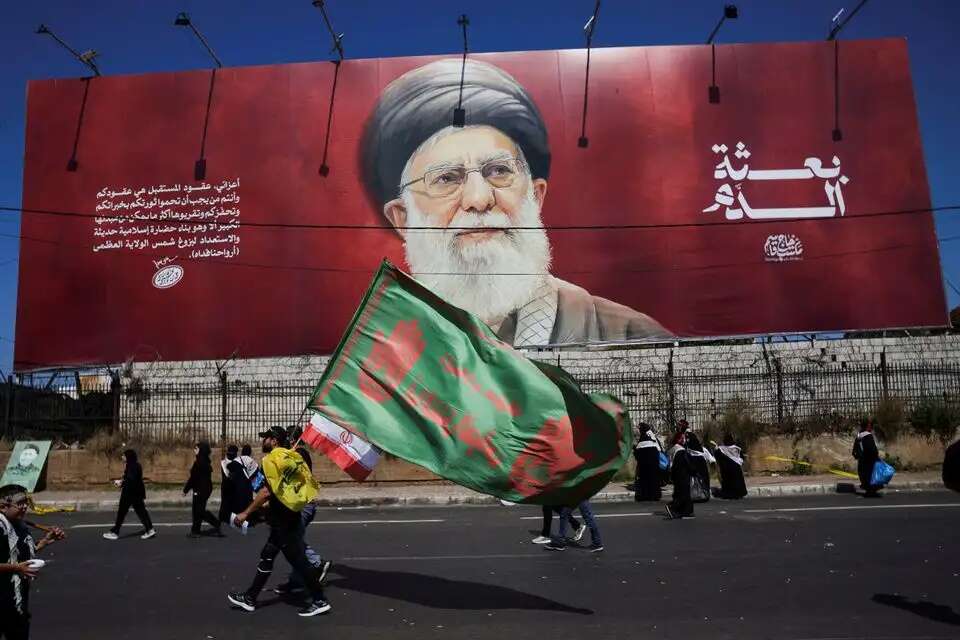
In that context, what do you think of the shah's son, Reza Pahlavi? Is he someone who could lead an interim government in Iran until democratic elections are held?
"Reza Pahlavi had the material opportunity to play a positive role in the changes taking place in Iran. He has the support of lobbyists and is known to possess considerable wealth, which gives him the ability to shape a narrative and build a media operation. But he has disappointed us repeatedly. The fact that he is unable to control his supporters, or that he himself organizes people to reject and push aside other political movements, is extremely worrying. We do not want, after everything we have fought for, to descend once again into assassinations, repression and executions.
"You are a journalist in Israel, and you found us and asked us questions. We do not believe we are so inaccessible to someone who claims to be leading a revolution that, even today, there is no contact whatsoever between us and his team to coordinate political activity. Meanwhile, we are in constant contact with various political parties, from Kurdistan to Azerbaijan and Balochistan, as well as political figures from both the Left and the Right. Given everything we have said, we cannot realistically imagine him playing such a role (as an interim ruler).
"Iranian society, and particularly the progressive and pro-modernization forces that today make up the majority of those who consistently struggle against the Islamic Republic, are deeply critical of Pahlavi's personal leadership and performance. We would rather not continue blocking the path forward. We do not see the political arena as a struggle between ideologies, ethnic groups and tribes. We see it as a playing field for forces that must reach understandings through dialogue. We have taken that mission upon ourselves, and many students, women and young people have joined us.
"We consider ourselves responsible even for those Pahlavi supporters who shout, 'Death to the Left.' Unlike Pahlavi's approach, we want to represent all of Iranian society. That is why we consider ourselves bound to political flexibility, to assessing reality and to making the best possible decision on that basis. We hope Mr. Pahlavi will finally acknowledge reality, change his current way of operating and fulfill his responsibility to Iranian society as the representative of his supporters."
Finally, what is your message to Israel? Do you believe peace between the two countries will be possible in the future?
"We have already declared our message to all the peoples of the world. That message was 'Woman, Life, Freedom.' We want our country, Iran, and the peoples of the region to live in peace and prosperity, not in the shadow of Islamist terrorism and war crimes. Our criterion for relations with governments is the interests of the citizens of our country and universal human principles that no one should violate.
"We have stated that, despite our criticism of some of the Israeli government's actions, the people of Israel are not our enemy. On the contrary, they have succeeded in building a country in which the human rights of the population, including women's rights and children's rights, meet higher standards than in other countries in the region. We judge the strength of a nation and its objectives according to those criteria. That is why we believe peace with the Iranian people could carry with it a message of victory for modernity and Western values. Peace among the countries of the Middle East can help us avoid repeating the tragedies we have experienced."