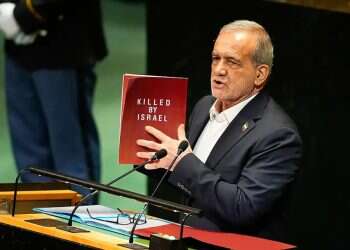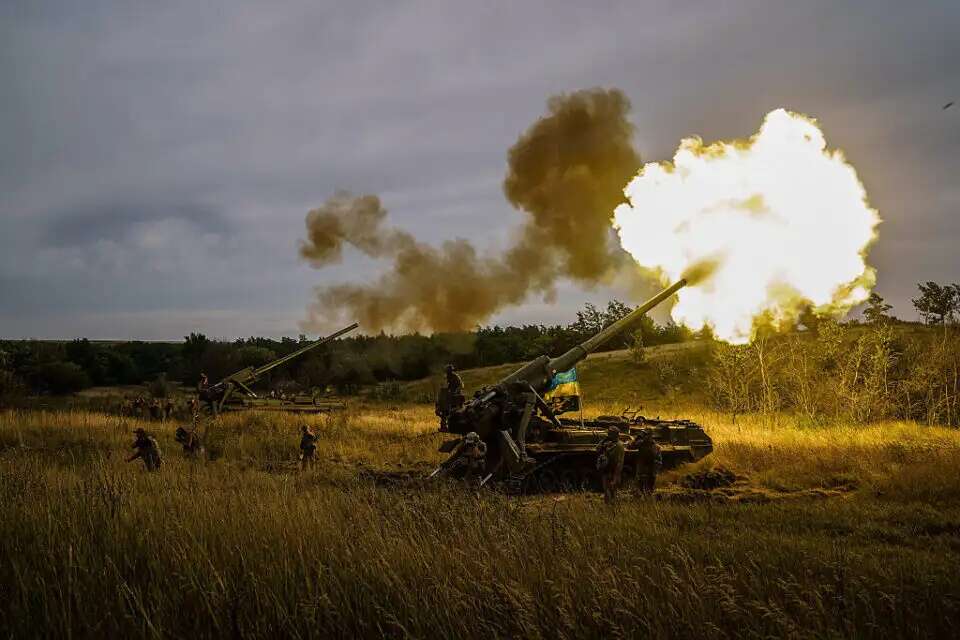
For years, the West has acted as though it has the luxury of deciding which wars concern it. Ukraine is a European problem. Iran is Israel's problem. The Houthis are a Middle Eastern problem. Russian troops in Moldova are in a frozen conflict. Missiles over the Red Sea are somebody else's shipping problem.
This logic works until the consequences arrive at their homes. Russia and Iran are very different regimes fighting very different battles, yet both have learned the same lesson: the West may be stronger, but strength means little when your adversaries believe you are afraid to use it. Washington and European capitals often fear escalation more than their enemies do. Restraint can prevent wars, but when it becomes predictable, it stops looking like restraint and starts looking like weakness. That weakness invites aggression from these regimes.
Ukraine and Israel are on the front lines of this problem, but the United States is not merely an uninvolved actor. Russia seeks to overturn the security order that America and its allies built in Europe. Iran has spent decades trying to weaken American influence in the Middle East while building the military infrastructure to threaten Israel, US forces and Washington's regional partners.

Russia's invasion of Ukraine did not suddenly begin in February 2022. Moscow spent years testing how much aggression the international community would tolerate. Russian troops remained in Moldova's separatist Transnistrian region after the Soviet collapse. Russia went to war with Georgia in 2008. It seized Crimea in 2014, fueled the war in the Donbas, and eight years later launched its full-scale invasion.
There is a deeper historical problem as well. The Soviet Union was never subjected to a reckoning comparable to the one imposed on Nazi Germany despite the Gulag system, mass deportations, political purges and decades of state repression. Modern Russia is not the Soviet Union, and Vladimir Putin is not a communist. But Moscow inherited parts of the Soviet security apparatus, imperial worldview and political culture. Even though Russia's ideology changed, many of the Soviet tactics survived.
Every successful act of aggression reinforces the same lesson: try again. If Russia succeeds in Ukraine, the message will extend far beyond Kyiv. It will demonstrate that borders in Europe can still be changed by force if an aggressor has nuclear weapons, sufficient manpower and enough patience to exhaust Western political attention.
Iran has spent decades conducting its own version of this experiment. Tehran built a network of armed organizations across the Middle East while much of the international community treated each component as a separate crisis. Hezbollah was Israel's problem. The Houthis were Yemen's problem. Shiite militias were Iraq's problem. Hamas was part of the Israeli-Palestinian conflict. But Iran's strategy was never limited to Israel or just the Middle East.
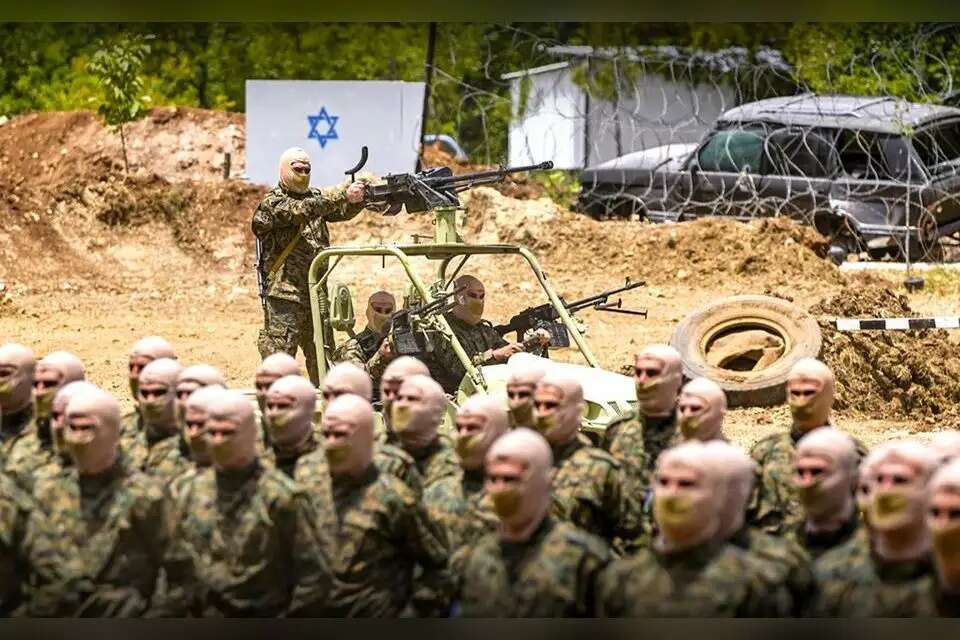
Iranian-backed groups have attacked American forces across the region. The Houthis turned one of the world's most important maritime corridors into a battlefield. Iran has developed missiles and drones capable of threatening Israel, American allies, military installations and global energy infrastructure. Its regional strategy has long included weakening the American position in the Middle East. Reducing Iran to an Israeli problem is therefore a strategic mistake by Western nations.
The Red Sea showed how quickly a supposedly regional conflict becomes international. Houthi attacks forced shipping companies to reroute vessels and required the United States and its allies to expend expensive weapons defending commercial traffic. In 2024, U.S. Central Command intercepted an Iranian weapons shipment bound for Houthi-controlled Yemen containing ballistic missile components, explosives, communications equipment and components for unmanned maritime systems.
The battle over the Strait of Hormuz only reiterates this point. The world quickly learned that disrupting one of the world's central energy routes has consequences that spread way beyond the Iranian coastline. Insurance costs rise, freight becomes more expensive, energy markets react, and eventually the cost is borne by ordinary Americans and Europeans. There is no such thing as "somebody else's war" when a missile fired in the Middle East can affect a family's fuel bill thousands of kilometers away.
Russia and Iran understand these connections, and it has become their modus operandi. Iran supplied Russia with Shahed drones that became an important weapon in the war against Ukraine, while Russia dramatically expanded domestic production of Shahed-derived systems. Moscow and Tehran have also deepened their political and strategic relationship.

Their objectives are different. Russia wants to dominate its neighborhood and weaken the Western security architecture in Europe. Iran wants to preserve its regime, expand regional influence, weaken the American position in the Middle East, and eliminate Israel as a strategic obstacle. But both benefit from a divided West reluctant to impose decisive costs.
This is where the Western call for de-escalation becomes dangerous. There is a difference between avoiding an unnecessary war and refusing to win a necessary one. Unfortunately, Western policy has not been able to make that distinction. They give Ukraine weapons but restrict how they can be used. They help Israel intercept missiles, but pressure it to avoid destroying the infrastructure responsible for producing and launching them. They protect merchant ships, but hesitate to impose costs severe enough to make attacking international shipping a losing strategy.
The result can become an endless defensive war in which the aggressor is granted unlimited attempts. Fire a missile. If it is intercepted, build another. Launch a drone. If it is destroyed, launch ten more. Arm a proxy. If the shipment is intercepted, send another. The defender must succeed repeatedly. The aggressor needs only one breakthrough.
Ukraine should not become a permanently bleeding buffer state between Russia and NATO. Russia must emerge from this war understanding that invading neighboring countries makes it weaker, poorer, and less militarily capable, not larger. Ukraine therefore needs the capabilities to seriously degrade the military infrastructure sustaining Russian aggression, consistent with international law, rather than simply enough weapons to prevent collapse.
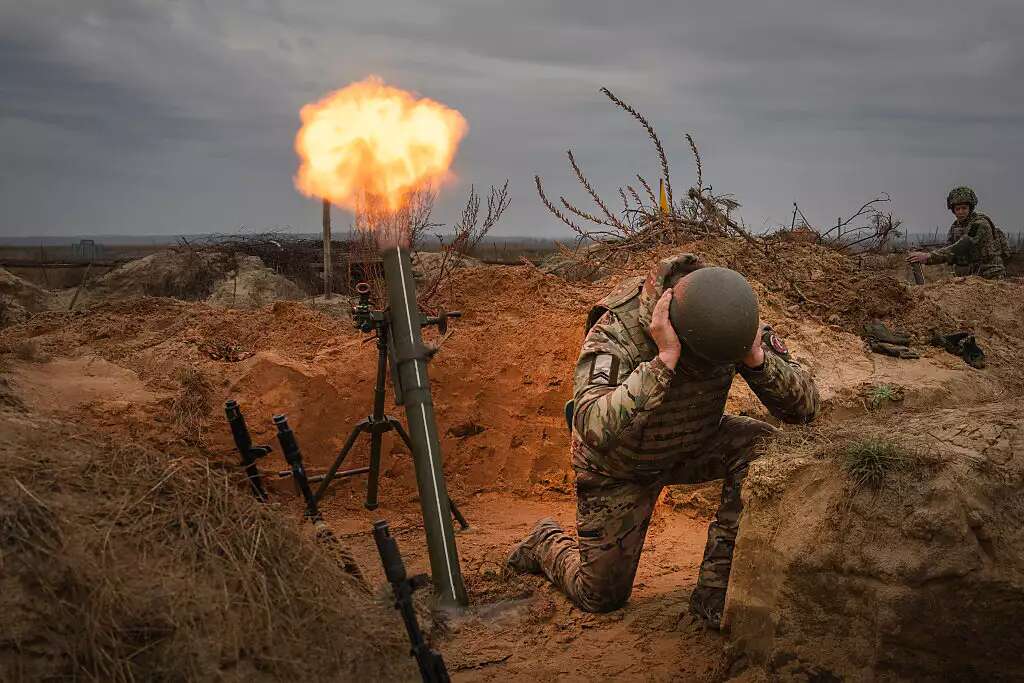
The same principle applies to Israel and Iran. Israel cannot reasonably be expected to spend another generation intercepting Iranian missiles and fighting regenerated proxy forces while the military architecture responsible for those attacks remains intact. Nor should the United States accept a regional order in which Iranian-backed forces can attack American troops, allies and international shipping while Washington's primary objective is simply preventing the confrontation from becoming larger.
Managed aggression
None of this means escalation should be pursued for its own sake. War is unpredictable, and restraint remains an essential instrument of statecraft. But restraint works only when the enemy believes there is a line it cannot cross without paying an intolerable price. When restraint becomes an assurance that aggression will never be answered decisively, it stops being deterrence.
The West should also stop treating escalation as something only democracies can cause. Russia escalated when it invaded sovereign states. Iran escalated when it built and armed a regional military network used against Israel, American forces and Washington's partners. The Houthis escalated when they attacked international shipping.
Confronting aggression carries risks. Allowing aggression to succeed carries risks, too, and those risks become more costly over time. Ukraine is fighting now. Israel is fighting now. The United States and Europe should give them the political support and military capabilities necessary to win rather than preserve indefinite wars in the name of de-escalation.
The Western public has to understand that it might not be your war today. But if your allies lose, do not expect it to stay that way.
David Rebel is an Israeli OSINT analyst and commentator specializing in Middle Eastern affairs, Iran, regional security, and geopolitical conflicts.