Nearly three years of a multifront war have passed without a decisive outcome or "total victory" on any front. In each front, the Israel Defense Forces continues to contend with the terrain and the enemy. Buffer zones and forward security areas have been established along three borders, effectively pushing the defensive line beyond the international border and creating additional depth that allows Israel to better protect the frontier, and above all, the communities closest to it.
Although the high-intensity fighting, ground maneuvers and continuous strikes ended long ago in both the Gaza Strip and Lebanon, the prospect of renewed warfare has never disappeared. The enemy, both Hamas and Hezbollah, has been rebuilding and recovering far more quickly than anticipated, once again exposing an underestimation of its capabilities. What remains of these organizations continues to pose a challenge and generate constant friction, causing damage and casualties among IDF forces.
At the same time, the enemy is constantly seeking to improve its capabilities as part of the continuing arms race, with fiber-optic drones being one example. Nor have the shifting roles of the political and military leadership helped: At times, one side pushes for an aggressive response that would upend the existing rules of the game while the other urges restraint, only for their positions to reverse later.

The Americans have been watching and assessing this reality from the outset. The prevailing argument in Israel was that the focus on Iran had pushed the nearer fronts to the margins, allowing Israel to continue pursuing the same policy without genuinely confronting the question of what strategy and policy could fundamentally change the situation. Maintaining a state of constant, low-level warfare on those fronts thus became the dominant strategy.
Here, too, it appears that assessment was mistaken. The United States has not abandoned ideas it promoted in the past, some before the war and others after it began.
The message never reached the battlefield
A widening gap has emerged between the way Washington wants, or is attempting to compel others, to portray the reality in the Middle East and what is actually happening on the ground. From the US administration's perspective, Lebanon and Gaza are fronts that can be moved from a wartime track to one of diplomatic arrangements: ceasefires, political negotiations, monitoring mechanisms, postwar plans and phased programs for ending the fighting.
But on the ground, neither front is anywhere close to being resolved. On the northern front, the United States succeeded in bringing Lebanon and Israel to a series of understandings and a cessation of hostilities. Yet the very fact that negotiations are continuing over an IDF withdrawal on the one hand and Hezbollah's disarmament on the other demonstrates that the war has not truly been brought to a close. The past week provided only further evidence of that.
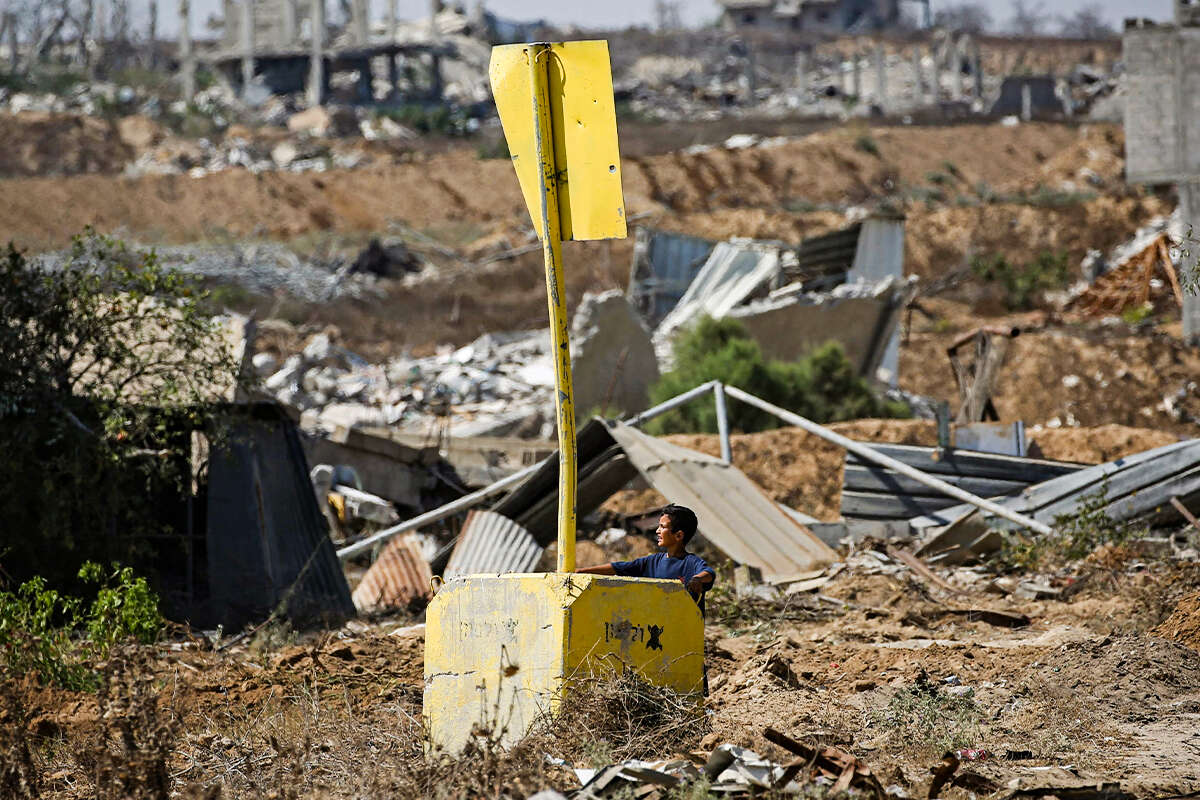
In Gaza, the gap is even more pronounced. US President Donald Trump announced progress toward the next phase of implementing his plan and said Hamas was prepared to disarm, a characterization Hamas quickly sought to distance itself from. Trump also said Israel would withdraw beyond the Yellow Line, a statement Israel likewise quickly rejected. After several days of pressure, a single word in the formulation was changed, referring instead to a withdrawal to the Yellow Line. Such word games merely conceal the gulf between declarations and the reality on the ground.
And when it comes to the Iranian front, the gap is greater and more troubling still. It is clear that any agreement reached between Oman and Iran, with the United States conspicuously absent from the negotiating table, would ultimately require Washington's consent. The US appears chiefly interested in putting the war behind it, along with what had been its central objectives: Iran's nuclear program and its ballistic missile program, both of which have long threatened far more than Israel alone.
The day after America
From Israel's perspective, the strategic danger is that the United States will define the mere transition from multifront warfare to negotiations and arrangements that are, in effect, nearly imposed by one side as a success, or even a "victory."
The Middle East has already taught us that negotiations do not necessarily mean a war is over. The United States should have learned that lesson from its dealings with Iran. Sometimes negotiations are simply another phase of the war, conducted by different means. A ceasefire may be durable or temporary. A withdrawal may be final or conditional. The disarmament of an organization may be genuine or merely declarative, and an international mechanism may exist on paper to monitor it.
The real test will not be the number of statements issued by leaders or the number of summit meetings held. It will be much simpler. Can Hamas still pose a threat to Israel? Does Hezbollah retain the ability, while its willingness clearly remains, to open fire and threaten Israel again? Can Lebanon ensure the effective exercise of its sovereignty? Will a governing mechanism emerge in Gaza that prevents Hamas from returning to power? Does Iran retain the ability to break out toward a nuclear weapon?

These and other questions leave Israel with few choices at this point. It must continue its force-building processes, draw lessons from every round of fighting in recent years, redefine the threats it faces and the scenarios against which it must prepare, and build its operational readiness and plans accordingly.
Israel must begin thinking about the day after America, meaning the day the United States leaves the Middle East, and the day the region is reshaped before our eyes, with Turkey emerging as a major player under US auspices. For now, regional defense alliances that exclude Israel are gaining ground at the expense of further normalization and expansion of the Abraham Accords. That reality demands long-term strategic thinking, one that does not ignore the complexities of the present but prepares Israel for the challenges of the future.