The world of intelligence agencies largely remains in the shadows, but French magazine L'Express ventured into the sensitive question of which service is "the best," focusing on European intelligence agencies and therefore excluding the US Central Intelligence Agency and Israel's Mossad. Britain topped the list, ahead of France and Ukraine, whose intelligence services have demonstrated almost unimaginable capabilities during the war against Russia.
To compile the ranking, L'Express surveyed 60 intelligence professionals and former officers from 25 countries. Although some declined to respond or were evasive because of secrecy requirements, dozens of intelligence professionals took part. Participants were asked to rank what they considered Europe's five leading services, with five points awarded for first place and one point for fifth.
"Only the very best from Oxford and Cambridge"
Taking first place was Britain's Secret Intelligence Service, better known as MI6. The veteran agency received no fewer than 251 points, more than 80 points ahead of France's Directorate-General for External Security, or DGSE, which finished second. The Netherlands' General Intelligence and Security Service, the AIVD, rounded out the top three with 97 points.
MI6's commanding lead was attributed to its exceptional ability to recruit and cultivate human intelligence sources, or HUMINT, overseas. Former CIA station chief Robert Gorelick told the magazine: "The United Kingdom has by far the strongest secret services in Europe. MI6 is extraordinary."
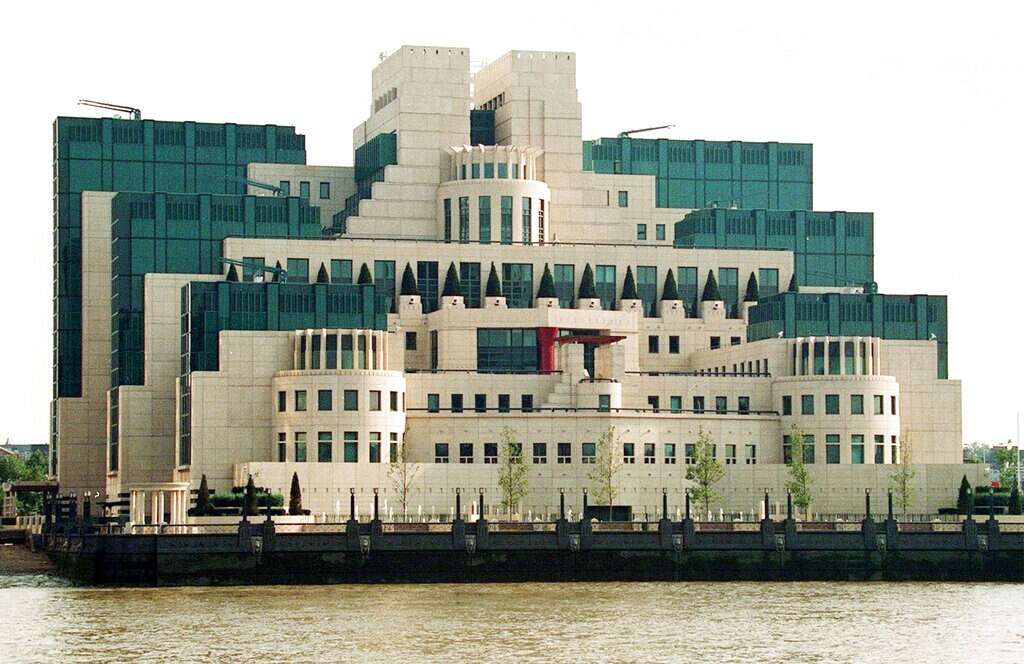
A former French intelligence official added: "The British have the ability to play the long game, investing in sources over a 10-year horizon, somewhat like the Russians. And they have a taste for dirty tricks." Another former French intelligence officer, Olivier Mas, said the organization was an inspiration to its counterparts and noted that "only the very best from Oxford and Cambridge join the service."
According to the French magazine, France secured second place because of the DGSE's broad range of capabilities, combining technical surveillance, human intelligence and operational capabilities in the field. The French service's extensive expertise in Africa was also highlighted.
The Netherlands' General Intelligence and Security Service ranked third. A former Portuguese intelligence chief praised the AIVD for its "extraordinary cost-effectiveness and impeccable reliability."
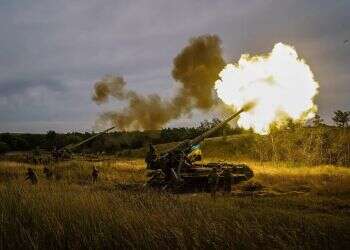
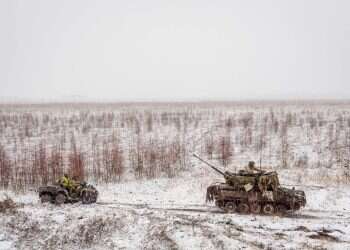
Although the list is based on the assessments of just 60 experts, it offers a rare glimpse into how intelligence agencies are regarded by their peers in the secretive world of espionage. Among the surprises, Ukraine finished a strong fourth with 77 points, ahead of Germany with 62. The experts surveyed praised the Ukrainians for their audacity, creativity and willingness to accept significant operational risks behind enemy lines.
One European intelligence official directly compared Ukraine's intelligence services to Mossad, saying the Ukrainian agencies demonstrated "extraordinary creativity and an ability to carry out particularly complex operations." Among the examples cited were Operation Spiderweb, known in Ukrainian as Pavutyna, and a series of disruptive operations and targeted killings of Russian generals and other senior military commanders.

Germany's Federal Intelligence Service, the BND, which finished only fifth, has for years been described by some experts as an occasionally "inefficient bureaucratic organization." In the L'Express ranking, the agency was praised for its international analysis but criticized for weak operational espionage capabilities. A former Swiss intelligence chief who participated in the survey compared BND personnel to "think tank researchers."
Small Estonia, meanwhile, stood out in eighth place, with its foreign intelligence service receiving praise for excellence in cyber intelligence and open-source intelligence, or OSINT. By contrast, the former intelligence officers surveyed awarded Hungary, Bulgaria and Slovakia no points at all.
Europe's top 10 intelligence services: Full ranking
MI6, Britain: 251 points
DGSE, France: 169 points
AIVD, Netherlands: 97 points
SBU and GUR: 77 points
BND, Germany: 62 points
SÄPO, Sweden: 40 points
PST, Norway: 34 points
VLA, Estonia: 27 points
ABW, Poland: 22 points
DSIS, Denmark: 16 points