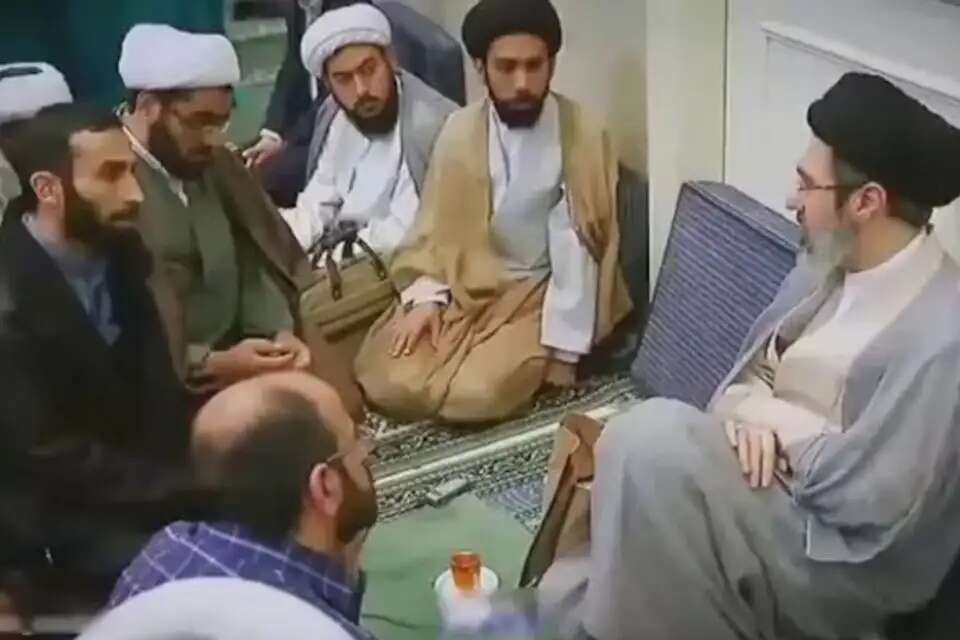
Iran's Mehr News Agency released a video over the weekend that it described as the "first video" of Iranian Supreme Leader Mojtaba Khamenei since he took office. The footage shows Khamenei attending what appears to be a religious studies class. The agency described the recording as "new footage" being published for the first time, but did not say when or where it was filmed or under what circumstances.
The video was released amid mounting questions over the supreme leader's condition. Khamenei has not appeared publicly or delivered any speeches since taking office. Until now, only several letters attributed to him have been published by Iran's official news agencies.
Iran releases video of Supreme Leader Mojtaba Khamenei. pic.twitter.com/52kmfbmbjU
— Globe Eye News (@GlobeEyeNews) August 9, 2026
IranWire, an opposition news website, reported two days ago that two sources close to the government of Iranian President Masoud Pezeshkian said Mojtaba Khamenei had not met with any member of the government since the US strike on the compound where the supreme leader was staying. His father, former Supreme Leader Ali Khamenei, and other family members were killed in the Feb. 28 attack.
According to the two sources, rumors have circulated at the highest levels of the Iranian regime that Mojtaba Khamenei is in extremely serious condition and could die at any moment.
A source close to Pezeshkian's cabinet confirmed that no government minister had met with Khamenei so far and said his physical condition was "not good." "We would not be surprised if we soon heard of his death," the source said. Last week, Iranian President Masoud Pezeshkian said communication with Supreme Leader Mojtaba Khamenei was currently "very difficult."
Khamenei, who was wounded in the US-Israeli strike that triggered the war in the Middle East, has not appeared publicly since succeeding his father, who was killed in the same attack. "It is very difficult to communicate with him right now, but in any case, his presence is a very great source of strength for us so that we can continue," Pezeshkian said.