Sunday Aug 9, 2026
NEWSLETTER
www.israelhayom.com
  • Home
  • News
    • Israel
    • Israel at War
    • Middle East
    • United States
  • Opinions
  • Jewish World
    • Archaeology
    • Antisemitism
  • Lifestyle
    • Food
    • Travel
    • Fashion
    • Culture
  • Magazine
    • Feature
    • Analysis
    • Explainer
  • In Memoriam
www.israelhayom.com
  • Home
  • News
    • Israel
    • Israel at War
    • Middle East
    • United States
  • Opinions
  • Jewish World
    • Archaeology
    • Antisemitism
  • Lifestyle
    • Food
    • Travel
    • Fashion
    • Culture
  • Magazine
    • Feature
    • Analysis
    • Explainer
  • In Memoriam
www.israelhayom.com
Home News Middle East

Saudi Arabia builds a new power bloc with Turkey and Pakistan

The Saudi-Turkish-Pakistani defense pact is designed to bolster the kingdom's security while reinforcing its position as the Gulf's leading power. The agreement seeks to strengthen collective deterrence, but for now Yemen's Houthis are continuing their attacks and threats

by  Shachar Kleiman
Published on  08-08-2026 21:27
Last modified: 08-08-2026 21:27
Saudi Arabia builds a new power bloc with Turkey and Pakistan

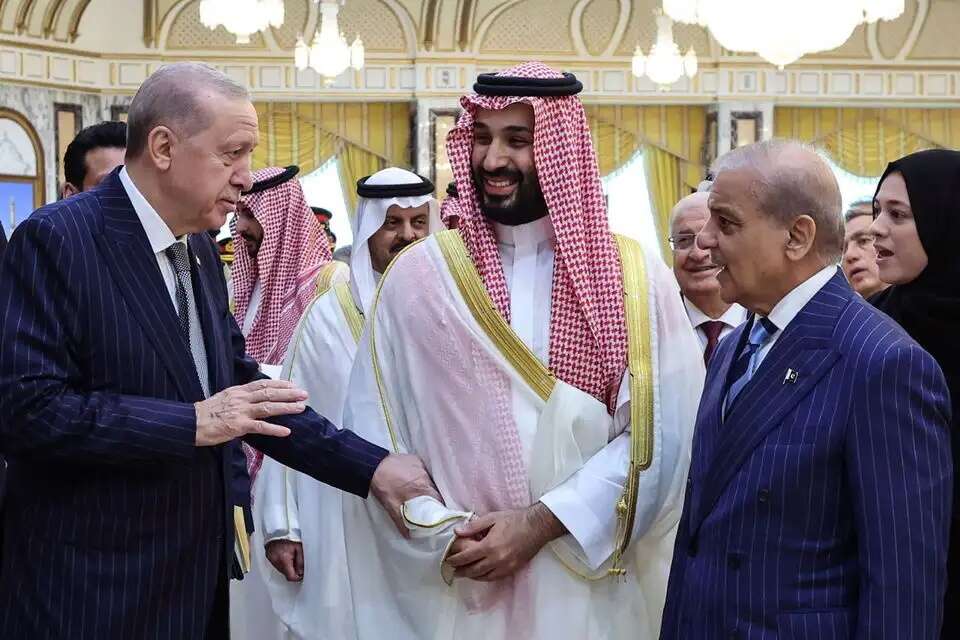
Turkish President Recep Tayyip Erdogan with Saudi Crown Prince Mohammed bin Salman and Pakistani Prime Minister Shehbaz Sharif. Photo: AFP

Share on FacebookShare on Twitter

Saudi Arabia, Turkey and Pakistan signed a "joint defense agreement" at a summit in Mecca on Friday. On Saturday, Turkey indicated that Egypt could also join the pact. For now, the alliance is intended primarily to serve as a counterweight to the Iranian axis, but no less importantly, to create a new center of gravity that bolsters the power of Saudi Crown Prince Mohammed bin Salman and Turkish President Recep Tayyip Erdogan.

The two leaders are not looking only toward Tehran and its terrorist proxies in Iraq, Lebanon and Yemen. Saudi dissatisfaction with the alliance between Israel and the United Arab Emirates has been apparent for some time. The Saudis, who regard themselves as the leaders of the Gulf, appear intent on strengthening their position against the Emiratis. To that end, bin Salman is prepared to consolidate his standing through an Islamic axis that could overshadow Abu Dhabi. Turkey, likewise, is seeking to build an Islamic axis as a counterweight to Israel's  regional power.

Officially, the three countries said they sought to "strengthen collective deterrence" and expand defense cooperation. The agreement also stipulates that "any armed attack against any one of the three states shall be regarded as an attack against them all." Erdogan stressed that the agreement merely reaffirmed the countries' right to self-defense and "targets no country." On the contrary, he said, it was open to other countries seeking "peace, prosperity and stability" in the region. From his perspective, however, Israel is chiefly among those that do not fall into that category.
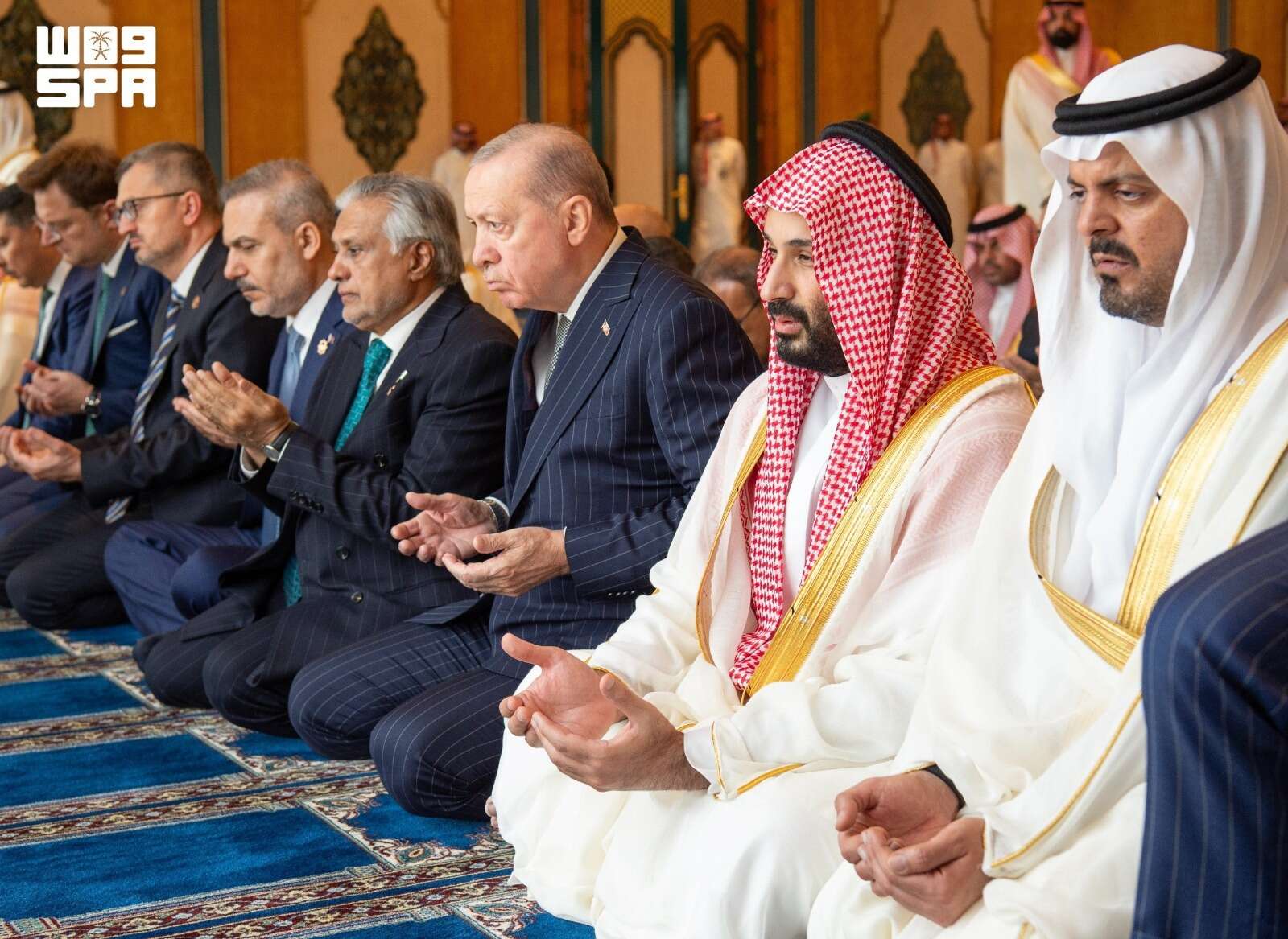
פגישת בן סלמן וארדואן , רשתות ערביות
Saudi Crown Prince Mohammed bin Salman meets Turkish President Recep Tayyip Erdogan. Photo: Arab Networks

Qatar welcomed the agreement. Former Qatari Prime Minister Sheikh Hamad bin Jassim bin Jaber Al Thani, a member of the ruling family, described it as an important and encouraging step. "I hope the remaining GCC states will take the initiative to join it, so that it becomes the beginning of an effective awakening towards a shared defence strategy in defence manufacturing, armament, planning and operational preparedness to confront the ambitions and threats facing the region," he wrote, referring to the Gulf Cooperation Council. For Doha, bringing Pakistan and Turkey into the arrangement strengthens the Islamist axis.

Saudi commentators have also pointed to the new opportunities created by the agreement, particularly for the development of defense industries. One Saudi commentator identified with the government wrote that Turkey has an advanced defense industry and Pakistan considerable military and technological expertise, while Saudi Arabia brings investment capacity, market share and a strategic location. Cooperation, he said, could be expanded to drones, missile and air-defense systems, radar, cybersecurity, artificial intelligence and satellites.

In the near term, however, the defense pact does not appear to have done much to deter Yemen's Houthis. Mahdi al-Mashat, chairman of the Houthi-controlled Supreme Political Council in Yemen, threatened Riyadh over the weekend, saying the group's "siege for siege" equation would continue until its objectives were achieved.

Referring to the new defense alliance, al-Mashat said anyone seeking to participate in what he called Saudi aggression and the continuing blockade was itself an aggressor, even if its involvement was dressed up under impressive-sounding slogans. He said Houthi-controlled Yemen's laws determined how hostile states would be treated. "Even if you mobilize the entire world on your side, it will do you no good," he warned. "The cost of peace is lower than the price of war."

The Houthis did not stop at rhetoric. Over the weekend, they carried out another attack against Yemeni forces backed by Saudi Arabia. If Riyadh wants to deter them, it will need a little more than regional agreements.

Tags: PakistanSaudi ArabiaTurkey

Related Posts

Iran strikes vessel in Strait of Hormuz as Pezeshkian calls for deal

Iran strikes vessel in Strait of Hormuz as Pezeshkian calls for deal

by Neta Bar and Dudi Kogan

Iranian president defends memorandum of understanding with US, says conditions are ripe for a deal. Financial Times: US blockade of...

US takes control of Gaza tunnel operations

Report: US intervention curbs Israeli response to Hezbollah violations

by Shachar Kleiman

According to Lebanese newspaper Nidaa al-Watan, Washington worked to restrict the scope of Israeli strikes in southern Lebanon. Lebanese source...

Hezbollah moves to undermine Lebanon-Israel framework agreement

Hezbollah moves to undermine Lebanon-Israel framework agreement

by Shachar Kleiman

As tensions rise, the talks between Israel and Lebanon in Rome are running into significant disagreements, while Hezbollah is once...

Menu

Analysis 

Archaeology

Blogpost

Business & Finance

Culture

Exclusive

Explainer

Environment


Features

Health

In Brief

Jewish World

Judea and Samaria

Lifestyle

Cyber & Internet

Sports


Diplomacy 

Iran & The Gulf

Gaza Strip

Politics

Shopping

Terms of use

Privacy Policy

Submissions

Contact Us

About Us

The first issue of Israel Hayom appeared on July 30, 2007. Israel Hayom was founded on the belief that the Israeli public deserves better, more balanced and more accurate journalism. Journalism that speaks, not shouts. Journalism of a different kind. And free of charge.

All rights reserved to Israel Hayom

Hosted by sPD.co.il

  • Home
  • News
    • Israel at War
    • Israel
    • United States
    • Middle East
    • Sports
  • Opinions
  • Jewish World
    • Archaeology
    • Antisemitism
  • Lifestyle
    • Food
    • Travel
    • Fashion
    • Culture
  • Magazine
    • Feature
    • Analysis
    • Explainer
    • Environment & Wildlife
    • Health & Wellness
  • In Memoriam
  • Subscribe to Newsletter
  • Submit your opinion
  • Terms and conditions

All rights reserved to Israel Hayom

Hosted by sPD.co.il

Newsletter

[contact-form-7 id=”508379″ html_id=”isrh_form_Newsletter_en” title=”newsletter_subscribe”]

  • Home
  • News
    • Israel at War
    • Israel
    • United States
    • Middle East
    • Sports
  • Opinions
  • Jewish World
    • Archaeology
    • Antisemitism
  • Lifestyle
    • Food
    • Travel
    • Fashion
    • Culture
  • Magazine
    • Feature
    • Analysis
    • Explainer
    • Environment & Wildlife
    • Health & Wellness
  • In Memoriam
  • Subscribe to Newsletter
  • Submit your opinion
  • Terms and conditions

All rights reserved to Israel Hayom

Hosted by sPD.co.il