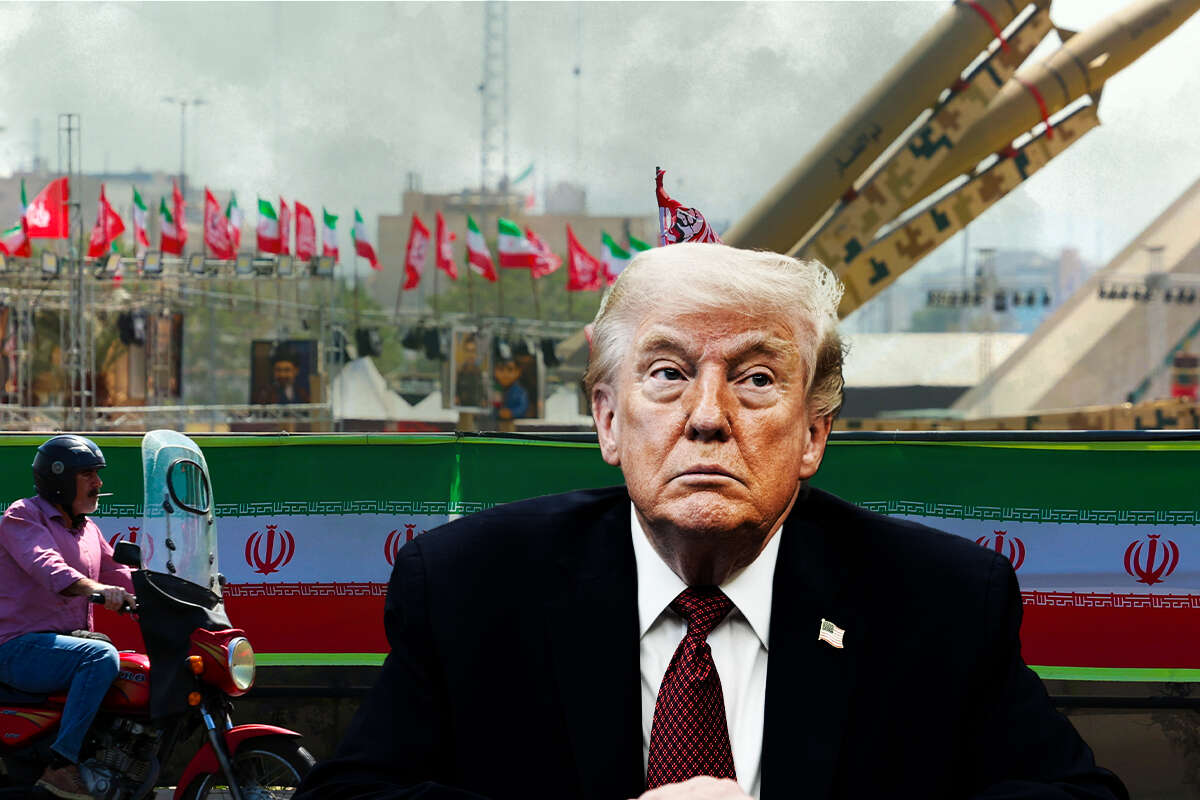
President Donald Trump's conduct toward Iran has become predictable. He issues warnings, raises the prospect of extensive strikes against Iranian infrastructure, and moves military forces closer to the region. Then, at the edge of confrontation, he responds to appeals from mediating states—Pakistan, Turkey, Qatar, and Egypt—and grants Tehran time for negotiations.
In Israel, this conduct is often interpreted as vacillation or inconsistency. In my view, that interpretation is too simplistic. Trump is serious about his intentions. He believes in American military superiority and in using that power to compel Iran to submit and prevent it from acquiring a nuclear capability. At the same time, he is aware of constraints and risks that require caution.
The first is the danger of a large-scale humanitarian crisis. Strikes on power stations, water systems, bridges, railways, and energy infrastructure could produce images of darkened hospitals, water shortages, injured children, and waves of refugees. Even when the adversary is a brutal regime, American society would find it difficult to remain indifferent to such scenes.
A second consideration is the danger that American aircrew might fall into Iranian hands. In any campaign involving thousands of sorties, an aircraft may be brought down by air-defense fire or lost because of technical failure. A single image of a wounded American pilot on Iranian television could transform public opinion in the United States and restrict the president's freedom of action. The memory of the Tehran hostage crisis and the failed rescue operation under President Jimmy Carter remains deeply embedded in American consciousness.
Third, a large-scale American attack launched after a cordial meeting between Trump and Israeli Prime Minister Benjamin Netanyahu could reinforce the impression that Israel persuaded the president to escalate the conflict. When Israeli Defense Minister Israel Katz describes American aircraft and refueling planes taking off from Israel to strike Iran, while noting that Iran has attacked American bases elsewhere but has so far refrained from attacking Israel, such remarks may be interpreted in Tehran as provocation and public humiliation.
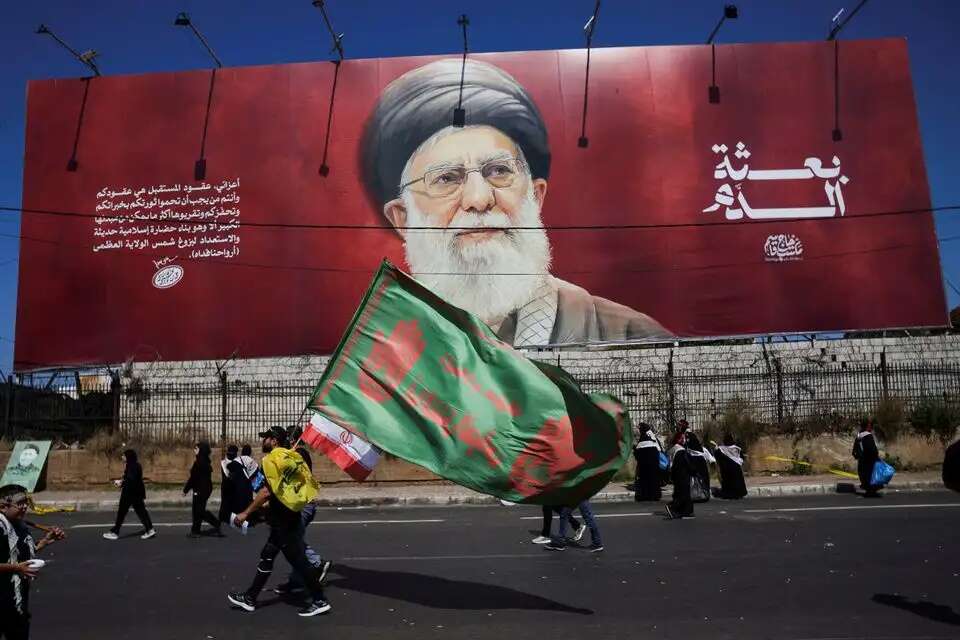
For Washington, this is a genuine risk. Iran's leadership may conclude that it can no longer tolerate such humiliation and launch a direct attack on Israel. That would give Israel grounds for a broad counterattack and could draw the United States into precisely the escalation Trump has sought to avoid. Tehran could also claim that Israel deliberately tried to provoke an Iranian response in order to force Washington into an all-out war.
Another factor is uncertainty surrounding Iran's stockpile of enriched uranium. Even if an attack destroyed nuclear facilities, there is no guarantee that it would eliminate the uranium itself. The material may have been dispersed, concealed, or stored at an underground site whose location remains unknown. Centrifuges, tunnels, and buildings can be destroyed while the regime retains its most important nuclear asset.
Even if the uranium's location were discovered, that would not necessarily mean it could be removed. If the material is buried deep underground, inside tunnels or fortified facilities, extracting it would require physical access, specialized equipment, security, technical expertise, and perhaps Iranian cooperation. An airstrike may destroy a site or block its entrance, but it cannot necessarily seize the material, remove it, or ensure that it will not be concealed elsewhere.
Finally, the overthrow or extreme weakening of the regime could produce chaos. Iran is a multiethnic country with minority communities. The collapse of central authority could trigger territorial struggles reminiscent of Yugoslavia's disintegration. It could also produce a refugee flow toward Europe and the loss of control over weapons, uranium, and strategic infrastructure.
Trump's conduct, therefore, need not be seen as weakness. He seeks to preserve a credible military threat, but would prefer economic pressure, blockade, and diplomatic isolation to compel Iran to make concessions without drawing the United States into a war whose outcome no one can foresee. This is not vacillation. It is a policy of power, tempered by a sober recognition of the potential costs and dangers of the day after.