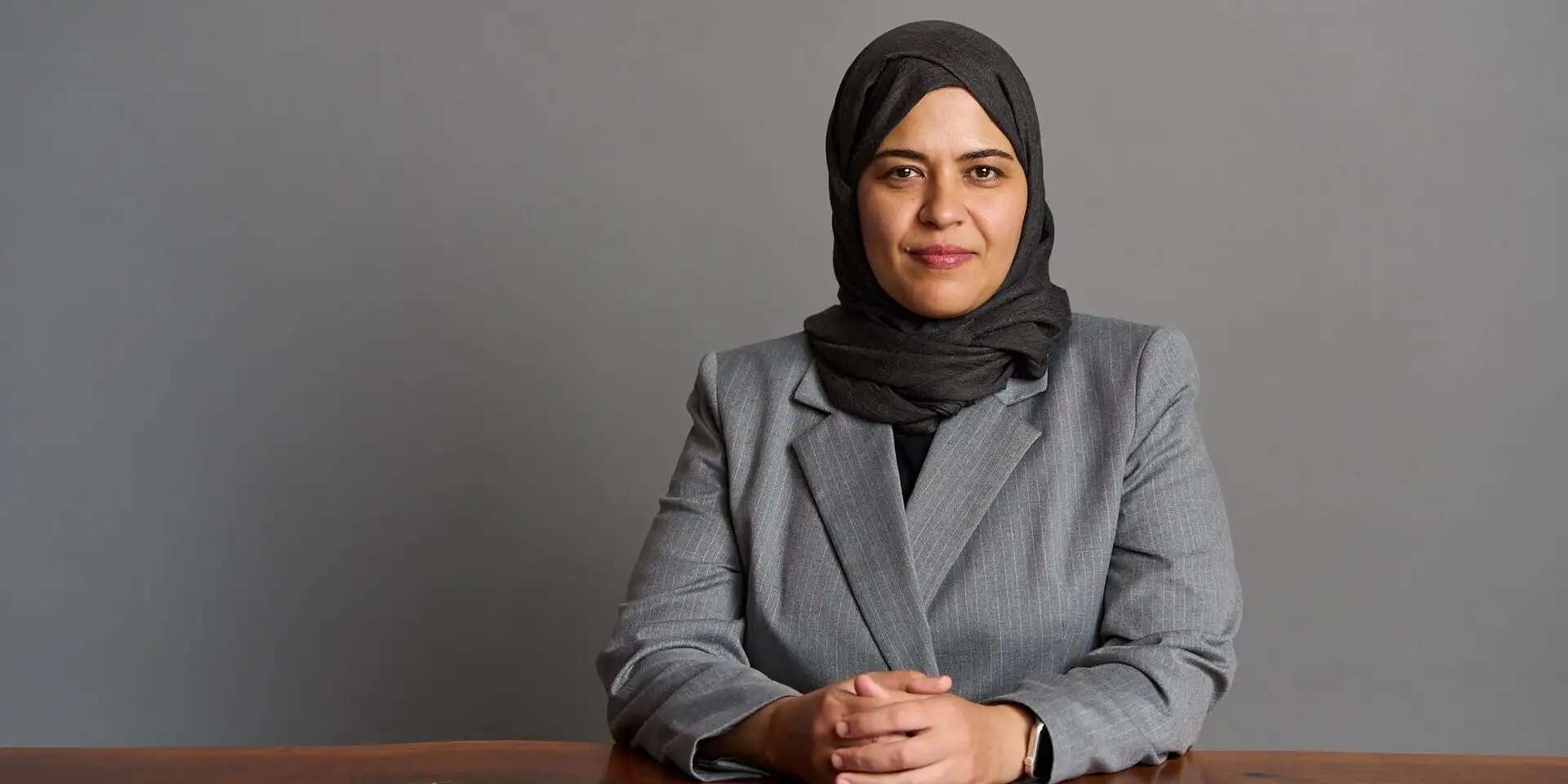
Within just five hours, Dalia Ziada managed to leave Egypt, abandoning her entire life and everyone she knew. In that brief span of time, she packed what she could, received help from friends in Israel and the US, and fled the country where she had been born, raised and educated, and where she had built a career and become a prominent public figure. It happened just two weeks after the Oct. 7 massacre.
Until the final moment, she refused to believe she would have to flee. Ziada was already well acquainted with incitement campaigns, abuse and online threats. As an activist for liberal democracy, a fierce opponent of the Muslim Brotherhood and an outspoken supporter of Israel's right to exist, she had paid a public price for years. This time, however, another threshold had been crossed.
"It came to the point that they were using a verse from the Quran to justify my killing," she says. "A local group in my family's neighborhood went to my family's house looking for me. Thank God I was not there that night." At the same time, she says, lawyers affiliated with the Egyptian government began pursuing legal action against her on serious charges. "These two combined made me feel trapped," she says. "I could have ended up in jail waiting to be executed on treason accusations, or being immediately killed by some Salafists. And then the government would come out and say, 'Oh, we're sorry,' and that's it. It was a matter of life or death."
The trigger for all this, she says, was her public declaration that Hamas was a terrorist organization and that Israel, like any other country, had the right to defend itself. But that was only the beginning.
One against all
Ziada, 44, was born and raised in Egypt in a Muslim family. Her father, who died when she was 19, was drawn to Sufism, a more spiritual and moderate tradition within Islam. She describes him as a liberal, open-minded man who deeply influenced her worldview. After his death, in a conservative society where her mother was left alone with two teenage daughters, Ziada began wearing the hijab. She emphasizes that this was not a purely religious decision, but a response to social pressure and her mother's need to protect her and her sister. Over the years, the head covering became part of her identity, as well as the focus of an unresolved internal crisis.
She studied international relations at the Fletcher School of Law and Diplomacy at Tufts University in Massachusetts and devoted her career to researching Middle East geopolitics, advancing democracy and working for regional peace. For her, "peace" was never limited to an agreement between Israel and the Arab world.
"By peace, I'm speaking not only about Arab-Israeli peace, but peace between all the factions of the Middle East," she says. "You have Muslims, Jews, Druze, Christians. You have people from different religious and ethnic backgrounds, the Kurds and others, who have spent, I would say, thousands of years fighting with each other. My hope and my fight, and still my fight, is to get to a point where they understand that we are all human, regardless of where we belong. At the end of the day, we all want to live good lives. We all want to live in peace."
From that standpoint, she says, she had always supported Israel's right to exist. "This is unfortunately not very common among people with my background, Muslims, Arabs, Egyptians and so on," she says. "This caused me a lot of problems and a lot of trouble in the past, but it did not get to the point that it really threatened my life."
At the same time, she was waging an ideological campaign against the Muslim Brotherhood. In her view, the organization is not merely a political rival, but the bearer of an ideology that rejects the very principle of human equality. "The ideology of the Muslim Brotherhood removes this concept that all of us are human and equal," she says. "It tries to divide the world into Muslims, who are good and superior to everyone else, and non-Muslims, who should be submissive to Muslims. This is exactly the ideology of the Muslim Brotherhood, which is something I totally rejected as a Muslim myself."
Then came Oct. 7.
According to Ziada, she was one of only three people in all of Egypt who dared to say publicly that Hamas was a terrorist organization. The claim illustrates the extent of the isolation she felt. "We are speaking about the most populous country in the Middle East," she says. "We are over 110 million people now, maybe more. It is really dangerous to think that this massive population could be radicalized."
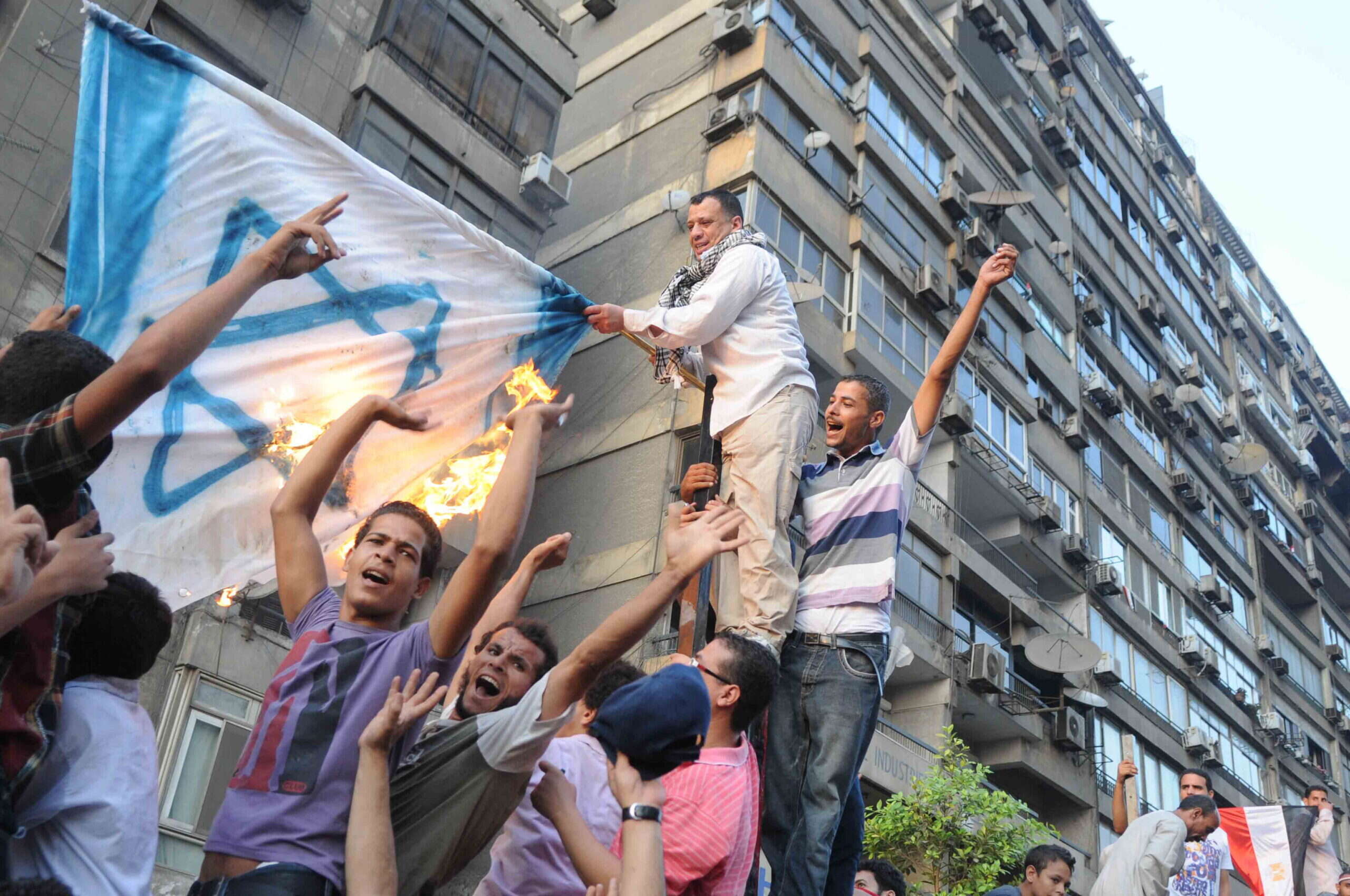
What shocked her was not only the terrorists' actions, but the response on the Arab street. "We saw how horrible it was, how brutal Hamas and its followers were toward Israelis, including innocent people who were literally in their pajamas in their own homes," she says. "Unfortunately, people in Egypt and in so many Arab countries were celebrating what happened as a victory."
She stresses that these were not merely members of the Muslim Brotherhood, Salafists or extremist activists. "They were mainstream Egyptians, people who look like me," she says. "So I had to speak up. I had to tell them exactly what happened on that day. It is not acceptable to celebrate such brutality. Then they turned against me."
According to Ziada, lawyers affiliated with the Egyptian government filed complaints accusing her of spying for Israel's Mossad intelligence agency, committing high treason, threatening Egypt's national security and damaging the country's international reputation. At the same time, Salafist clerics circulated a fatwa stating that if she was "an ally of the Jew," then she was like them and her blood was no longer sacred.
When she contacted a senior official in the Egyptian security establishment and asked for protection, she expected that her public standing would at least ensure that her request was taken seriously. Instead, she says, she received the opposite response. "He was very aggressive with me," she says. "He said that I had made everyone angry and that I deserved what I got, simply because I said Hamas was a terrorist organization and Israel, like any other country, had the right to defend itself."

Returning to life
Even today, Ziada is not certain why the Egyptian government chose to act against her. At first, she thought the regime might have wanted to offer her up as a scapegoat to a public inflamed by support for Hamas. But the attacks did not stop. A few weeks before the interview, she says, a member of parliament close to the regime appeared on a prime-time television program, called her not only a "traitor" but also a "terrorist," and attacked her because of her outspoken opposition to Iran.
Ziada offers a complex explanation for the apparent contradiction between an Egyptian government that fights the Muslim Brotherhood and its hostility toward her. "The current leadership in Egypt, President Abdel-Fattah el-Sissi and the military, are against the Muslim Brotherhood, of course," she says. "But why they are against the Muslim Brotherhood is a question we need to ask. They are not against the ideology of the Muslim Brotherhood per se. They are against the Muslim Brotherhood as a political entity that threatens their existence, threatens their throne. The Muslim Brotherhood is the only organized political group that can compete against the military."
When it comes to Israel, she argues, the ideological gap between the Egyptian military and the Muslim Brotherhood is far narrower. "The Muslim Brotherhood considers Israel pure evil," she says. "In the military ideology, until today, they still consider Israel our historical enemy, and it will always remain an enemy."
She says the peace agreement was perceived for years by many Egyptians not as true reconciliation between the two peoples, but as "a strategic agreement to stop war with Israel." "Even if on paper it is called a peace treaty, in real life, no, this is not how it was understood by Egyptians," she says.
The personal cost she paid was not limited to losing her homeland. Her family also cut off contact with her. "Even my mother," she says.
Her relatives, she says, found themselves under intense pressure from neighbors, extended family members and the authorities. Egyptian television displayed her face for days with a Star of David superimposed over it and announced, "We discovered the Zionist spy."
Her brother was harassed by security officials at his workplace, and family members were forced, she says, to physically confront Salafists who continued coming to their home after the police failed to protect them. "They had to fight physically against these Salafists to stop them coming back to our home," she says. "They also contacted the authorities to come protect them, the policemen, and they did not come. So I can understand why they are angry at me. I hope they do not hate me yet."
Her first month in the US was a period of almost complete mourning. "All of a sudden, it felt like death, honestly," she says. "It was not like your family died. It was like you died. All of a sudden, you found yourself in a different place, and you had to live a new life and forget everything about your previous life."
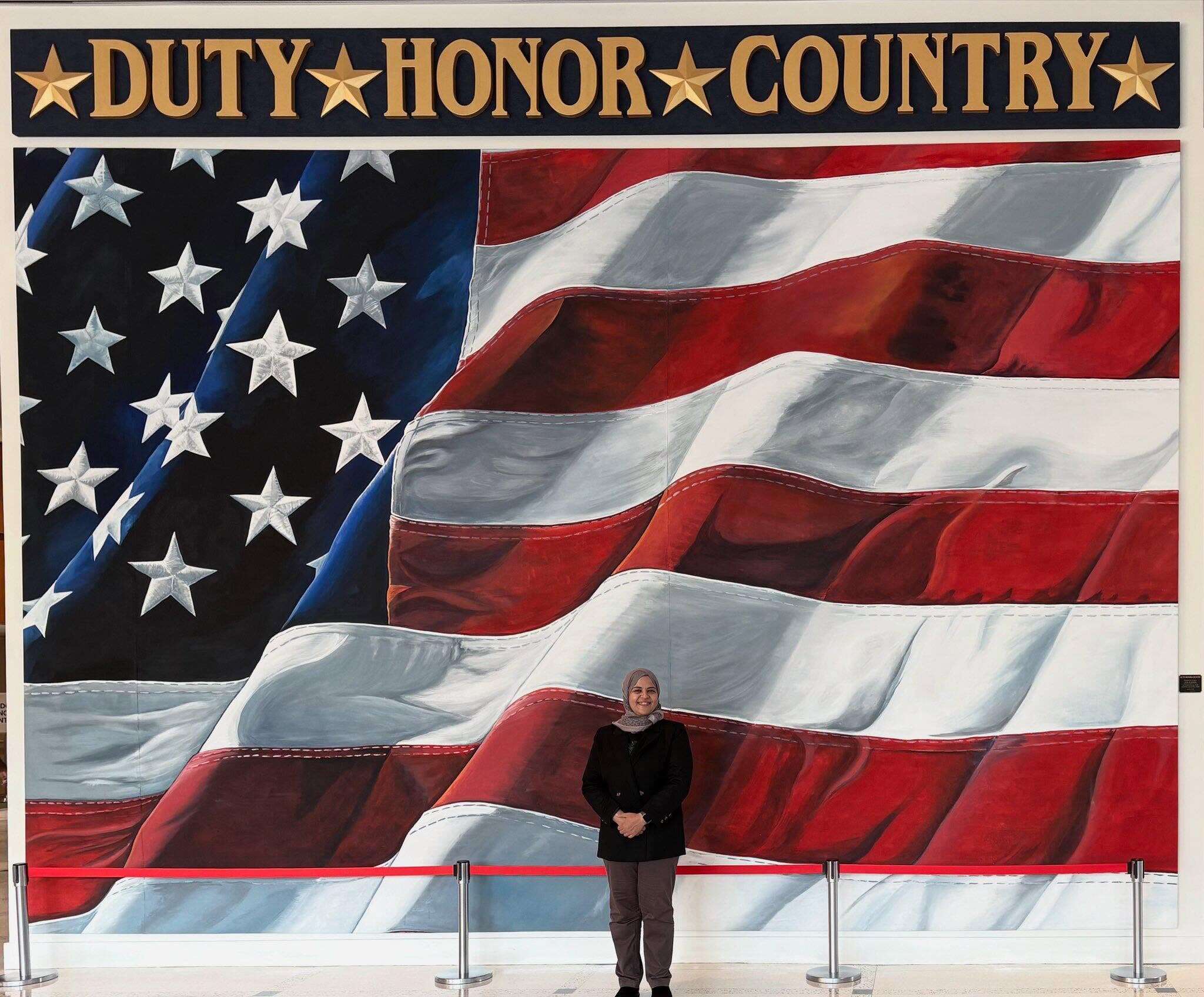
She says she was in a terrible psychological and emotional state until friends in the US helped her move "out of survival mode and into thriving mode." Receiving asylum gave her, for the first time, a sense of security and belonging. "The United States started to feel like home for me, the home that really protected me, that was a refuge when I needed one," she says. "It was the place that opened its arms for me when I was in danger and protected me."
Today, she says, she cannot envision returning to Egypt. "Now, the only way I remember Egypt is in nightmares," she says. "They are very nasty, very bad. I wake up shaking."
One of the most powerful moments in her crisis of identity occurred after the bodies of members of the Bibas family were returned and Hamas staged a cruel ceremony around them. She said that the next morning, she stood in front of a mirror preparing to put on her hijab, then stopped. She asked herself whether wearing the hijab meant giving legitimacy to such terrorism or lending credibility to those responsible. She said she continued to experience a profound identity crisis because of what she had witnessed.
She still defines herself as a Muslim, but as a Muslim reformist. In her view, Islam requires a deep process of reckoning and reinterpretation that distinguishes spiritual faith from a political ideology of conquest and coercion. She advocates Islamic reform and seeks to give the next generation of Muslims the legitimacy to ask questions, reject extremism and choose freedom and life.
Deep-rooted hatred
Following Oct. 7, Ziada reached an even harsher conclusion about Jew-hatred in the Arab and Muslim worlds. "Jew-hatred is so deeply ingrained in the Arab and Muslim identity, beyond what we can imagine," she says. "It is not really about one place, one war or one incident. It is not about Gaza, as some people are saying right now."
According to Ziada, the public response to the massacre demonstrated that the problem runs deeper than a territorial conflict. "You can understand that a terrorist commits terrorism," she says. "But why would an ordinary person endorse this terrorism simply because it happened against Jewish people? Because the target was Jewish. This opened my eyes to a very shocking truth."
Ziada now works with the Institute for the Study of Global Antisemitism and Policy and is pursuing a doctorate in antisemitism studies at Gratz College in Pennsylvania. "I am a Muslim myself. I am not a Jew," she says. "But I think it is the fight of anyone. It is not only the fight of the Jewish people. It is the fight of anyone who believes in human rights and liberal values."
Ziada distinguishes between historical European antisemitism and what she describes as "Arab-Islamic antisemitism." The first, she says, was curbed to some extent through education, changes in public discourse and the lessons of history. The second, she argues, is rooted in religion, ideology and identity. "Today, to be a good Arab and a good Muslim, part of it is to be hateful toward the Jews," she says. "Someone like me, they come at me and say, 'You are not a Muslim. You are not an Arab.' Why? Because I love the Jews. Forget about love. Because I treat them as human beings, just like me, as they treat me as a human being. Just because of that, they consider me not a good Muslim, or not even a Muslim at all, not an Arab at all, or not an Egyptian at all."
She sees the new antisemitism in the West as an imported and adapted version of the same worldview. "What we are seeing now is like a Westernized version of Arab-Islamic antisemitism," she says. "It uses the same language, the same flags, the same symbols and the same everything I saw when I was a young student, a freshman in Cairo, during the Second Intifada. It is so much a déjà vu for me."
At the same time, she warns of the rise of nationalist movements in the West that demonize both Muslims and Jews. "The pressure on the Jews is double or triple because it is coming from different directions," she says.
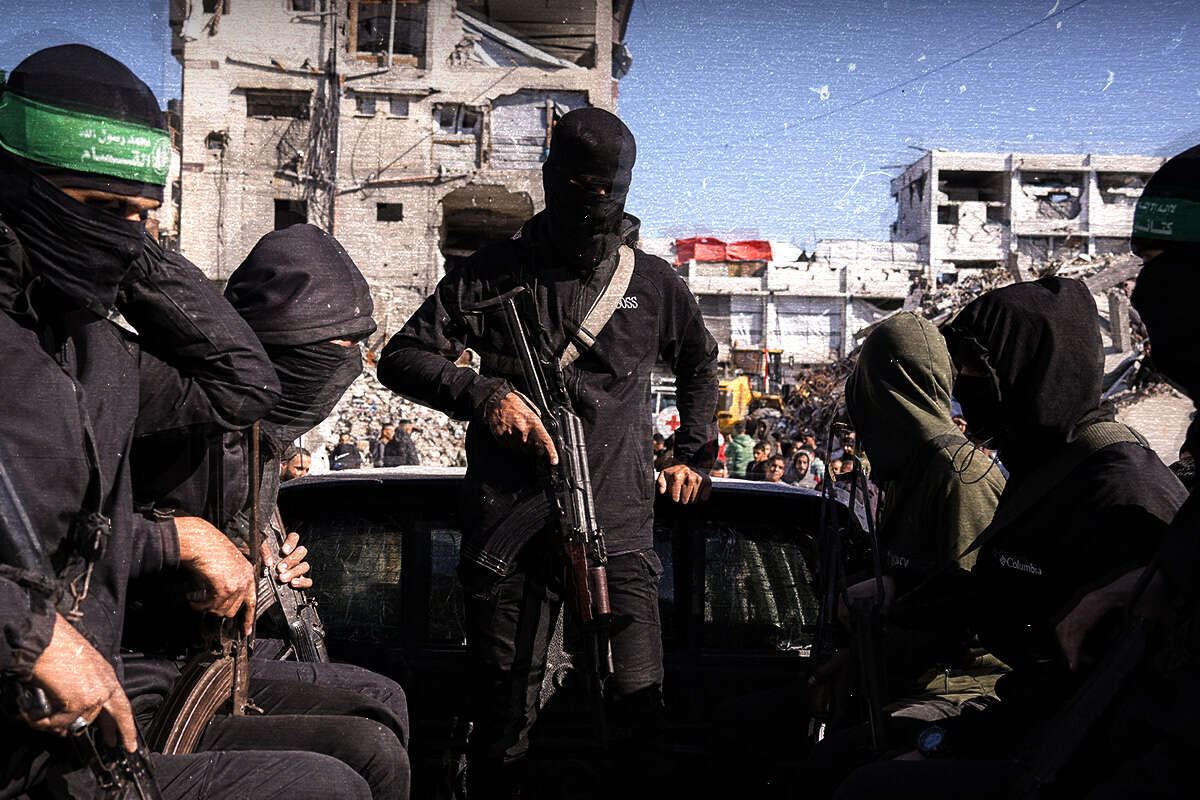
Her view of Hamas is also shaped by her former life in Egypt. For most of the organization's existence, she says, it was depicted there as "the resistance," rather than as a terrorist group, equating it with Egyptian nationalist movements that fought foreign occupiers. "Most Egyptians do not understand the historical context that makes the case of Israel very special and very particular," she says. "It is not a colonial power occupying another country, as many people think. We studied in our schools that Israel was an agent of Western imperialism that came to the Middle East as a wedge hammered into the middle of the region to destroy us, the Arabs, and fragment Arab unity."
After the Arab Spring and the Muslim Brotherhood's rise to power, she says, the picture changed briefly. Hamas was accused of infiltrating Sinai, helping establish terrorist organizations and attacking Egyptian soldiers and Coptic Christians. But public opposition to the organization faded, and support returned during subsequent rounds of fighting with Israel. From the regime's perspective, she argues, relations with Hamas are also a diplomatic asset. They give Cairo leverage over Gaza and allow it to present itself as an indispensable mediator.
"Chronic schizophrenia" over the Palestinians
Ziada uses harsh language to describe Egyptians' attitude toward the Palestinians, calling it "chronic schizophrenia." On the one hand, the media and public proclaim their love for Palestinians. On the other, Egypt closed its border to them and regarded their entry as a security threat. "We are willing to support them as long as they are on the other side of the border," she says. "If they come here, they become our enemies. If they come here, we will hate them and push them back."
She says she personally witnessed a case in which a family from Gaza was required to pay thousands of dollars to leave through Egypt: $5,000 for a woman and $7,000 for a man under 30. "There was nice talk and nice songs about Palestine in the Egyptian media, but no actual action to save the people," she says.
Her conclusion is blunt. "Egyptians do not necessarily love the Palestinians," she says. "They hate Israel. If Israel did not exist, if there were no object of hatred called Israel, they would make the Palestinians the object of their hatred."
Israelis have blind spots as well, she says, chief among them the tendency to treat all Arabs as a single bloc. "They put all Arabs in one category," she says. "They cannot differentiate between Gulf people, Egyptians and North Africans. "They think that because the United Arab Emirates and Bahrain signed the Abraham Accords with Israel, and they are nice people and Israelis can travel to their countries, they wonder why it is not the case in Saudi Arabia or Egypt."
Since Oct. 7, she has identified a deeper sense of disappointment in Israel. "Before Oct. 7, the sense was, 'If we are nice enough with the Arabs, they will like us back,'" she says. "But after Oct. 7, I can see more and more Israelis reaching the point that they will never love us, they will never accept us, and we have to live with that."
Asked whether she agrees, her answer is difficult. "Absolutely. I agree, unfortunately," she says. "For the time being, Israel is not safe. If I were an Israeli, I do not know how you guys can sleep at night. It is very scary, very scary, to be in a neighborhood where everyone else just wants to kill you."
Nevertheless, she does not believe Israel should abandon its efforts to communicate with the Arab world. On the contrary, she says, her own story proves that information can transform consciousness. "I am one of the people who grew up thinking that Israel was evil, that Israel was our enemy," she says. "I changed when I learned the truth, when I studied what Israel is, what the Israeli people are and what Judaism is. This changed me completely from one side to the other."
Her advice to Israel is to choose both its messengers and its target audiences carefully. "With all respect to all the activists, they are all angry people," she says. "One of them comes on a screen or appears at a conference shouting and screaming. Nobody will agree with you if you speak like this. But if you speak logically about Israel, about why we need to live in peace and all of that, people will listen."
Rather than devoting efforts to persuading people committed to demonizing Israel, she recommends approaching young people who grew up in an echo chamber and do not know the facts. "Focus on the people who are not aware enough and need real education," she says. "They are asking good questions, not because they hate Israel per se, but because they do not know. They grew up in an echo chamber telling them from all directions that Israel is their enemy. Target these people and find a way to deliver the right messages, the right education about what Israel is."
Frightened minority
Despite the threats, Ziada insists that an Arab peace camp still exists. It is small, isolated and afraid, but it has not disappeared. "At the same time that I am receiving death threats, until today, I also receive messages from young people, young Arabs and young Muslims, who come to me and say, 'You are doing the right thing. We want to do what you do and we want to be with you,'" she says. "These people do exist. There are good people there, but they are still a minority. And they are, of course, very frightened, because look what happened to me. If they speak up, they will face the same fate."
At the end of the interview, she offers a direct message to Israelis. "Stay strong," she says. "Your history is all about resilience, about people trying to destroy you and you bouncing back stronger. This episode we are living through right now is just another episode of this history. So, do not panic. Do not think it is the end. Of course, it is too painful. I can understand. But be sure that sooner or later, you will bounce back stronger."
And what does she wish for herself? First, stability and security in her new homeland, the US. Then, she says, she hopes to continue her fight against radical Islamism and for peace in the Middle East. "I hope that we, meaning me and the team I am working with, and people who believe in peace and in making the world a better place, will win in the end," she says. "I hope we will win in the end, no matter how long it takes."