Another meeting
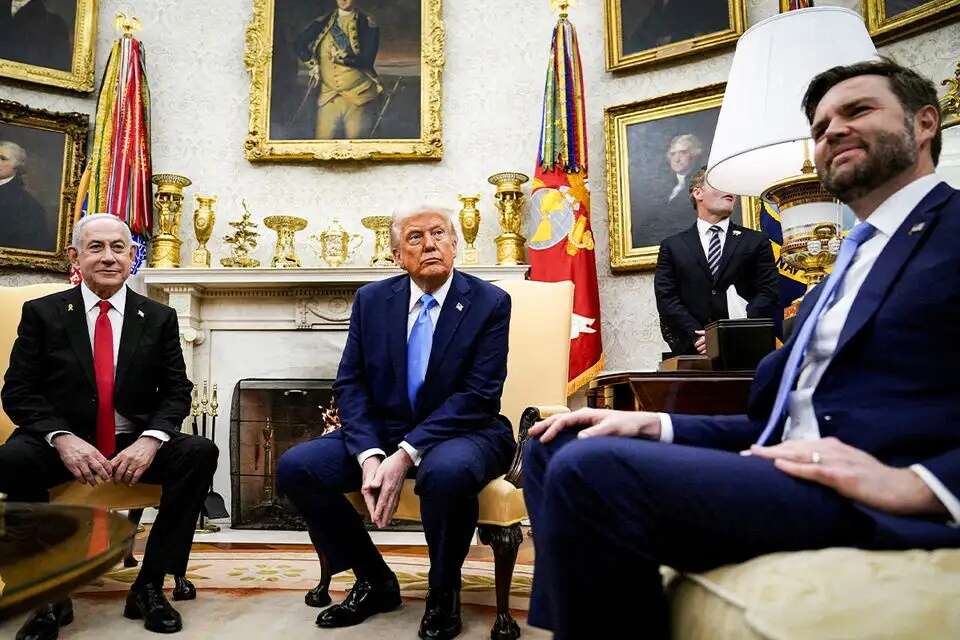
The contradictory accounts of the Trump–Netanyahu meeting (a public cold shoulder, or "the best meeting ever") and the focus on technical but important details (there was no one-on-one meeting; no journalists were invited) ignore a more basic question: what was its purpose?
Why, in fact, did Netanyahu travel to Washington? In January the goal was advancing what would later become known as Operation "Roaring Lion." A year earlier—blocking bad hostage deals and the strike on Fordow by American bombers.
But what now? Is the goal to renew the war? It is not clear that Israel is interested in such a renewal at any price. Minister Smotrich went all the way to Tucker Carlson and Nick Fuentes with the claim that the current situation is, in fact, the best one for Israel.
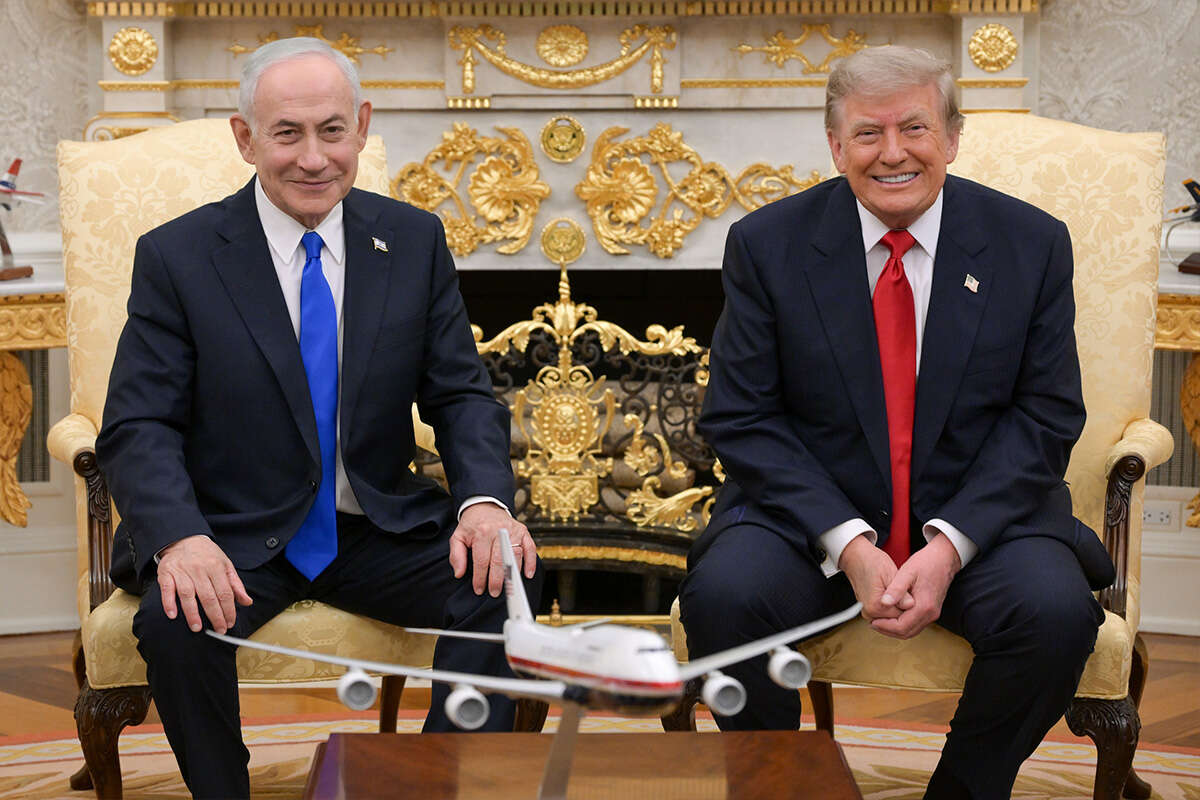
David Makovsky, a commentator and scholar who knows both sides of the Atlantic well, offered a plausible explanation, one that also accounts for why there were no cameras at the summit but there was a row of senior American officials. "Netanyahu did not come to the White House to persuade President Trump to abandon his preference for diplomacy with Iran in favor of renewed military action. It is more reasonable to assume that Netanyahu is betting the Iranian Revolutionary Guard and other ideologues in Tehran will eventually go too far and torpedo the diplomatic track themselves."
"This will let him focus on contingency plans the moment Trump concludes that Iran has made Plan A impossible to implement, whether through renewed economic pressure or, if necessary, military action. Why? Because there is a meaningful difference between demanding that Trump abandon Plan A from the outset—when the man most identified with it, Vice President Vance, is sitting half a meter away from you—and discussing credible Plan B options in case diplomacy fails.
"What's more, Netanyahu had no one-on-one time with Trump, and I think he will be especially careful, knowing that every word of his is closely scrutinized within a broader meeting. With all the leaks to the American press that came out of the famous February 11 meeting, he surely assumes it will happen again. At least this time, Netanyahu wants to be certain no one can accuse him of pushing the US back into war."
From above
"So when will we eliminate the drone threat?" the Chief of Staff was asked recently, in the days when Hezbollah was hitting IDF soldiers in southern Lebanon daily. He looked at his questioner with a pitying gaze. "Roughly around the time we eliminate the anti-tank or missile threat." Zamir, and like him the Shin Bet chief Zini, believe the drone's arrival on the battlefield is comparable to the tank's arrival in World War I. "A weapon that showed up in the first campaign will be there in the second, the third, and until further notice."
There is a common thread linking the steps the IDF is taking in the security zone, the holding of the cabinet meeting at a secret location, the takeoff of "Wing of Zion" to Washington from Nevatim base of all places, and the mysterious trickle of reports about aircraft downed on their way "from the east" toward Israel—"their origin still being examined." The common thread is the understanding that a battered Iran, stripped of its proxies, has found a possible way to reset the equation. Drones taking off from southern Lebanon are the only weapon in Hezbollah's arsenal that caused real loss of life. Why wouldn't they try the same thing from Gaza, and above all from Judea and Samaria?
Iranian agents were hired en masse but failed to get close to senior figures in Israel. And what if this time a swarm of drones crashes onto an IDF officers'-course graduation attended by the prime minister, the defense minister, and the Chief of Staff?
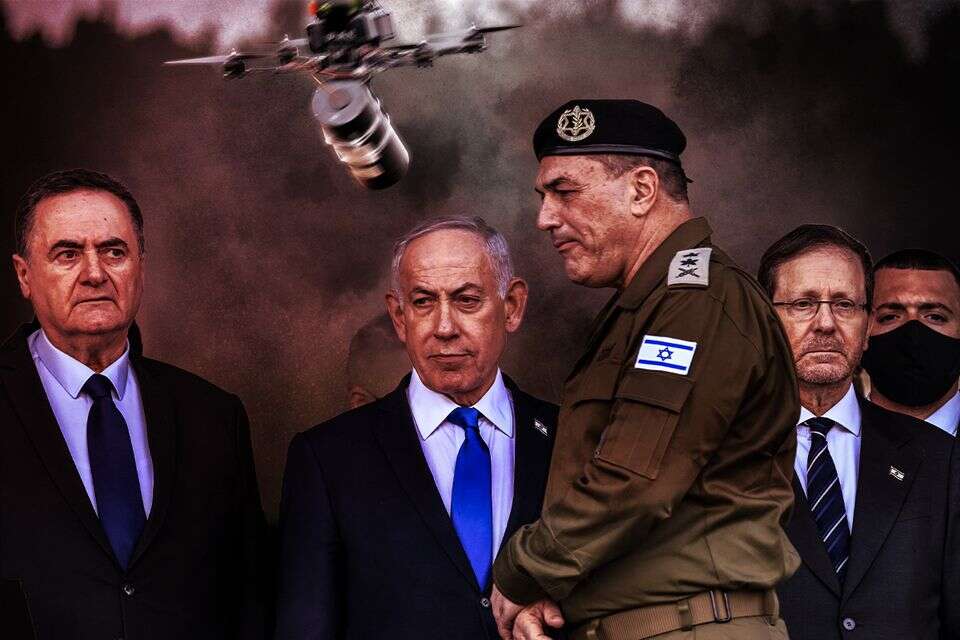
Zini is very worried about such scenarios, and it is fair to say that, as a rule, the drone danger sits at the center of his concerns these days, and it is not as if he is short on them. The polarization and division in Israeli society have bred deep suspicion toward the Shin Bet chief's assessment about the inability to hold Netanyahu's court testimony in the courtroom, for fear of Iranian missiles and drones. Here is a more fundamental question: why wouldn't the logic of an aerial-strike threat apply to any public appearance at a time and place known in advance? During the dark years of containing Hamas in Gaza, a ban was placed on senior officials' visits south of a certain line in the country. It should be no surprise if the same soon happens with every appearance by a prime minister: the beacon-lighting ceremony, a Ben-Gurion memorial, a tour of Ichilov. Take your pick. Holding this week's cabinet meeting at a secret location is only the trailer.
For decades the IDF has fought the rocket and missile threat on every front, doing everything in its power to block the leakage of the technology into Judea and Samaria. You can swap out the floppy disk (and floppy disks, in general, are worth getting rid of): rockets are out, drones are in. Why bother with an expensive, cumbersome system when you can easily smuggle, through the air, hundreds of tiny drones that do enormous damage?
That is exactly what happened from the Egyptian border, when drones came from Sinai into Israel and from there to Gaza. Like the old Soviet joke: for 20 years a man crossed the Soviet border with a truck full of sand, while the border guard sifted the sand every day and never found anything smuggled. After the guard retired, he ran into the driver by chance and begged to know what he had really managed to smuggle under his nose all those years. The driver smiled at him calmly and answered: "Trucks."