This week, the question of Israel's relationship with Qatar resurfaced. For years, the Gulf emirate has pursued a hostile policy that undermines Jerusalem's standing in the West, fuels hatred toward Israel and even supports its most brutal enemies.
At the same time, senior officials, retired Israel Defense Forces officers and Israeli businesspeople have not hesitated to work with the Qataris when it suited their interests. Qatar experts who spoke with Israel Hayom painted a troubling picture of the network of ties between Jerusalem and Doha, but stressed that Israel needed a coherent and consistent policy. Improvised measures and populist declarations would only cause harm.
"Qatar's reputation around the world has genuinely been tarnished," said Professor Yossi Mann, a senior researcher of society and economics in the Arab Gulf at Bar-Ilan University. "Its association with the October 7 massacre and its support for Hamas and the Muslim Brotherhood have raised awareness. Some will say people do not care, but I think American universities are already asking questions about their funding. Qatar's support for the Muslim Brotherhood has raised eyebrows.
"So we can certainly tell the world that Qatar poses a threat, that it is behind the Muslim Brotherhood, maintains ties with Iran and supported Islamic State and every other problematic actor in the region, and that it must therefore be treated with caution. Any country facing challenges from extremist Muslim minorities should know that Qatar may be operating behind the scenes."
Cards that are hard to beat
"I think Israel has already hurt Qatar by associating it with October 7 and with incitement," Mann added. "As for whether it should be designated an enemy state, I think that makes sense domestically, but we have to ask how other parties around the world would view such a move.
"I think the United Arab Emirates should be the barometer, and we should make our decisions accordingly. For example, if Al Jazeera is not allowed to operate in the UAE, why do we need it here? We should say that what is good enough for others is good enough for us. The UAE is currently treating Qatar with great caution, so we should also be extremely cautious."
The boycott imposed on Qatar by several Arab states in 2017 largely failed in that respect.
"That's true. Ultimately, Qatar holds cards that are very difficult to beat. It has money, media outlets and influence over religious forces across the Muslim world. That is the perfect combination. It is extremely difficult to fight.
"The Americans also maintain a relationship with Qatar. It is a highly problematic entity. Qatar's maneuvering during the war with Iran is also deeply problematic. That is something Israel should be raising now. What is Qatar doing with the Iranians at this point? It needs to decide. Is it against them? Why is it not aligning itself with the Gulf Cooperation Council?
"In my view, Israel should push the message that Qatar is not aligning itself with the US position. It is not going all in against Iran, as the United Arab Emirates is. The Gulf Cooperation Council had an opportunity to say that its members were acting together against Iran, but Qatar and Oman are not doing so because the current situation suits them."
The failed strike
Dr. Yoel Guzansky, head of the Gulf Program at the Institute for National Security Studies and a former senior official on Israel's National Security Council, noted that Israel struck Qatar in September 2025 in an unsuccessful attempt to eliminate Hamas' senior leadership.
"That operation created tensions between us and the Americans for a time and achieved nothing," he said. "The strike did not damage Qatar's image and instead handed it enormous dividends. It brought the Gulf states closer to Qatar, with all of them expressing solidarity.
"The concern in the Gulf and elsewhere was that Israel would attack on their territory whenever it saw something it did not like. The strike also pushed the Qataris closer to the United States. They received a form of defense agreement that no other Gulf state had received. That is an example of a foolish operation."
"I would recommend acting with sound judgment," Guzansky stressed. "If Qatar is a sophisticated state, then let us be sophisticated as well. Calls to designate it an enemy state have been heard for years. On the one hand, there are such calls, while on the other, Israel cooperates with Qatar behind the scenes.
"Qatar has inaugurated a diamond exchange. The country that helped it establish that exchange was none other than Israel. Senior Israelis have conducted business with Qatar. Israel accused it of harming the country, called for it to be ostracized and even said it should be declared an enemy state, while doing something entirely different behind the scenes. Al Jazeera has been inciting against us for years, but we cooperated with Qatar in various ways, including by allowing Qatari money to reach Hamas."
Guzansky said Israeli policy needed to be reset. "We need a reset, a kind of national reassessment. We need to understand what this country is, how it harms our relationships and interests, whether anything can be done, what can be done, by what means and whether those means are worthwhile."
Harming US interests?
"If I declare war on Qatar now, I may be harming American interests because Qatar is a highly significant US partner," Guzansky said. "We need to consider whether Israel's hands are tied. If they are, it would be better not to speak, because such talk only causes damage and embarrassment for Israel.
"If Israel's hands are not tied, and I do not believe they are, then there are things that can be done. But this is not about shouting 'enemy state' or carrying out strikes. If evidence can be produced showing that Qatari money is flowing to a particular organization, Qatar can be discredited and harmed, creating leverage over it."

The researcher added: "It is true that Qatar funded Hamas and the worst of our enemies, but in practice, we were the ones who funded them. We carried the suitcases of Qatari cash. That continued during Naftali Bennett's term.
"What changed under Bennett and Yair Lapid? Instead of suitcases, the money was transferred through orderly bank transactions. There was no real difference, and money continued to flow from Qatar to Hamas. Everyone is responsible for this, and now everyone is trying to justify themselves."
Concern on two fronts
Qatari diplomats angrily rejected Israeli accusations this week that the emirate supported terrorism. They maintained that its assistance to Gaza had been "purely humanitarian" and coordinated with Israel.
Hamad Al-Muftah and Ali Al-Ansari of the Qatari Embassy in Washington complained that former Prime Minister Naftali Bennett had merely been trying to score political points at Qatar's expense when he pledged to designate it a terrorist state.
"This probably reflects concern on two fronts that the issue will stir action among figures in Washington who also recognize the Qatari threat," said Dr. Ariel Admoni, an expert on Qatar and a researcher at Ariel University and the Jerusalem Institute for Strategy and Security.
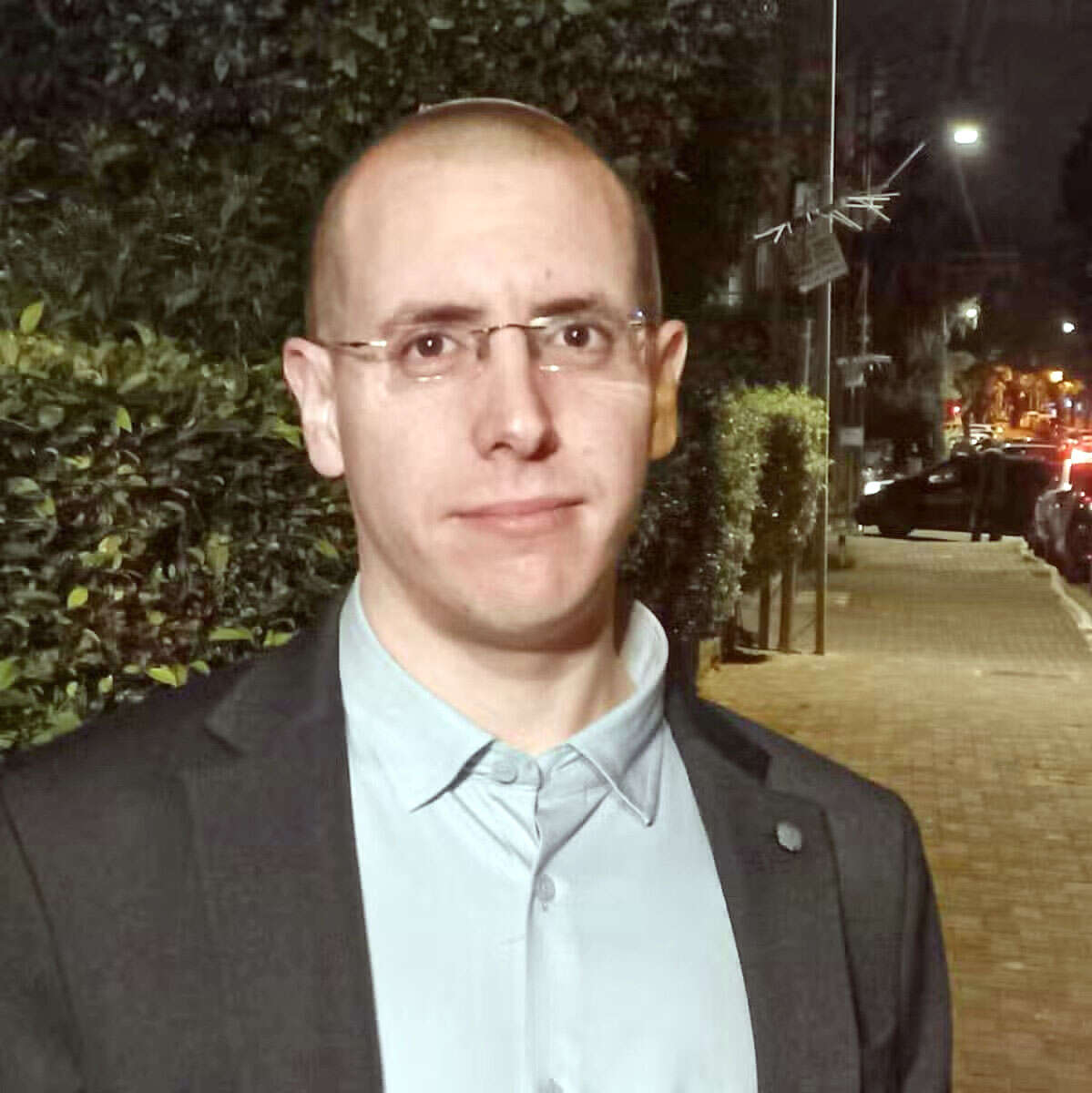
"It is no coincidence that the International Media Office did not issue a statement this time and that the response instead came from the media attaché in Washington. Qatar is also aware that Israel attracts international attention. In other words, a discussion of this kind spills into television studios around the world and raises the question of whether Qatar is an enemy."
Admoni nevertheless stressed that a broader policy was needed, rather than merely declarative measures. "Qatar is a sophisticated enemy, so the response must also be sophisticated. Qatar has numerous interests in many countries, and even minor damage to its image or the closure of a local initiative has greatly disturbed the authorities in Doha.
"The way to confront the head of the octopus is to establish an interministerial team that coordinates small-scale operations, sometimes in the economic sphere, sometimes in the media, sometimes in intelligence and sometimes in the security sphere. In Qatar's case, sustained work should focus on striking the fists at the ends of its tentacles."