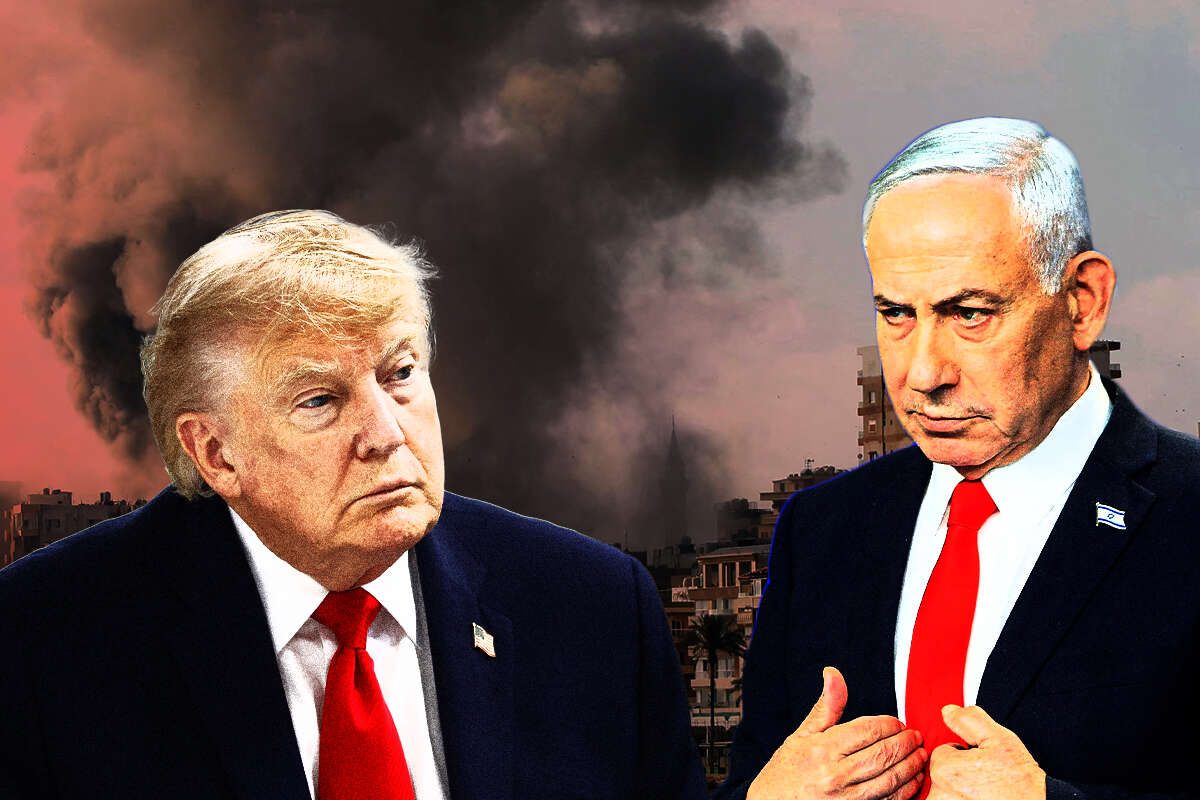
Prime Minister Benjamin Netanyahu will not say so to US President Donald Trump this evening, but the truth is that Israel breathed a sigh of relief over the weekend. That happened when it became clear that Trump was delaying the major attack he had planned against Iran.
Netanyahu and those around him had already concluded on Thursday that, despite the president's forceful statements that day, he did not intend to attack anytime soon. On Friday, and even more clearly on Saturday, it became apparent that Trump was once again doing the opposite of what the entire world expected.
Netanyahu was relieved. Not because he had suddenly developed sympathy for the group of madmen in Tehran. Quite the opposite: Israel wants an overwhelmingly powerful attack on Iran, one that would strike its national infrastructure and perhaps bring down the regime.
On the other hand, the Americans do not need Israel merely to continue wearing down the ayatollahs. At least as of this weekend, Trump still did not want to target infrastructure. Israel, meanwhile, did not want to join a campaign whose purpose even the defense establishment did not believe in.
Obviously, had the president asked, Israel could not have refused. Nor can Israel allow itself to appear less hawkish than Trump toward Iran. Therefore, when it became clear that Trump himself had ordered a ceasefire and, in the process, had released Israel from the obligation to fall into line, there was quiet satisfaction behind closed doors. Israel had not been dragged into a confrontation in which it had no interest.
The reason for the stalemate
The larger question, of course, is where things go from here. US media outlets are reporting that the US military is preparing unprecedented special operations. On the other hand, similar reports have appeared before and ultimately came to nothing. Moreover, despite his public display of confidence and victory, Trump must decide in the Oval Office between scenarios that do not appeal to him.
In theory, he could reach an Iranian surrender agreement, but that will obviously not happen. The remaining options are also unappealing. One possibility is to continue playing for time, as he has effectively been doing for the past three months. The price of this middle-ground approach is an inconclusive and lackluster outcome that carries both economic and political costs. A second option is to launch the large-scale operation the US military has been preparing. Here, however, there is a risk of failure and a heavy loss of life.
Trump is sensitive both to the deaths of soldiers and to operational failure. That is why he has so far rejected the grandiose plans presented to him. His inability to decide explains the repeated advances and retreats seen since the official conclusion of Operation Epic Fury.
Mojtaba's bluff
Judging by developments in recent days, the Iranians will not leave Trump free to choose which path to take. The level of their provocations is rising by the day. After striking all their neighbors, the mullahs have in recent days begun threatening European countries. Yes, Bulgaria and Ukraine could come under drone attack. That is the threat now being issued by the deranged figures ruling the Iranian people.
Fanatically devoted to their beliefs and filled with satisfaction at having survived until now, the Islamic Revolutionary Guard Corps is raising the stakes. As has happened so many times in history with unhinged rulers, those in Iran genuinely believe that no one can touch them.
After all, the world has continued for five months to accept the bluff surrounding Mojtaba Khamenei's supposed existence and decisions. His voice has not been heard, his face has not been seen, his handwriting has not appeared, and there is not even evidence that he is still alive. Yet Western intelligence has still failed to expose the deception.
Nevertheless, the bubble will eventually burst. No one knows exactly what the collision between reality and Iran's delusions will look like, but it is closer than people think. Dictatorships fall without warning. History has taught us that as well. The Islamic Republic's fate will be no different.
Concessions on Gaza
What will Netanyahu say about all this? The truth is that we do not know. After all, only later did it become clear how profoundly the two leaders' previous meeting in February had changed history by giving rise to the war against Iran. There is no doubt that the prime minister will again propose moves concerning Iran, but their nature will become known only in the future.
There is, however, one step Netanyahu will present in an effort to please the king: the Diplomatic-Security Cabinet's approval two days ago to begin bringing the international force into Gaza. Netanyahu described the move as a way to "release pressure from the valve."
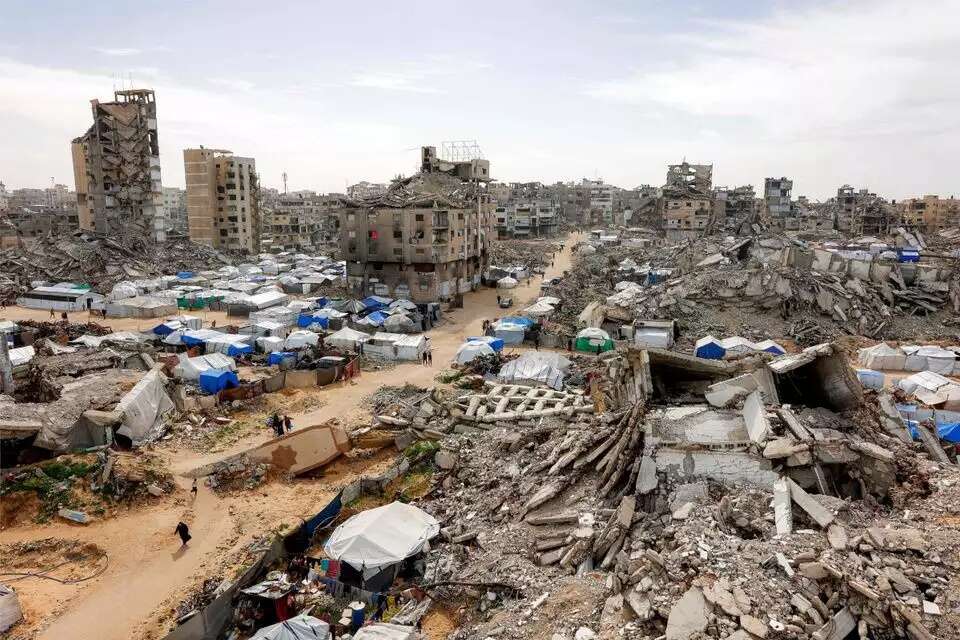
Trump and his officials repeatedly pressure Israel to withdraw its forces from Lebanon and Syria, and they also want to see "progress" in Gaza. All of this is happening while Hamas has not disarmed, Hezbollah remains active and dangerous, and Syria is under unstable jihadist rule.
To show Trump that Israel is doing "something," Netanyahu will point to the cabinet's decision to allow the International Stabilization Force into the Gaza Strip. Although the rationale can be understood, this concession is a mistake. Three years after the massacre, Hamas should have been a dead organization, and Netanyahu promised countless times that he would bring about that result.
Here is a creative proposal that could bring Israel closer to that goal. Yishai Spaz of the Israel Border Communities Forum has raised a simple idea that would not require restarting the war. Israel, Spaz says, should divide the Gaza Strip along the Netzarim and Kissufim corridors. Instead of one large contiguous enclave, Hamas would be left with three small, disconnected pockets. Such a move would make it harder for the terrorist organization to rearm.
A creative step of this kind would be preferable to returning to the familiar cycle of concessions Netanyahu approved in the cabinet at the beginning of the week. Since Hamas is not meeting the agreement's basic conditions, Netanyahu has full legitimacy to present Trump with better alternatives.