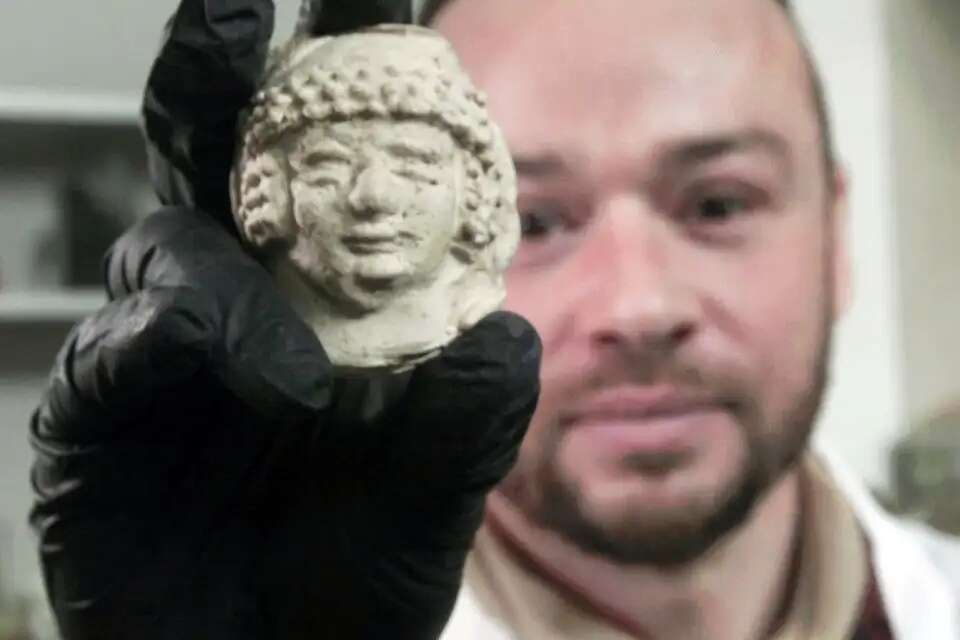
A rare mold used to cast the face of a female figurine dating to the First Temple period has been uncovered in an Israel Antiquities Authority excavation at the Kishle, within the Tower of David Jerusalem Museum complex. The excavation was conducted as part of work to establish the museum's new Schulich Wing for Archaeology, Art and Innovation. The new wing will complement the museum's permanent exhibitions and present the site's unique heritage through a combination of archaeology, contemporary art and innovation.
"The mold was found while soil removed from fills and accumulated deposits dating to the First Temple period was being sifted," said Dr. Amit Re'em and Dr. Ayala Zilberstein, the excavation directors on behalf of the Israel Antiquities Authority. "The excavation at the Kishle, which has been underway for several years, continues to surprise us time and again. It is one of the most important archaeological excavations conducted in Jerusalem in recent decades, clearly and continuously presenting the city's history, from the days of the kings of Judah through the various periods that shaped its character and up to the British Mandate period."
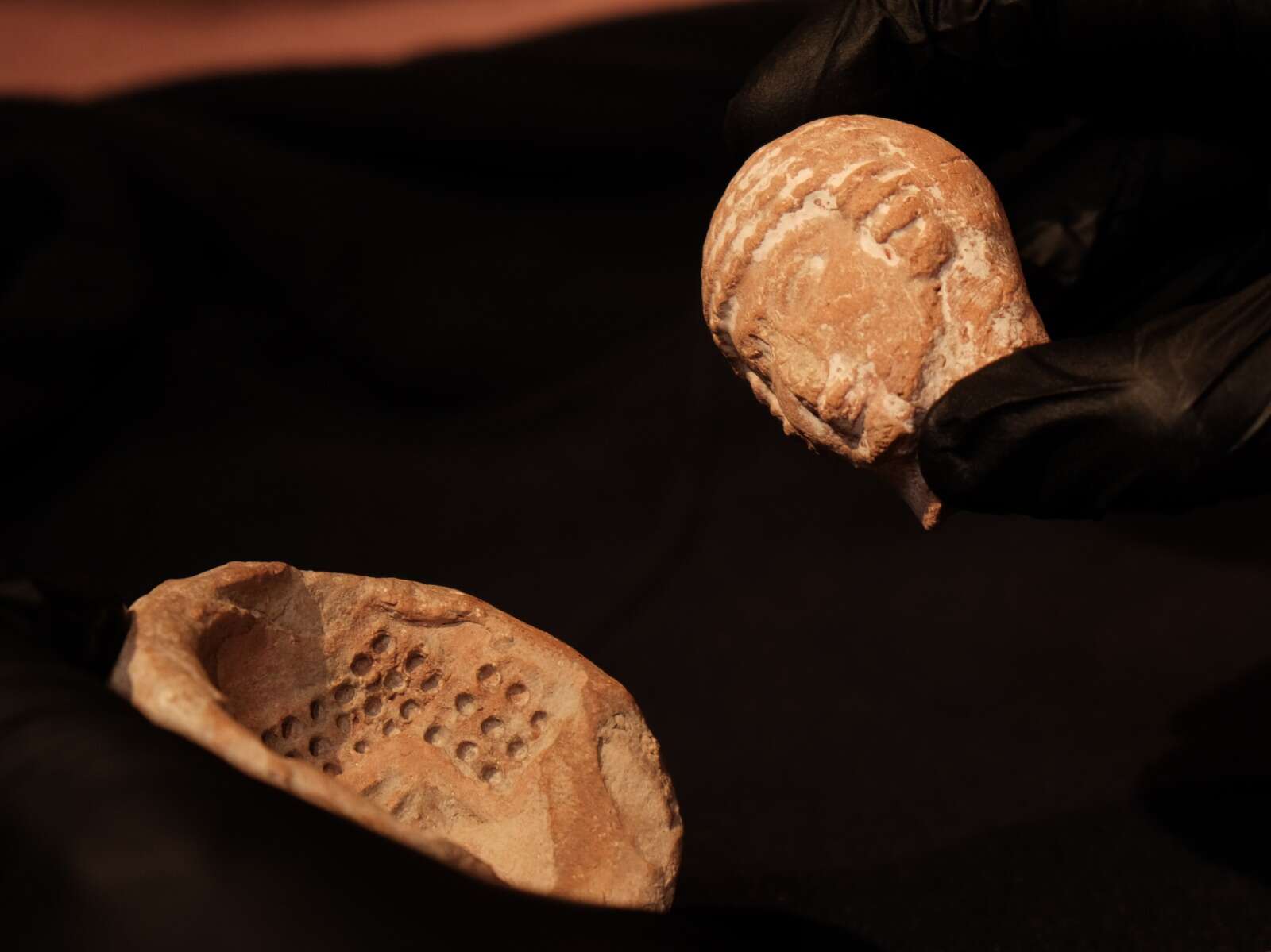
After its discovery, the mold was transferred to Tamar Gonen, an Israel Antiquities Authority specialist in the conservation and restoration of pottery finds. She carefully treated the artifact, removing every grain of soil from its surface. The conservation work revealed the mold's minute details and the facial features impressed into it. The mold was then transferred to Slava Klindukhov, a specialist in the conservation and restoration of archaeological finds, who poured a suitable material into it.
The impressive result was a complete reconstruction of the female figurine's face, featuring clearly defined facial characteristics and an intricately detailed hairstyle of curls. "Clay figurines from the First Temple period are known from nearly every archaeological site excavated in Jerusalem and Judea," Re'em said. "Until now, however, no molds used to produce these figurines had been discovered in Jerusalem, raising the question of whether they were manufactured in the city itself or brought in from elsewhere. The discovery of the production mold at the Kishle is therefore the first of its kind in Jerusalem and provides direct evidence that at least some of the figurines were made in the city itself."
Figurines of this type date to the latter part of the First Temple period, between the eighth and sixth centuries BCE. They were made of clay and generally stood approximately 10 to 20 centimeters (4 to 8 inches) tall. Most are found broken at the neck, a result of the production method in which the body and head were fashioned separately by hand, with only the head shaped in a mold.