2025 was saturated with conflict. The past year saw clashes between Thailand and Cambodia, nuclear-armed India and Pakistan, a direct confrontation between Israel and Iran and the end of the war in Gaza, an unresolved stalemate in Ukraine, military coups in West Africa and brutal massacres in Sudan and Congo. At the same time, and perhaps to the frustration of a US president eager for a peace deal, the trends that took shape in 2025 point clearly to a turbulent year ahead. Europe, and in practice much of the world along with it, is arming itself at a pace unseen in decades. Russia is acting with increasing audacity, China is more assertive, and the US is concentrating massive forces in the Caribbean. The Middle East also shows no signs of calming.
The most explosive flashpoint: China, Taiwan and the Far East
Among Western experts, analysts and intelligence officials, one date has become shorthand for a potential confrontation over Taiwan: 2027. According to this assessment by Chinese President Xi Jinping, likely the most powerful Chinese leader since Mao Zedong, has instructed the People's Liberation Army to be ready to seize the island by force. Taiwan has functioned as a de facto state since 1949, but Beijing defines it as a renegade province.
As 2026 begins, all indicators point to rising tensions. Large-scale Chinese military exercises are simulating the encirclement of the island. Japan's prime minister has hinted at possible Japanese involvement in Taiwan's defense in the event of conflict, with Chinese rhetoric growning increasingly aggressive.
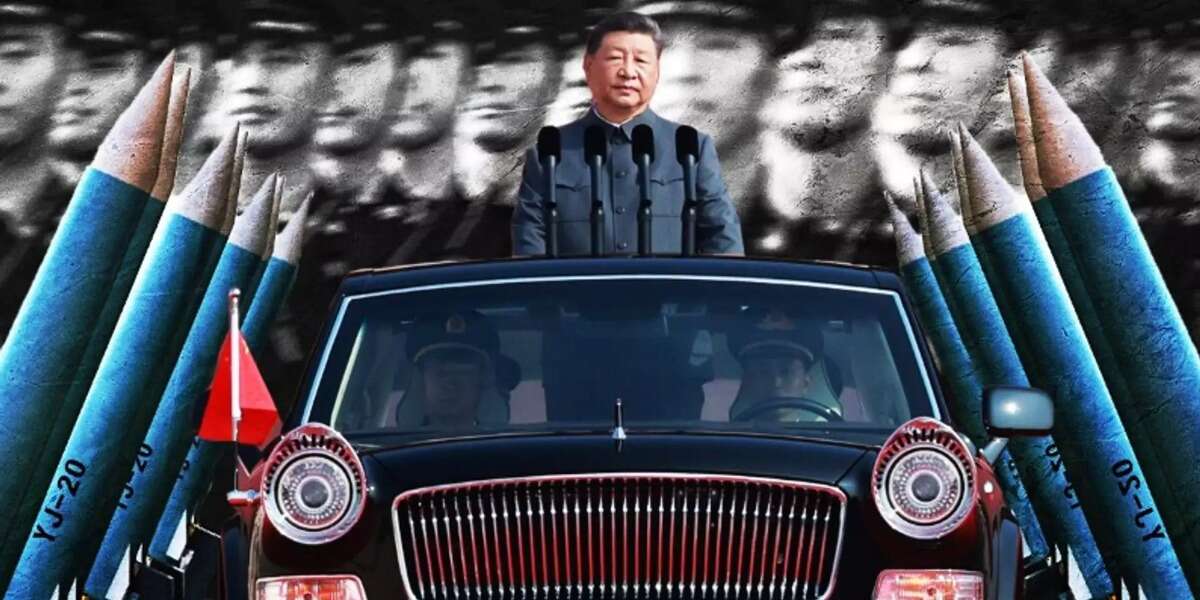
With the US concentrating large forces in the Caribbean, fears are mounting that Beijing may test Washington's long-standing policy of strategic ambiguity. This is the most explosive hot spot of all. Any spark in the Taiwan Strait, through which roughly half of global maritime trade passes, could trigger a great-power level conflict stretching from the Korean Peninsula to the Philippines, and possibly beyond.
The collapse of the Shiite axis: The Middle East
In the Middle East, betting on some form of escalation is usually safe. In 2026, the odds are particularly high. Iran, Hezbollah, Hamas and the Houthis find themselves at a point of weakness that Israel and the US would be eager to exploit. The leadership of the pro-Iranian axis has been severely damaged. Hassan Nasrallah, Yahya Sinwar and other key commanders have been eliminated, and their successors have apparently failed to recreate the same level of coordination.
The result is the collapse of the deterrence once associated with the so-called Shiite crescent, and the breaking of taboos surrounding contacts with Israel. Growing voices in Beirut and Aden are openly supporting talks with Jerusalem.

In Yemen, southern separatist forces are gaining strength. They are inspired by the Somaliland precedent and have made the overthrow of the Houthis a central goal. Paradoxically, Saudi Arabia, the Houthis' chief rival, is threatening to strike the separatists if they refuse to submit to the authority of the exiled government in Sanaa.
The struggle against separatist forces will also shape Syria. The government of Ahmad al-Sharaa is seeking to impose centralized Sunni Islamist rule and has rejected demands for autonomy from minority groups. Opposing it are three key figures. Sheikh Hikmat al-Hijri, who leads most of the Druze in the south, is demanding separation from the central government. Sheikh Ghazal Ghazal has emerged as a leading figure among the Alawites in the west, where members of the community recently burned portraits of Bashar Assad as a declaration of new loyalties. In the east, Kurdish General Mazloum Abdi is demanding formal recognition of the Kurdish autonomy that exists under the Syrian Democratic Forces. A refusal by Damascus to compromise could ignite all fronts simultaneously.
The arms race: Europe and Russia
On Feb. 28, 2025, the event that became known as the "Shouting Summit" took place, when Ukrainian President Volodymyr Zelensky was ejected from the White House after a public and heated clash with the US president and vice president. Across European capitals, the message was unmistakable. The US might still be present, but not for much longer.
The administration's national security strategy made clear how decisively Washington was turning away from the transatlantic alliance that had defined the global order since the end of World War II, and even more so since the collapse of the Soviet Union.
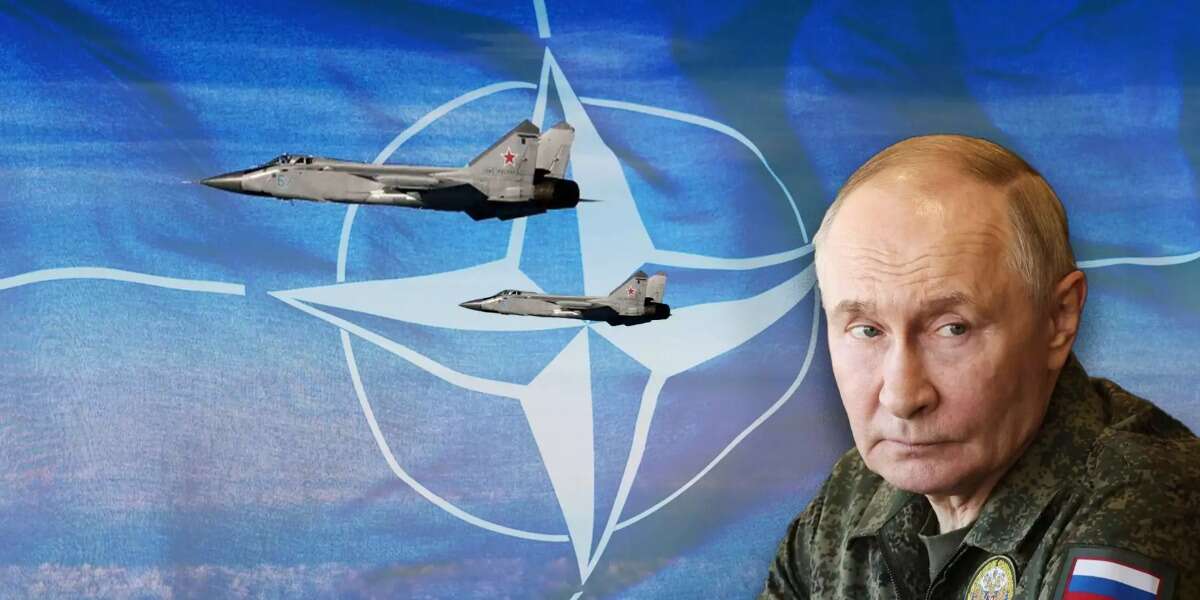
With efforts to end the war in Ukraine deadlocked, despite the US president's public optimism, Europe is now seriously grappling with the nightmare scenario of a war with Russia. The result is a wave of rearmament not seen since World War II. At the NATO summit in The Hague, member states committed to raising defense spending to 5 percent of GDP by 2035. The president of the European Commission unveiled an 800 billion euro rearmament plan, while Germany, France and the UK announced new recruitment drives to expand their armed forces.
In some respects, the confrontation has already begun. Drones are disrupting air traffic across the continent. Rail lines are being sabotaged in Poland. The hybrid war attributed to the Kremlin appears to be at its peak. What might the next stage look like? The most immediate concern is a Russian attempt at a lightning grab in the Baltic states, similar to the appearance of unidentified soldiers in Crimea.
NATO's secretary-general has set 2029 as the target year for readiness. Events in the coming year could prove decisive for the continent's future.
Regimes fall, Jihad rises: Africa
2026 could be a pivotal year in the expanding confrontation in West Africa between regional states and Islamist terrorist organizations that have established footholds in border areas and, in some cases, are directly threatening state authority.
The ongoing conflict is unfolding as the region is split between members of the Economic Community of West African States, which are aligned with the West, and Mali, Burkina Faso and Niger. These three countries have undergone military coups in recent years led by pro-Russian and pro-Chinese elements.
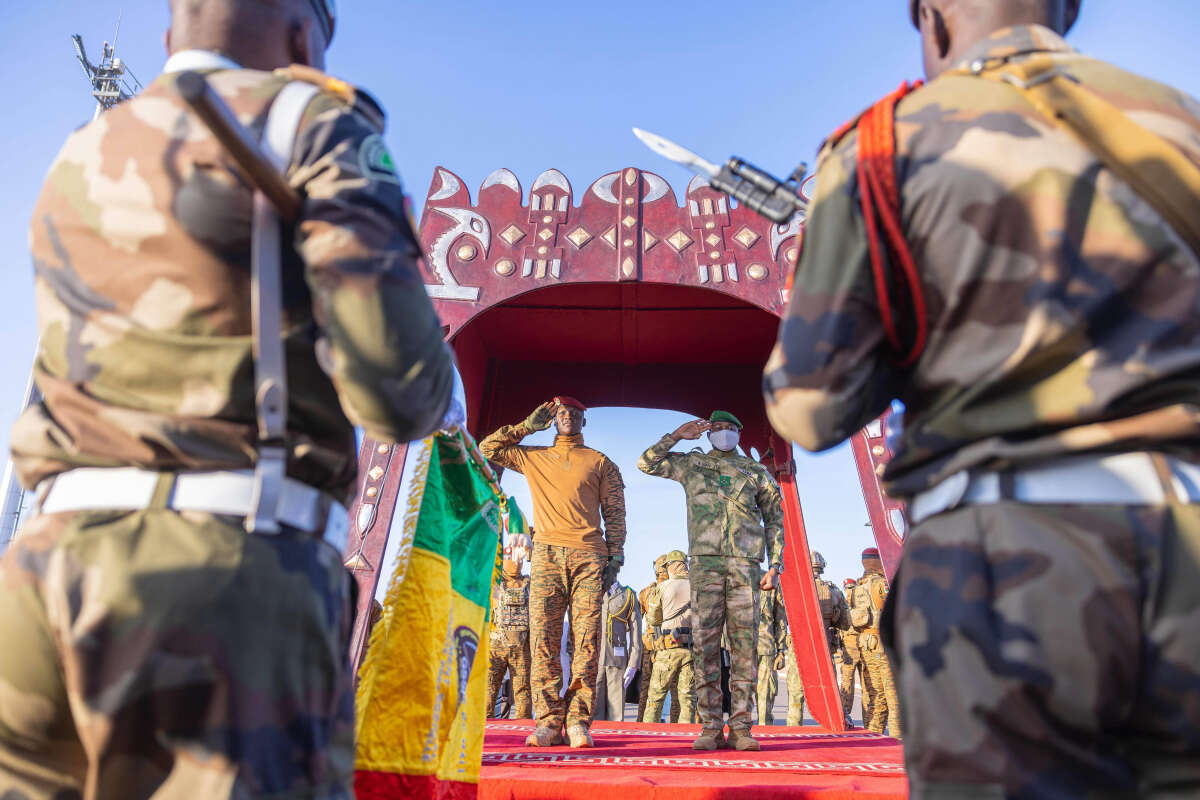
Mali is now at a critical stage of its war between government forces and an organization affiliated with al-Qaida. Fighters from Jama'at Nusrat al-Islam wal-Muslimin have managed to encircle the capital, Bamako, and it is unclear whether government forces will be able to hold the city into 2026. The group is also active in Niger and Burkina Faso and over the past year has inflicted humiliating defeats on the armies of both countries. Recently, the three states announced the creation of a "Sahel Regional Force" to coordinate the fight against the terrorist organization.
In Central Africa, another war dominated headlines in 2025 and appears set to spill into 2026 after a ceasefire effort collapsed completely. The M23 militia, backed by Rwanda, continues to seize territory from the Congolese government in the east of the Democratic Republic of Congo, threatening stability across the entire region.
The US "restores order" in Its backyard: The Americas
"Venezuela is surrounded by the largest armada ever assembled in the history of South America," President Donald Trump declared on social media about two weeks ago. "It will only grow, and the shock they will experience will be like nothing they have ever seen."
Trump may have won under the slogan "America First," but his first year in office was marked by intense international engagement and a very public pursuit of the Nobel Peace Prize.

One arena in which the administration's activism aligns, at least rhetorically, with that vision is the Western Hemisphere, often described by Americans as the US "backyard." From the public claim of ownership over Greenland, through confrontations in the Caribbean framed as efforts to stem migration and drug flows, to support for conservative leaders across Latin America, the administration is declaring a revival of the 200-year-old Monroe Doctrine.
The immediate focus is Venezuela and drug trafficking in the Caribbean, as Trump ramps up pressure week by week on the regime of Nicolas Maduro. This has included strikes on drug vessels off the coast, the seizure of oil tankers, designating the regime as a foreign terrorist organization and direct threats to the dictator's life.
The White House is likely to continue "shaking the tree" on which the Caracas leader sits, hoping his inner circle will betray him. But it cannot be ruled out, and indeed appears increasingly likely, that the military force amassed off Venezuela's shores will be used more openly and with greater intensity against targets inside the country itself. Will the move stop with Venezuela? The midterm elections in November will be critical. Military action could expand to Colombia and Mexico, which are far more central to the US drug problem.